
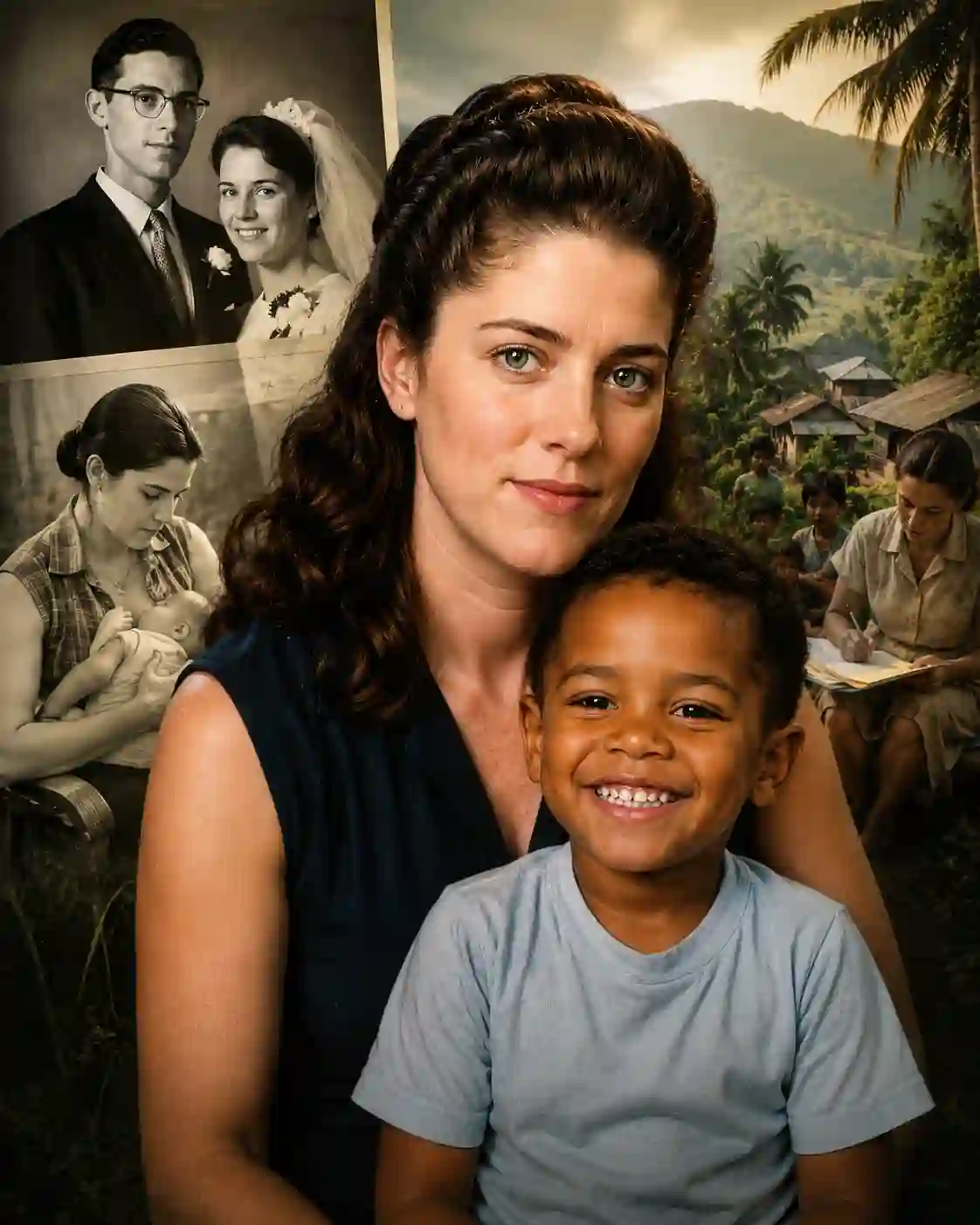
The woman who shaped one of the most powerful men in the world spent most of her own life feeling invisible.
Her name was Stanley Ann Dunham.
And the first mystery of her life began the day she was born.
Her father had wanted a boy so badly that when his daughter arrived in 1942, he gave her his own name: Stanley. Imagine growing up as a little girl in the 1940s carrying a name almost every person connected to boys. Every time teachers called attendance, every time she met someone new, the same awkward moment happened again.
“Wait… Stanley?”
Most girls would have hated the attention. Ann learned to live with it.
Her family moved constantly. Kansas. California. Texas. Washington. Just when she got comfortable somewhere, her father packed everything up again. He sold furniture and chased opportunities wherever he thought money could be made.
By the time Ann turned 18, she had already lived in five different states.
Most teenagers wanted stability.
Ann wanted something bigger.
At Mercer Island High School in Washington, she stood out immediately. While other girls talked about dances, makeup, and dating, Ann sat in coffee shops reading philosophy books. She asked difficult questions that made even adults uncomfortable.
One friend later said,
“She was mentally years older than the rest of us.”
Another called her “the original feminist” before most people even used the word.
Ann did not seem interested in living a normal life. That confused people around her.
Then, just after high school graduation, everything changed.
Her father announced the family was moving again.
This time to Hawaii.
Ann was furious. She had already been accepted into the University of Chicago. She had plans. Dreams. A future she could finally control.
But her father refused to change his mind.
So in 1960, only one day after graduating high school, Ann boarded a plane to Hawaii feeling like her own life had been stolen from her.
She had no idea that one decision would eventually change American history.
At the University of Hawaii, she signed up for a Russian language class.
That was where she saw him.
Barack Obama Sr.
Tall. Brilliant. Confident. Different from anyone she had ever met.
He was the school’s first African student, originally from Kenya. When he spoke in class, people listened. He carried himself like a man who already believed he was destined for greatness.
Ann was fascinated by him almost immediately.
Their relationship shocked people around them.
Not just because he was Black though interracial marriage was still illegal in many states at the time but because Ann had never seemed interested in marriage at all.
Then the rumors started spreading.
Ann was pregnant.
In February 1961, at only 18 years old, she married Barack Obama Sr.
Six months later, she gave birth to a son named Barack Obama.
From the outside, it looked romantic and brave.
Behind closed doors, it was falling apart.
Obama Sr. was ambitious and restless. Soon after graduating, he left Hawaii for Harvard University. Ann stayed behind holding a baby, struggling financially, and depending heavily on her parents.
At 19 years old, she was basically a single mother.
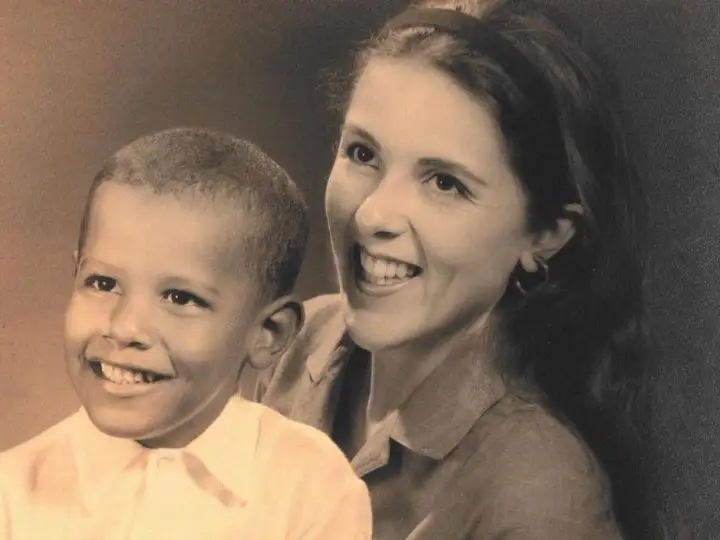
Most people would have given up on school.
Ann refused.
She attended classes while raising her son. She survived on food stamps. Some nights she barely slept.
But what nobody understood was this:
Ann had started developing a dangerous habit.
She kept chasing impossible lives.
That habit led her to another foreign student.
His name was Lolo Soetoro.
He came from Indonesia. He was calm where Obama Sr. had been intense. He played chess with Ann’s father and made little Barack laugh for hours.
Ann married him in 1967.
Then she did something most American women at the time would never even imagine.
She moved to Indonesia with her young son.
The country was chaotic and unfamiliar. Streets crowded with bicycles, chickens, smoke, and noise. Power outages happened constantly. Poverty surrounded them.
But while other Americans might have felt trapped there, Ann felt alive.
She learned the language quickly. She explored villages most outsiders ignored. She became fascinated by ordinary people—especially women trying to survive through small businesses and handmade crafts.
Most people looked at poverty and saw hopelessness.
Ann looked at it and saw systems that could be changed.
That obsession slowly became her life’s work.
Years passed.
While raising children, managing marriages, and moving between countries, Ann continued studying anthropology. She earned degree after degree while living a life that already seemed impossible.
Then came one of the hardest choices she would ever make.
When Barack was 10 years old, Ann sent him back to Hawaii to live with her parents.
She believed he would get a better education there.
But privately, the decision crushed her.
Imagine putting your child on a plane knowing you may only see him during holidays.
Many people later judged her for that decision.
But Ann always believed education mattered more than comfort.
While her son adjusted to life in Hawaii, Ann stayed in Indonesia and buried herself deeper into work.
This was where the real mystery of her life began.
Almost nobody in America knew what she was doing.
While future headlines focused on politicians and celebrities, Ann traveled through remote villages studying blacksmiths, farmers, and women running tiny businesses from their homes.
She worked with organizations like USAID, the Ford Foundation, and the Asian Development Bank. She designed microfinance programs that gave poor families small loans to build businesses and escape poverty.
The programs worked.
Entire communities changed because of them.
Women who once had no income suddenly supported their families. Small businesses expanded. Villages became more stable.
But outside development circles, almost nobody noticed Ann Dunham.
She was not interested in fame.
She cared about understanding people.
That was why she spent nearly 20 years working on one massive anthropology dissertation about village industries in Indonesia.
Over 1,000 pages long.
Most people would have quit long before finishing.
Ann kept going.
In 1992, at 50 years old, she finally earned her Ph.D. from the University of Hawaii.
Think about that for a moment.
Teen mother at 18.
Single parent.
Two marriages.
Living across different countries.
Years of financial struggle.
And still earning a doctorate at 50.
Most people never even attempt one difficult dream in life.
Ann kept building new ones.
But just as things finally seemed stable, something terrifying happened.
One evening in Jakarta, she complained about stomach pain during dinner.
A local doctor brushed it off as indigestion.
Weeks later, the pain became worse.
When Ann returned to the United States for medical treatment, doctors discovered the truth.
It was cancer.
Not early-stage cancer.
Advanced cancer.
It had already spread.
Suddenly, the fearless woman who spent her entire life crossing borders and solving problems faced something she could not outwork.
She moved back to Hawaii to stay close to her mother.
Friends who visited her later said she stayed calm even near the end. She talked more about her children than herself. She worried about unfinished projects and research papers.
Even then, her mind remained focused on work and purpose.
On November 7, 1995, Ann Dunham died at only 52 years old.
Most Americans never heard the news.
There were no huge headlines.
No national tributes.
At the time, her son Barack Obama was still a young lawyer trying to build a political career.
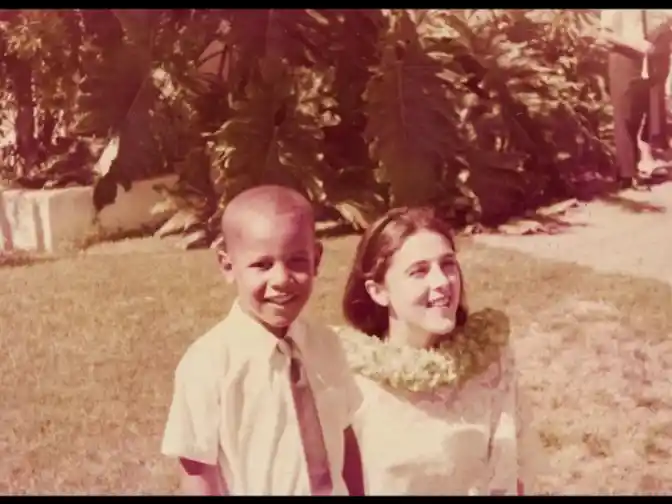
Few people imagined he would someday become President of the United States.
But those closest to him already understood something important:
The woman who raised him had shaped the way he saw the world.
Years later, Obama described his mother as “the dominant figure” in his childhood.
She taught him curiosity. Empathy. Openness toward different cultures. The belief that people from completely different backgrounds could still understand one another.
Those ideas later became central to his political identity.
But Ann’s influence went beyond politics.
She quietly proved something powerful through her own life:
You do not have to follow the path people expect for you.
She was a white woman from Kansas who felt more comfortable in Indonesian villages than in elite American circles.
A teenage mother who became a respected anthropologist.
A woman who spent decades helping strangers escape poverty while barely receiving recognition herself.
She lived with contradictions most people could never understand.
And maybe that was exactly the point.
Her father once gave her a boy’s name because he thought a daughter would disappoint him.
Instead, that daughter grew into a woman who helped shape global development programs, influenced millions of lives, and raised a future president.
Yet even today, most people still don’t know her name.
Not because her story wasn’t important.
But because Ann Dunham never cared about being famous.
She cared about understanding the world.
And in the end, that may have been the most powerful legacy of all.
Thanks for reading until the final line. Her life proved that influence does not always come with fame.
Latest Posts
- My Mom Spat in My Face at Christmas and Called My Daughter a Burden, Then Dad Revealed a Family Inheritance She Tried to Hide

- My Neighbor Borrowed $200 for Her Sick Son—Two Months Later, I Saw What She Had Done and Was Speechless
- My Mother-in-Law Called My 8-Year-Old Daughter a Disappointment at Dinner—Then I Discovered Why She Had Always Treated Her Differently
- My Family Forced Me to Cook Thanksgiving Dinner Alone—Then a Man in a Black Suit Walked In, Kissed My Hand, and Called Me “Darling”





About the Author
Hassan is the founder and editor of MidnightReads, a publication featuring thoughtful stories, human-interest articles, history, relationships, and entertaining reads.
He is involved in researching, writing, and editing content for the site, with a focus on creating original, clear, and useful articles that give readers something meaningful to take away.
Hassan believes good content should inform, entertain, and encourage curiosity.
— Hassan, Founder & Editor, MidnightReads