Evenings feel different.
The noise of the day slowly fades. Work ends. Conversations reduce. The sky changes color, and something inside us also shifts. It’s not dramatic. It’s subtle. But it’s real.
Many people notice that during quiet evenings, their thoughts feel clearer. Emotions feel closer. Questions appear that didn’t exist during the busy hours of the day.
There is something about evenings that makes us understand ourselves better.
The Day Is Full of Distraction
During the day, we move quickly.
There are responsibilities, messages, deadlines, traffic, and expectations. We are constantly reacting. Our attention jumps from one thing to another. Even when we think we are resting, we are usually consuming something—scrolling, watching, listening.
There is very little silence.
Because of that, we rarely hear our own thoughts clearly. We stay busy enough to avoid deeper reflection.
Evening changes that.
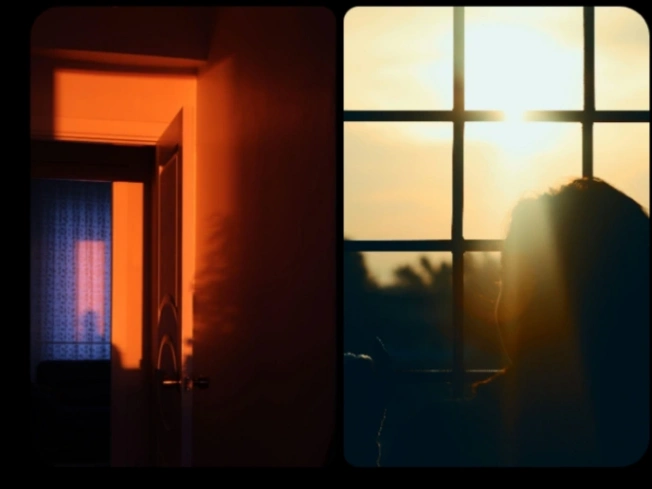
When sunlight softens and the world becomes quieter, our mind follows.
The nervous system begins to slow down. The pressure to respond immediately disappears. There are fewer interruptions. That shift creates space.
And in that space, awareness grows.
You may suddenly remember something you ignored earlier. You may feel grateful for something small. Or you may recognize that something has been bothering you.
Evening does not create these feelings. It simply gives them room to appear.
Why Silence Feels Honest
Silence can feel uncomfortable at first.
When external noise fades, internal noise becomes louder. Thoughts that were pushed aside during the day return. Some are pleasant. Some are not.
But this honesty is healthy.
Silence does not judge. It does not rush. It allows you to observe yourself without pressure.
In that observation, clarity begins.
We Think Differently When We Slow Down
During busy hours, our thinking is practical. We focus on solving problems and completing tasks. Reflection feels unnecessary.
In the evening, thinking becomes softer.
We ask:
✓ How did today really feel?
✓ Why did that conversation affect me?
✓ What am I avoiding?
✓ What am I grateful for?
These questions don’t demand answers. They simply invite awareness
Evenings Help Us Process Emotions
Throughout the day, emotions are often postponed. We say, “I’ll deal with it later.” Later usually means never.
But quiet evenings make it harder to ignore emotions. They rise gently.
You might suddenly feel tired—not physically, but emotionally. Or you might feel calm in a way that surprises you.
That processing is important. It prevents emotional buildup.
A Simple Evening Routine

Evenings don’t need complicated routines.
A simple pattern works best:
✓ Lower the lights
✓ Reduce screen brightness
✓ Sit quietly for a few minutes
✓ Read something light
✓ Reflect without pressure
Small actions signal safety to the brain. They tell the body it can relax.
When the body relaxes, the mind opens.
The Difference Between Night and Evening
There is a difference between staying up late and enjoying a quiet evening.
Late nights can sometimes feel restless or overthinking-heavy. Evenings, however, carry softness.
Evening reflection is gentle. It is not dramatic or intense. It feels like listening rather than analyzing.
This is where balance lives.
Creativity Often Begins in Quiet Hours
Many people notice creative ideas appear in the evening.
This happens because creativity needs space. During busy hours, the brain is in survival mode. In quiet hours, it connects ideas naturally.
You might find:
✓ Solutions appear without effort
✓ Writing feels easier
✓ Planning feels clearer
✓ Perspective feels wider
All because you slowed down.
Why We Avoid Quiet Evenings
Not everyone enjoys quiet time.
Some people fill evenings with constant entertainment to avoid stillness. Silence can feel uncomfortable if we are not used to it.
But avoidance usually hides something simple—fear of facing our own thoughts.
The truth is, our thoughts are rarely as scary as we imagine. When we sit with them calmly, they lose intensity.
Quiet moments also remind us that life isn’t a race. If you’ve ever felt like everyone else is ahead, you may connect with Stop Feeling Behind.
Understanding Ourselves Without Judgment
Evenings are powerful because they are private.
There is no audience. No performance. No expectations. Just you.
In that privacy, honesty becomes easier.
You may realize:
✓ You are more tired than you admit
✓ You need clearer boundaries
✓ You are grateful for small things
✓ You are stronger than you think
These realizations do not require effort. They appear naturally.
The Emotional Reset Before Sleep

A calm evening improves sleep.
When reflection happens gently before bed, the mind empties itself gradually. There is less emotional noise carried into the night.
Sleep becomes deeper because the brain has already processed much of the day.
Evenings are preparation for rest—not just physically, but emotionally.
Is Reading at Night Good or Bad?What You Should Know
Why This Matters in Modern Life
Modern life rarely encourages stillness.
We are praised for speed, productivity, and constant availability. But self-understanding requires the opposite: pause, quiet, and awareness.
Evenings provide that pause without demanding drastic life changes.
You don’t need retreats or dramatic transformations. You need consistent, gentle quiet.
Building a Habit of Reflective Evenings
You don’t need an hour.
Start with ten minutes.
Sit somewhere comfortable. Lower the lights. Put your phone away. Let the day settle.
You don’t have to solve anything. Just notice.
With time, this habit becomes natural. Evenings start to feel like a conversation with yourself instead of empty time.
Final Thoughts
Quiet evenings are not empty hours. They are mirrors.
They show us what the busy day hides. They help us process emotions, understand reactions, and reconnect with our inner balance.
In a world that moves fast, evenings remind us that slowing down is not weakness. It is awareness.
The next time the sky changes color and the world becomes softer, don’t rush through it.
Stay for a moment.
Listen.
You may understand yourself better than you did this morning.