
Introduction
Today’s world moves fast.
People often celebrate new ideas, speed, technology, and youth. Progress is important but sometimes in the rush to move forward, experience gets pushed aside.
Older generations may not always move as quickly as younger people, but the wisdom of older generations offers lessons built through years of experience and observation.
This story reminds us of something simple but powerful:
Knowledge can open doors, but experience often shows us which door to choose.
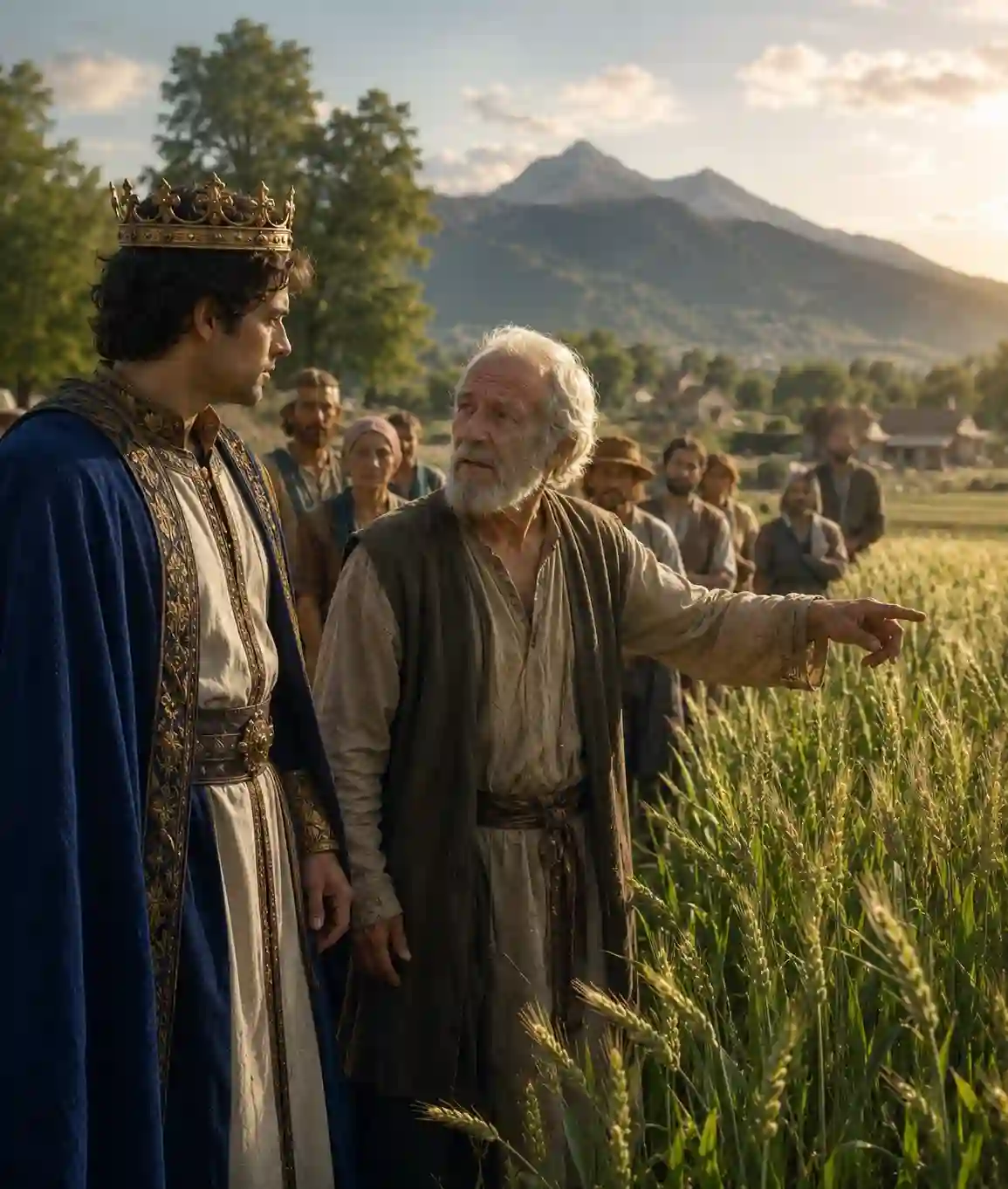
Long ago, in a peaceful kingdom surrounded by mountains and fertile land, a young king ruled with confidence and ambition.
He believed his country should become stronger, faster, and more efficient.
The people respected him at first because he worked hard and introduced many improvements.
New roads were built.
Trade increased.
Farming expanded.
The kingdom seemed to be moving toward a brighter future.
But the king had one belief that slowly changed everything.
He believed older people no longer contributed enough to society.
In his mind, once someone passed sixty years of age, their useful years were behind them.
He thought the future belonged only to the young.
One day during a royal meeting, the king asked his advisors:
“Tell me honestly what value do elderly people still bring to this kingdom?”
The advisors exchanged nervous looks.
Finally, one spoke.
“They cannot work the way younger people can.”
Another added:
“They depend on others more than before.”
The king listened and made a decision.
Without speaking to the people, without considering different opinions, he created a new law.
Anyone older than sixty would no longer remain in the kingdom.
The announcement spread quickly.
Families were shocked.
Parents cried.
Children held tightly to grandparents.
People obeyed because they were afraid.
But something changed after that.
The country became quieter.
There were fewer stories.
Less guidance and less patience.
People still worked but something invisible had disappeared.
In a small village lived a young farmer named Daniel.
Daniel’s father was one of the elderly people affected by the king’s order.
His father no longer worked long days in the fields.
His steps were slower and His hands shook slightly.
But his judgment and wisdom remained sharp.
People in the village often said that the wisdom of older generations could solve problems that books and quick decisions sometimes could not.
People had always respected him because he noticed details which others ignored.
When difficult situations appeared, he usually had practical advice.
Daniel loved his father deeply.
He could not imagine abandoning him.
So before officials arrived, Daniel prepared a hidden room beneath his home.
It was small but safe.
He stored blankets, water, and food.
When the soldiers searched the village, Daniel hide his father underground room.
After they left, Daniel quietly continued caring for him.
Life became difficult.
Daniel worked during the day.
At night, he visited his father.
Sometimes they talked.
Sometimes they simply sat together.
During those moments, Daniel realized something.
Age had slowed down his father’s body.
It had not reduced his understanding.
Years passed.
Then the kingdom faced disaster.
The rain stopped.
Fields dried.
Harvests became smaller.
Soon there was not enough food.
The kingdom entered a severe famine.
People became worried.
Markets emptied.
Families rationed meals.
The king gathered experts.
Meetings were held.
Ideas were tested.
Nothing worked.
Everyone searched for solutions.
But there was a problem nobody noticed.
Without realizing it, the kingdom had removed something valuable—the wisdom of older generations that had guided communities through difficult times before.
Many of the people who once understood weather cycles, land patterns, and old farming methods were gone.
Daniel’s fields also failed.
One evening, exhausted and worried, he visited his father.
He explained everything.
The empty land.
The hunger and the fear spreading through the village.
His father listened quietly.
Then he asked:
“Is the old road near the fields still there?”
Daniel thought.
“Yes. Nobody uses it anymore.”
His father nodded.
“Take your plow tomorrow.”
Daniel waited.
His father continued.
“Plow that old road deeply and prepare the soil.”
Daniel looked confused.
“That road is not a farmland.”
His father smiled.
“Not every answer looks obvious.”
The next day Daniel followed the advice.
People watched.
Some laughed.
Others whispered that desperation had affected him.
Still, Daniel continued.
He prepared the land carefully.
Days later, rain finally came.
Then something unexpected happened.
Green shoots appeared.
Then more.
Soon healthy wheat began growing where the old road had been.
People gathered in amazement.
No one understood.
News spread across villages and eventually reached the king.
Daniel was called to the palace.
The king asked:
“How did you discover this?”
Daniel hesitated.
Then he told the truth.
“It wasn not my idea.”
The king frowned.
“Then whose was it?”
Daniel answered:
“My father’s.”
The room became silent.
The king stared at him.
“But elderly people no longer remain in this kingdom.”
Daniel lowered his eyes.
“I hid him.”
The king expected anger.
Instead, curiosity took over.
The old man was invited to the palace.
When he arrived, he looked ordinary.
Simple clothes.
Slow steps.
Quiet presence.
The king asked:
“How did you know wheat would grow there?”
The old man smiled.
“I did not know.”
The king looked surprised.
The old man continued.
“I observed.”
He explained:
“For years people carried harvested crops along that road. Seeds naturally fall. Rain and soil cover them over time. I believed some life remained beneath the surface.”
The court became silent.
Then the old man added:
“Experience does not guarantee perfect answers. It simply helps people notice things others may miss.”
The king looked around.
For the first time, he realized something important.
His kingdom had not removed weakness.
It had removed memory.
It had removed lessons learned through years of living.
That day, the king canceled the law.
Families reunited.
Older citizens returned.
The king created places where experienced people could teach farming, practical skills, and life lessons.
Slowly, the kingdom recovered.
Years later, people remembered the king not for his mistake
but because he was willing to change.
And they remembered the old man because he proved something timeless:
Wisdom should never be measured by age alone
but age should never be ignored either.
What This Story Teaches Us
1. Experience Still Matters
New ideas are valuable, but experience helps people avoid repeating old mistakes.
2. Every Generation Has Something To Offer
Progress happens faster when younger and older generations learn from each other.
3. Good Leaders Listen
Strong leadership is not knowing everything—it is being willing to learn.
4. Respect Creates Strong Communities
People feel stronger when every generation is valued.
Question for readers:
Do you think modern society still respects older generations enough—or are we becoming too focused on speed and forgetting the value of experience?
Related Posts
- 7 Young Stars You will Be Seeing Everywhere in 2026

- Pick a Chair: This Personality Test Might Reveal More About You



Hammad Ali
Co-Owner & Author
Hammad Ali is a co-owner and author at MidnightReads, contributing thoughtful and engaging articles across human-interest, life, history, relationships, and entertainment topics.
They help develop and create original, useful content designed to inform, entertain, and give readers something meaningful to take away.