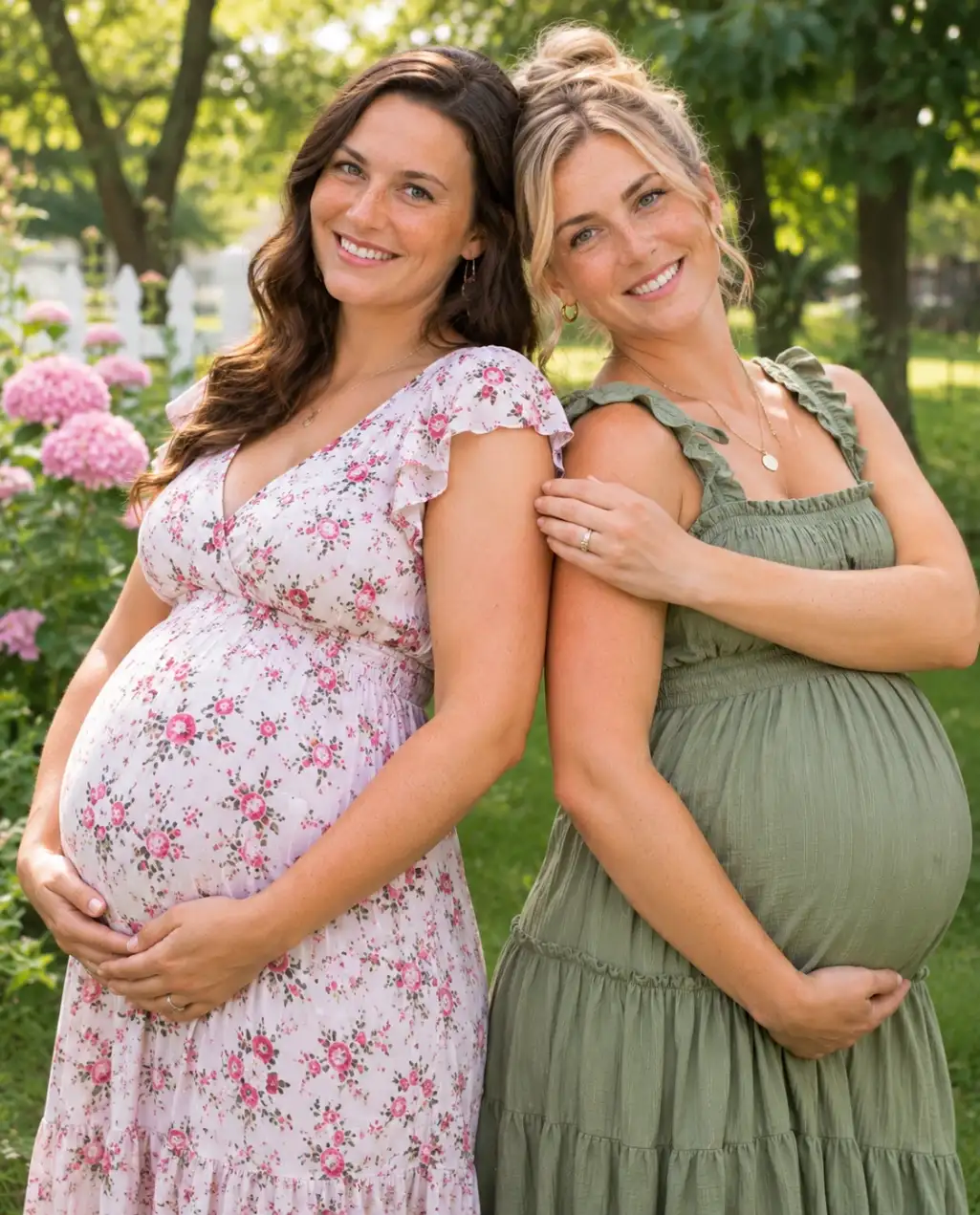
My Best Friend and I Chose the Same Sperm Donor for Our Babies later Then the Doctor Asked If We Were Secretly Related
My closest friend and I chose to conceive using the Same Sperm Donor so our babies would be biologically related. But when the physician examined our genetic screening results, his expression turned to fear.
“Oh my God… Do you realize what might happen to these children?”
Then an astonishing secret suddenly emerged…
My name is Sarah. I’m thirty-two years old, and I never expected the happiest chapter of my life to lead to a medical appointment that would leave me terrified for my unborn child.
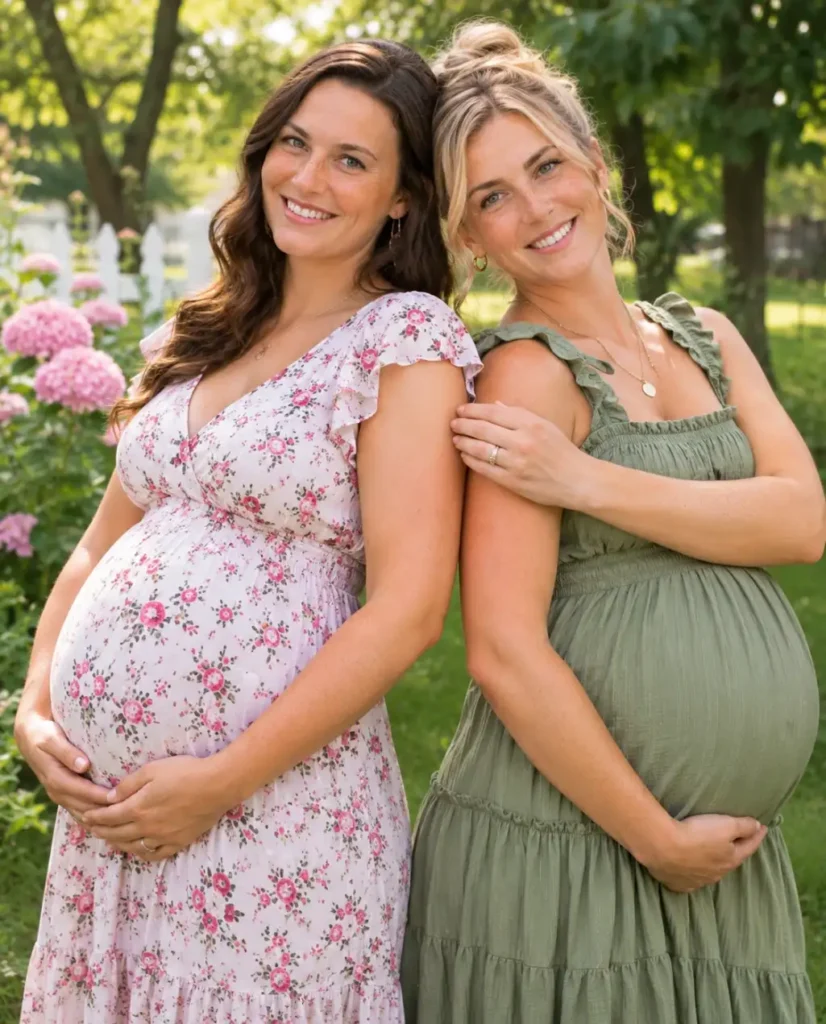
My best friend, Emily, is thirty-one.
We’ve been inseparable for twenty-five years.
We grew up in neighboring houses, attended the same schools, shared countless childhood adventures, and supported each other through our first relationships and heartbreaks.
Our mothers frequently joked that we behaved more like sisters than best friends.
And for as long as I could remember, Emily and I had shared one particular dream.
We wanted to become mothers and watch our children grow up together.
Unfortunately, life didn’t unfold the way we’d imagined.
My marriage had ended five years earlier, leaving me heartbroken and uncertain about my future.
Emily had never married, despite several serious relationships.
By the time we reached our thirties, we’d both grown tired of waiting for the right partners to start families.
Then, one evening, Emily suggested something completely unexpected.
“Sarah, what if our children weren’t simply childhood friends?”
I smiled.
“What do you mean?”
She leaned forward.
“What if they actually shared the same biological father? They could be brother and sister, or maybe two sisters.”
At first, I thought she was joking.
But Emily had already considered the possibilities.
We could both become mothers through fertility treatment using sperm from the same donor.
Our children would share a biological connection, and we could raise them together, just as we’d always hoped.
The idea was unconventional, but it gradually began to make sense.
After months of consultations, medical examinations, and careful discussions, we selected a donor named Daniel.
According to the information provided by the clinic, he was thirty-five, healthy, and had passed the required medical screening.
We completed the procedures and hoped for the best.
Then something wonderful happened.
I became pregnant.
Three weeks later, Emily discovered she was expecting too.
We were overwhelmed with happiness.
We bought tiny baby clothes, compared ultrasound pictures, discussed names, and imagined our children celebrating birthdays and playing together.
For the first time in years, everything seemed to be falling into place.
But during the fifth month of our pregnancies, our excitement turned into fear.
One morning, the genetics clinic called unexpectedly.
“Sarah, Dr. Harrison needs to speak with you and Emily as soon as possible,” the nurse explained.
Something in her voice immediately worried me.
“Is there a problem with our babies?”
She hesitated.
“Please come to the clinic. The doctor will explain everything.”
I called Emily immediately.
Neither of us said much during the drive.
When we entered Dr. Harrison’s office, he was studying two genetic reports displayed on his computer monitors.
He didn’t greet us with his usual reassuring smile.
Instead, he examined the results again before slowly closing the office door.
“Before we discuss these findings, I need to confirm something,” he said.
Emily gripped my hand.
“What is it, Doctor?”
“Are you absolutely certain that the same sperm donor was used for both pregnancies?”
“Yes,” we answered together.
He looked at the screens once more.
His expression grew increasingly serious.
“The genetic similarities between your babies are not entirely what we expected.”
I felt my heartbeat quicken.
“But they share the same biological father,” Emily replied. “Wouldn’t that explain the similarities?”
“It would explain some of them,” he said carefully. “However, these preliminary findings suggest there may be another biological connection we haven’t accounted for.”
I instinctively placed my hands over my stomach.
“Doctor, please tell us. Are our babies sick?”
He looked at me, then at Emily.
“We haven’t established that either child has a medical condition. Further testing is necessary.”
He paused before continuing.
“I’ve worked in this field for twenty-seven years, and I’ve rarely encountered a situation like this. If these results are confirmed, there is something extremely important you both need to understand about your children’s biological relationships and possible medical risks.”
Emily’s hand tightened around mine.
“Then tell us,” she whispered.
Dr. Harrison took a slow breath.
“First, I need to ask you both a question about your families.”
I stared at him.
“What question?”
He looked directly into my eyes.
“Sarah, Emily… are you absolutely certain that the two of you aren’t biologically related?”
For several seconds, neither of us could speak.
Because the possibility he had just raised threatened to change everything we believed about our families.
And we had no idea that the most shocking discovery was still to come.
The full story continues in Part 2.
Part 2:
For several seconds, Emily and I simply stared at Dr. Harrison.
I wanted to laugh because his question seemed impossible. Emily and I had known each other since we were little girls. We’d grown up in neighboring houses, celebrated every birthday together, and spent countless holidays with each other’s families.
How could we possibly be biologically related without knowing?
“Doctor, that’s impossible,” Emily finally said. “Our parents aren’t related. We’ve known each other for twenty-five years.”
Dr. Harrison didn’t argue.
Instead, he turned his computer monitor toward us.
“I understand why you find this difficult to believe. But the preliminary genetic analysis has identified several unusual similarities. They could indicate a closer biological relationship than the one you currently believe exists.”
My mouth went dry.
“Are you saying Emily and I are sisters?”
“Not necessarily,” he replied. “We need additional testing before making that conclusion. But there is another issue. Both pregnancies were conceived using sperm from the same donor, and the genetic screening has raised questions about the donor’s family medical history.”
Emily began crying.
“Please, Doctor. Are our babies in danger?”
He immediately softened his voice.
“I don’t want either of you to panic. Sharing a donor doesn’t automatically mean your children will have a genetic disorder. However, if you are also biologically related, certain inherited conditions could become more likely, depending on the exact relationship and genetic variants involved.”
He explained that children conceived using the same sperm donor would generally be paternal half-siblings. If their mothers were also biologically related, the children could share additional genetic ancestry.
That possibility made my stomach turn.
Then he opened another document.
“There’s something else. The donor’s updated medical records contain information that wasn’t included in the original summary we received.”
“What information?” I asked.
Dr. Harrison hesitated.
“The donor reported a hereditary condition in his biological family several years after his original screening. The clinic is investigating whether that information affects the risk assessment for pregnancies involving his donations.”
Emily covered her mouth.
“Why weren’t we told?”
“That’s precisely what we’re trying to establish.”
I felt tears gathering in my eyes.
We had spent months researching donors, asking questions, and trusting the clinic to provide accurate information.
How could something so important have been missed?
Dr. Harrison then asked whether either of our mothers was available to speak with us.
I immediately called mine.
She answered cheerfully, but her voice changed when I explained that we needed to discuss something important.
Twenty minutes later, both our mothers arrived.
Emily’s mother, Margaret, looked confused.
My mother, Linda, appeared frightened.
After everyone had settled into the consultation room, Dr. Harrison explained that he wanted to establish whether there was any possibility of a biological connection between our families.
He asked both women about their family histories.
At first, their answers seemed ordinary.
Then he asked my mother a question that made her face turn completely white.
“Mrs. Parker, did you ever give birth to another child before Sarah?”
My mother looked down.
Emily’s mother suddenly began trembling.
“Linda,” she whispered. “You never told her?”
I turned toward my mother.
“Told me what?”
My mother began crying.
For several moments, she couldn’t speak.
Finally, she reached into her handbag and removed an old photograph.
It showed two newborn babies lying beside each other in a hospital nursery.
One had a small bracelet around her wrist.
The other wore an identical one.
My mother placed the photograph on the table.
“Sarah,” she whispered, “you and Emily weren’t supposed to find out this way.”
I felt as though the room had started spinning.
“What does this photograph mean?”
Emily’s mother reached for her hand.
“Twenty-five years ago, there was a terrible mistake at the hospital.”
My mother continued.
“When Emily was born, her biological mother experienced serious complications. She needed emergency treatment, and the hospital temporarily placed the babies in different nursery sections.”
Emily stared at her.
“Different babies?”
My mother nodded.
“After the emergency, the hospital discovered that two newborn girls had been mistakenly identified. By the time the error was recognized, the families had already begun taking the children home.”
I couldn’t breathe.
“Are you saying…”
My mother looked directly at me.
“Emily and I were originally supposed to be raised by different families. But the hospital never properly explained what had happened. Your biological records were corrected privately, and both families were told that everything had been resolved.”
Emily began shaking her head.
“No. That doesn’t make sense. Why would nobody tell us?”
“Because everyone involved believed the matter had been settled,” Margaret replied tearfully. “And over the years, we became frightened of destroying the families we had built.”
Dr. Harrison quietly interrupted.
“There’s one more thing we need to establish. If the hospital records are accurate, you two may share a biological mother.”
The room fell silent.
I looked at Emily.
My best friend.
The woman who had stood beside me through every heartbreak, every disappointment, and every important moment of my life.
Could she really be my biological sister?
Before either of us could respond, Dr. Harrison received a message from the genetics laboratory.
He read it twice.
Then he looked up.
“The results from the additional family comparison have arrived.”
Emily grabbed my hand.
“What do they say?”
Dr. Harrison turned the screen toward us.
“The preliminary analysis strongly supports a close biological relationship between you. Your mothers’ accounts also explain why the original family histories were inconsistent.”
My mother began sobbing.
But Dr. Harrison wasn’t finished.
He pointed to another section of the report.
“However, we still have to investigate the donor’s updated medical history. We cannot assume the children have inherited a condition simply because a risk factor exists. We need to identify the specific genetic variant and determine whether either pregnancy is affected.”
Emily looked at him desperately.
“Can our babies still be healthy?”
He nodded gently.
“Absolutely. There is every reason to hope for that. But we need to act carefully and arrange the appropriate genetic counseling and testing.”
I looked at the photograph of the two newborn girls.
For twenty-five years, Emily and I had believed our friendship was an extraordinary coincidence.
Now we were discovering that our lives had been connected long before either of us could remember.
And the children we had deliberately planned to raise as biological relatives might have an even closer family connection than we had ever imagined.
I squeezed Emily’s hand.
“Whatever happens, we’re going through this together.”
She nodded through her tears.
Then my mother said something that made both of us turn toward her.
“There’s something else about Daniel, the donor you selected. I recognize that name.”
Dr. Harrison looked up immediately.
“How do you know him?”
My mother slowly opened her handbag again.
This time, she removed an old letter with a hospital stamp dated twenty-six years earlier.
At the bottom was a signature.
Daniel Harrison.
My mother stared at the paper.
“Because he was the young doctor who helped us after the hospital mistake.”
Dr. Harrison went completely still.
He looked at the signature, then at the donor identification number on his computer.
“That’s impossible,” he whispered.
And for the first time that morning, I realized that the mystery surrounding our babies might be connected to something much bigger than a mistake made in a hospital nursery.
To be continued in Part 3…
Part 3:
Dr. Harrison stared at the old letter as though he had just seen a ghost.
For nearly a minute, nobody spoke.
My mother held the document with trembling fingers, while Emily sat beside me, silently wiping tears from her cheeks.
“Doctor,” I finally whispered, “what is happening? Why does that name frighten you?”
He looked at the letter again.
“Because the name on this document belongs to someone I know. But I need to verify something before I tell you what I suspect.”
He picked up his phone and stepped into the hallway.
Emily leaned toward me.
“Sarah, do you think our mothers are hiding something else?”
I didn’t answer.
I was beginning to understand that the story of our families was far more complicated than either of us had imagined.
A few minutes later, Dr. Harrison returned.
He carried a printed document.
“I’ve spoken with the clinic’s records department,” he explained. “The donor identification number in your file belongs to a man whose medical history has recently been flagged for additional review.”
“Daniel?” Emily asked.
“Yes. But there’s a problem. The name Daniel Harrison on your mother’s letter is not enough to establish that he is the same person as your sperm donor. We need verified identity records.”
My mother suddenly covered her face.
“I should have told you both years ago.”
I turned toward her.
“Told us what?”
She looked at Margaret.
Margaret nodded slowly.
Then my mother began explaining.
Twenty-six years earlier, when the hospital discovered that two newborn girls had been incorrectly identified, both families had been devastated.
The hospital launched an internal investigation.
A young medical resident named Daniel Harrison had helped review the nursery records and arrange additional testing.
He was not responsible for the mistake, but he had been one of the people who discovered the problem.
Eventually, the hospital corrected the children’s records.
However, the families were advised to seek legal guidance and undergo further testing to establish their biological relationships.
My mother and Margaret had made a decision that neither of us could understand.
They agreed to raise the girls who had come home with them, believing that changing everything after so many months would cause unbearable emotional damage.
But they never realized how many unanswered questions would remain.
“Why didn’t you tell us when we were older?” I asked.
My mother started crying.
“Because every year it became harder. We loved you both. We were afraid that knowing the truth would make you question everything.”
Emily stood up.
“You let us believe we were unrelated for twenty-five years.”
Margaret reached for her hand.
“I know. And I’m sorry.”
Dr. Harrison gently interrupted.
“There’s something important I want both of you to understand. Your family history needs to be established accurately, but that doesn’t mean your pregnancies are automatically in danger.”
He explained that if Emily and I were biological sisters, our babies would share both a biological father and a biological maternal family connection.
That would make them more closely related than ordinary paternal half-siblings.
The genetic counseling team would need to assess the implications carefully.
Then he showed us the donor’s updated medical information.
A hereditary condition had been reported in one branch of the donor’s biological family.
However, the exact risk to our babies depended on the specific variant, how it was inherited, and whether either of us carried a relevant genetic change.
“Can we find out whether our babies have inherited it?” I asked.
“Yes,” he replied. “We can arrange appropriate testing and discuss the available prenatal diagnostic options. We will not make assumptions based on preliminary screening.”
Emily immediately agreed to further testing.
So did I.
Before we left, Dr. Harrison promised that the clinic would investigate the donor’s medical history and the connection to the old hospital records.
Outside the clinic, Emily and I sat in my car without speaking.
Finally, she turned toward me.
“Sarah, whatever the tests show, I want you to know something.”
“What?”
“You’re still my sister in every way that matters. Whether we share DNA or not.”
I reached over and hugged her.
For the first time that day, I cried without trying to hold back.
Three days later, the clinic called.
The formal family relationship testing was ready, and the genetic counselor had also reviewed the donor’s updated medical report.
But the counselor wanted both of us present before revealing the findings.
When we arrived, she placed two envelopes on the table.
“These results answer some of your questions,” she said.
I opened mine.
My hands began shaking.
The report confirmed that Emily and I were biological half-sisters.
But the second document contained something that neither of us had expected.
The donor’s family history had been incorrectly associated with an older medical record, and the clinic was now investigating a possible identification error involving the donor’s original screening.
The counselor looked at us seriously.
“Before we discuss the implications, I want you to understand that neither pregnancy has been diagnosed with a genetic disorder. We need additional testing to establish whether either baby carries the relevant inherited variant.”
Emily held my hand.
Then she asked the question that had been haunting us since the beginning.
“Will our children be okay?”
The counselor looked at both of us.
“We have reasons to be hopeful. But we won’t give you false reassurance until we have the necessary results.”
I looked down at my growing stomach.
For months, I had imagined two children growing up together, celebrating birthdays, sharing secrets, and becoming lifelong friends.
Now I understood that their family connection was even deeper than we had planned.
But our journey wasn’t over.
Because the clinic’s investigation had uncovered another unanswered question: How had a donor with a decades-old connection to our families been selected without anyone recognizing the connection?
And somewhere in the records was the answer.
To be continued in Part 4…
Part 4:
The following Monday, Emily and I returned to the genetics clinic.
Neither of us had slept properly since receiving the latest results. We had discovered that we were biological half-sisters, but the mystery surrounding our sperm donor remained unresolved.
More importantly, we still didn’t know whether our babies had inherited the hereditary condition mentioned in his medical records.
I kept reminding myself that a genetic risk wasn’t the same as a diagnosis.
But waiting was becoming unbearable.
When we entered the consultation room, Dr. Harrison was already there. Beside him sat Rebecca, the clinic’s compliance officer, with several documents arranged neatly on the table.
“Thank you for coming,” Rebecca said. “We’ve completed the first stage of our investigation.”
Emily immediately leaned forward.
“Did you find out why Daniel’s medical records were connected to our families?”
Rebecca nodded.
“Yes. And there’s something you both need to understand about the original hospital incident.”
She opened a folder.
Twenty-six years earlier, the hospital had experienced a serious identification error involving two newborn girls. During an emergency transfer between nursery units, two identification records had been incorrectly associated with the babies.
The mistake was eventually discovered through a review of blood-group information and hospital documentation.
However, the original investigation had not included comprehensive modern DNA testing.
That meant some details about the children’s biological relationships had never been fully established.
“Your mothers were given incomplete information,” Rebecca explained. “And the hospital’s historical records were not properly reconciled with later medical databases.”
My mother looked devastated.
“So all those years, we were living with information that wasn’t complete?”
Rebecca nodded sympathetically.
“Unfortunately, yes.”
Emily turned toward her.
“But what does Daniel have to do with any of this?”
Rebecca took a breath.
“Daniel was a medical resident at the hospital during that period. He assisted with reviewing the original records. Years later, he enrolled as a sperm donor through a separate fertility program.”
I felt a chill.
“Did he know who we were?”
“We haven’t found evidence that he knew either of you personally when you selected his donation. His donor identity was protected under the clinic’s procedures. We are still reviewing whether any historical records should have triggered an additional screening alert.”
Dr. Harrison then placed another report on the table.
“This is the part that matters most for your children’s health.”
He explained that the donor’s family had recently reported a hereditary condition associated with a specific genetic variant.
The clinic had therefore initiated a review of the donor’s previous screening results.
The original donor profile had not included that updated family information.
“Does this mean our babies have the condition?” Emily asked.
“No,” Dr. Harrison replied firmly. “It means we need to establish whether the donor carries the relevant variant and whether either of you has inherited a matching variant. A family history alone cannot tell us that.”
He recommended that both of us undergo targeted genetic testing, followed by additional testing for the babies if medically appropriate.
I immediately agreed.
Emily did too.
For the next several days, our lives revolved around appointments, blood samples, and phone calls.
We tried to keep our families calm, but the uncertainty was exhausting.
Then, on Thursday afternoon, Rebecca called.
“The donor’s updated genetic report has been verified,” she said. “We would like you both to meet with the genetic counselor tomorrow.”
My heart began racing.
“Have you found something?”
“We have an important clarification. The result does not establish that either baby is affected, but it changes the recommendations for your testing.”
I barely slept that night.
The next morning, Emily arrived at my house before sunrise.
We drove to the clinic together.
Dr. Harrison greeted us and introduced a genetic counselor named Dr. Lewis.
She began by explaining the donor’s updated results.
The donor carried a genetic variant associated with an inherited condition. The original screening had not identified it because the relevant family history had not been available at the time.
However, the counselor emphasized that the risk to each child depended on the exact inheritance pattern.
She then reviewed our own screening results.
Emily carried a particular recessive variant.
I did not carry that same variant.
The donor’s results showed that he carried a different variant associated with the condition under investigation.
The counselor explained that additional testing was necessary to determine whether the two variants could combine in a way that affected either child.
Emily looked frightened.
“So my baby could be at risk?”
“There may be a risk worth investigating,” Dr. Lewis answered. “But we cannot diagnose your baby from these screening results. We need the appropriate confirmatory testing.”
I squeezed Emily’s hand.
“We’ll do whatever is necessary.”
Dr. Lewis nodded.
“That’s exactly the right approach.”
Then she brought up the second subject.
Our biological relationship.
The formal testing had confirmed that Emily and I shared one biological parent.
But the counselor wanted to explain something that had been overlooked in our original fertility consultations.
Because we were biological half-sisters, our children would share more genetic material than ordinary paternal half-siblings.
That additional relationship mattered when evaluating inherited conditions.
It did not mean either baby would automatically have a disorder, but it made accurate family-history assessment particularly important.
Emily stared at the report.
“All we wanted was for our children to grow up together.”
“I know,” Dr. Lewis replied gently. “And they still can. The important thing now is making sure both pregnancies receive appropriate medical care.”
For the first time, I felt that someone was giving us answers without frightening us unnecessarily.
But there was still one mystery.
Daniel.
That afternoon, Rebecca informed us that the clinic had contacted him through its authorized donor communication process.
He had agreed to review the historical records and provide additional medical information.
A week later, we received a message.
Daniel wanted to speak with us through the clinic.
We agreed.
The video call began at three in the afternoon.
A man in his early sixties appeared on the screen.
His hair was mostly gray, and his expression was serious.
“Sarah? Emily?” he asked.
We nodded.
He looked at us for several seconds.
“I’ve been told about the investigation. I want you both to know that I never intended to cause harm.”
Emily’s voice trembled.
“Did you know our families?”
Daniel lowered his eyes.
“I remember the hospital incident. I was a young resident, and it was one of the most difficult situations I encountered during my training.”
“Did you know we were the children involved?”
“No. I didn’t know your identities when I became a donor. I was never given access to your personal information.”
He paused.
“However, I should tell you something about my family medical history.”
My stomach tightened.
Daniel explained that several years after his original donor screening, his sister had been diagnosed with an inherited condition.
He had informed the clinic when he learned about it.
Unfortunately, the information had not been correctly connected to every previous donor profile.
He was deeply upset when he learned that two pregnancies might have been affected by the incomplete records.
“I wish someone had caught this sooner,” he said.
Emily began crying.
“Do you understand how frightened we’ve been?”
“I do,” he answered quietly. “And I’m sorry.”
For a moment, nobody spoke.
Then Daniel asked something unexpected.
“Have either of you received the final results of your prenatal testing?”
We shook our heads.
“Then please don’t assume the worst,” he said. “My family history doesn’t determine your children’s futures.”
His words stayed with me long after the call ended.
Over the next two weeks, we completed the recommended medical investigations.
Finally, the clinic called with the results.
Emily and I arrived together.
Dr. Harrison was waiting.
He smiled as we entered.
“I have some reassuring news.”
Emily grabbed my arm.
“Please tell us.”
He opened the reports.
“The testing completed so far has not identified the suspected condition in either baby. The genetic counselor has reviewed the results and will explain what they mean, including any remaining limitations.”
Emily burst into tears.
This time, they were tears of relief.
I hugged her tightly.
But Dr. Harrison wasn’t finished.
He handed us one final document.
It was a formal statement from the clinic acknowledging that the donor’s updated family history had not been properly incorporated into the original screening records.
The clinic was reviewing its procedures and contacting other potentially affected families.
Emily read the statement twice.
Then she looked at me.
“We came here thinking something terrible had happened to our babies.”
I nodded.
“And instead, we discovered the truth about our families.”
That evening, we sat together in my living room, looking at the ultrasound pictures.
Two tiny babies.
Two lives that had already brought us closer than ever.
Emily placed her hand over her stomach.
“Whatever happens, I want them to know the truth when they’re old enough.”
I smiled.
“Me too. No more family secrets.”
And for the first time since that frightening phone call, I allowed myself to imagine the future again.
Two children growing up together.
Two mothers who had been best friends for twenty-five years.
And a family finally brave enough to face its past.
THE END.
Editor’s Note: This story is a work of fiction created for entertainment and storytelling purposes. The characters, events, and situations are fictional. Any resemblance to actual people or events is purely coincidental. The story explores friendship, family relationships, medical uncertainty, and the importance of honesty and understanding.
Related Stories
- My Husband Said I Lost Both Arms in a Car Accident. Three Years Later, a Doctor Revealed the Truth He Had Hidden From Me

- A Mafia Boss Arrived With 52 Pages of Divorce Papers, Convinced His Wife Was Hiding Another Man, But When He Opened Her Bedroom Door, He Discovered the Painful Secret She Had Kept Hidden for Six Months

- My Best Friend and I Chose the Same Sperm Donor for Our Babies later Then the Doctor Asked If We Were Secretly Related

- I Came Home Early to Surprise My Wife and Newborn Son, But Found Them Fighting for Their Lives While My Mother and Sister Slept Peacefully—Then the Doctor Called the Police

- He Abandoned His Partner and Their Five Newborn Babies in 1995—30 Years Later, an Unexpected Letter Revealed a Truth He Never Bothered to Discover

- A Martial Arts Instructor Humiliated My Son in Front of Everyone, Then He Challenged Me to Fight

About the Author
Hassan is the founder and editor of MidnightReads, a publication featuring thoughtful stories, human-interest articles, history, relationships, and entertaining reads.
He is involved in researching, writing, and editing content for the site, with a focus on creating original, clear, and useful articles that give readers something meaningful to take away.
Hassan believes good content should inform, entertain, and encourage curiosity.
— Hassan, Founder & Editor, MidnightReads