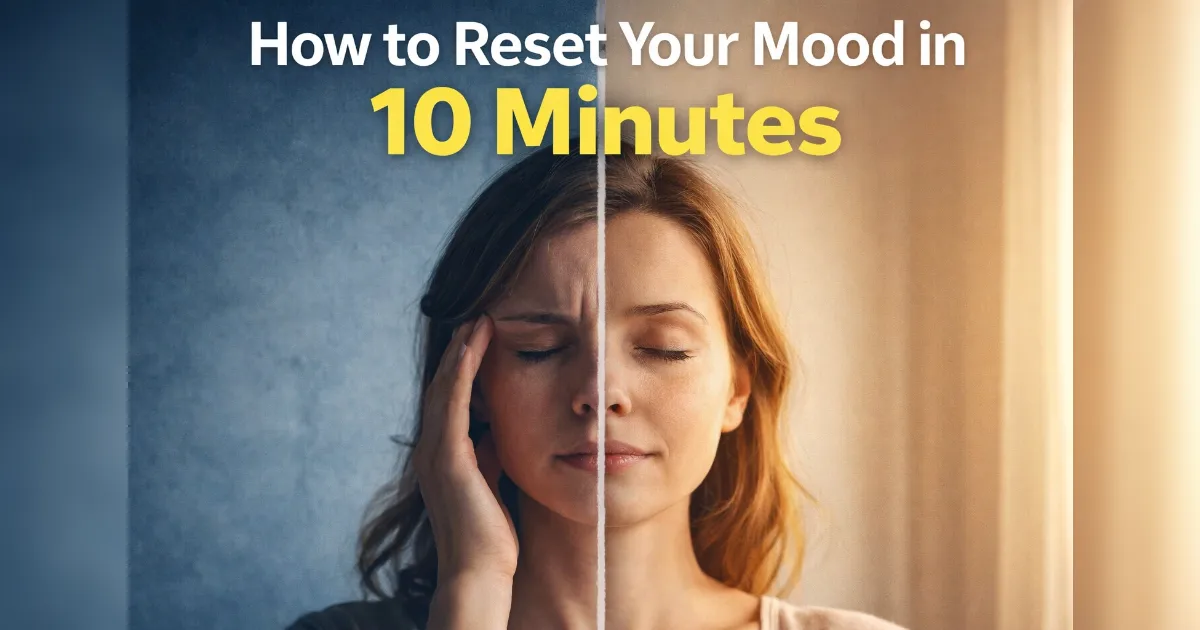
Bad moods happen quietly.
You wake up feeling fine, and then something small changes everything. A message, a comment, a delay, a mistake. Suddenly your energy feels low. You feel irritated, heavy, or distracted.
The strange thing is that most bad moods don’t come from big problems. They come from small emotional shifts that slowly build up.
The good news?
You don’t always need hours to feel better. Sometimes, 10 minutes is enough to reset your mood.
Why Moods Change So Quickly
Mood is not permanent. It responds to thoughts, environment, stress, and even body posture.
If you sit in one place too long, your body becomes stiff. If you think about the same negative thought repeatedly, your mood follows it. If you scroll through overwhelming content, your energy drops.
Moods are flexible. That means they can shift both ways.
A reset is not about ignoring feelings. It’s about gently guiding them.
Step 1: Change Your Physical Position
The fastest way to influence your mood is to move your body.
Stand up. Stretch your arms. Roll your shoulders. Walk to another room. Open a window.
Even small movement sends a message to your brain: something is changing.
When the body shifts, the mind follows.
You may also want to know Why We Feel More Honest With Ourselves at Night
A Quick Breathing Reset

Take five slow breaths.
Inhale through your nose. Hold for a few seconds. Exhale slowly.
You don’t need special techniques. Just breathe deeper than usual.
Slow breathing lowers stress signals and gives your nervous system space to calm down.
Step 2: Interrupt the Thought Loop
Often, a bad mood is powered by repeated thoughts.
You replay something someone said. You imagine worst-case outcomes. You criticize yourself.
Instead of fighting the thought, pause and say:
“Is this thought helping me right now?”
That question creates distance. It reduces the emotional charge.
You don’t need to solve the thought. Just interrupt it.
Step 3: Use a 10-Minute Rule
Tell yourself:
“For the next 10 minutes, I will focus on one simple thing.”
It could be:
✓ Washing dishes slowly
✓ Organizing your desk
✓ Making tea
✓ Cleaning one small area
Small focused action brings the mind back to the present.
A Simple Tea Moment

Holding something warm can feel grounding.
It signals comfort and safety.
Sometimes, mood improves not because problems disappear, but because attention shifts gently.
Do you know Why We Feel More Connected to Our Thoughts at Night
Step 4: Change Your Environment
Your surroundings influence your feelings more than you realize.
If you stay in the same position where the mood dropped, it may stay longer.
Try:
* Changing rooms
* Going outside briefly
* Sitting near natural light
* Playing soft background music
Environment resets emotional tone.
Step 5: Lower the Pressure
Sometimes mood worsens because we expect ourselves to “snap out of it” quickly.
Instead of forcing happiness, allow neutrality.
You don’t have to feel amazing. You just need to feel slightly better.
Small improvement is enough.
Step 6: Speak to Yourself Kindly
Bad moods often come with harsh self-talk.
“I shouldn’t feel like this.”
“Why am I so sensitive?”
“This is stupid.”
Replace those thoughts with something softer:
“It’s okay to feel off today.”
“This will pass.”
“I’m allowed to reset.”
Kindness reduces emotional tension faster than criticism.
Step 7: Step Outside If Possible

Even five minutes outside can shift perspective.
Natural light regulates mood. Fresh air reduces mental heaviness. Physical movement releases built-up stress.
You don’t need a long walk. Just a short change of scenery.
Why 10 Minutes Actually Works
Ten minutes feels small enough to try.
If you tell yourself to fix your entire day, it feels overwhelming. But ten minutes feels manageable.
In that short window:
• Stress lowers
• Breathing slows
• Thoughts settle
• Attention resets
Often, that small reset changes the direction of the entire day.
Understanding That Mood Is Temporary
One important reminder: moods are not permanent states.
They rise and fall like weather. Sometimes clouds appear. That doesn’t mean the sky is broken.
The more you practice short resets, the more confident you become in handling emotional shifts.
When Reset Doesn’t Happen Immediately
Sometimes 10 minutes helps a little, not completely.
That’s normal.
The goal is not perfection. The goal is movement.
If the mood improves even slightly, that is progress.
Small shifts create momentum.
Make It a Habit, Not a Rescue Plan
You don’t have to wait for a bad mood to practice resets.
You can:
✓ Take breathing pauses daily
✓ Step outside regularly
✓ Change posture during work
✓ Create short screen-free moments
When these habits become normal, mood dips become easier to manage.
Final Thoughts
You cannot control every situation. But you can influence your response.
A bad mood does not define your day. It does not define you.
Ten minutes of awareness, movement, breathing, and gentleness can quietly change your emotional direction.
Next time your mood drops, don’t panic. Don’t overanalyze.
* Pause.
* Move.
* Breathe.
* Reset.
You might be surprised how quickly your inner balance returns.