
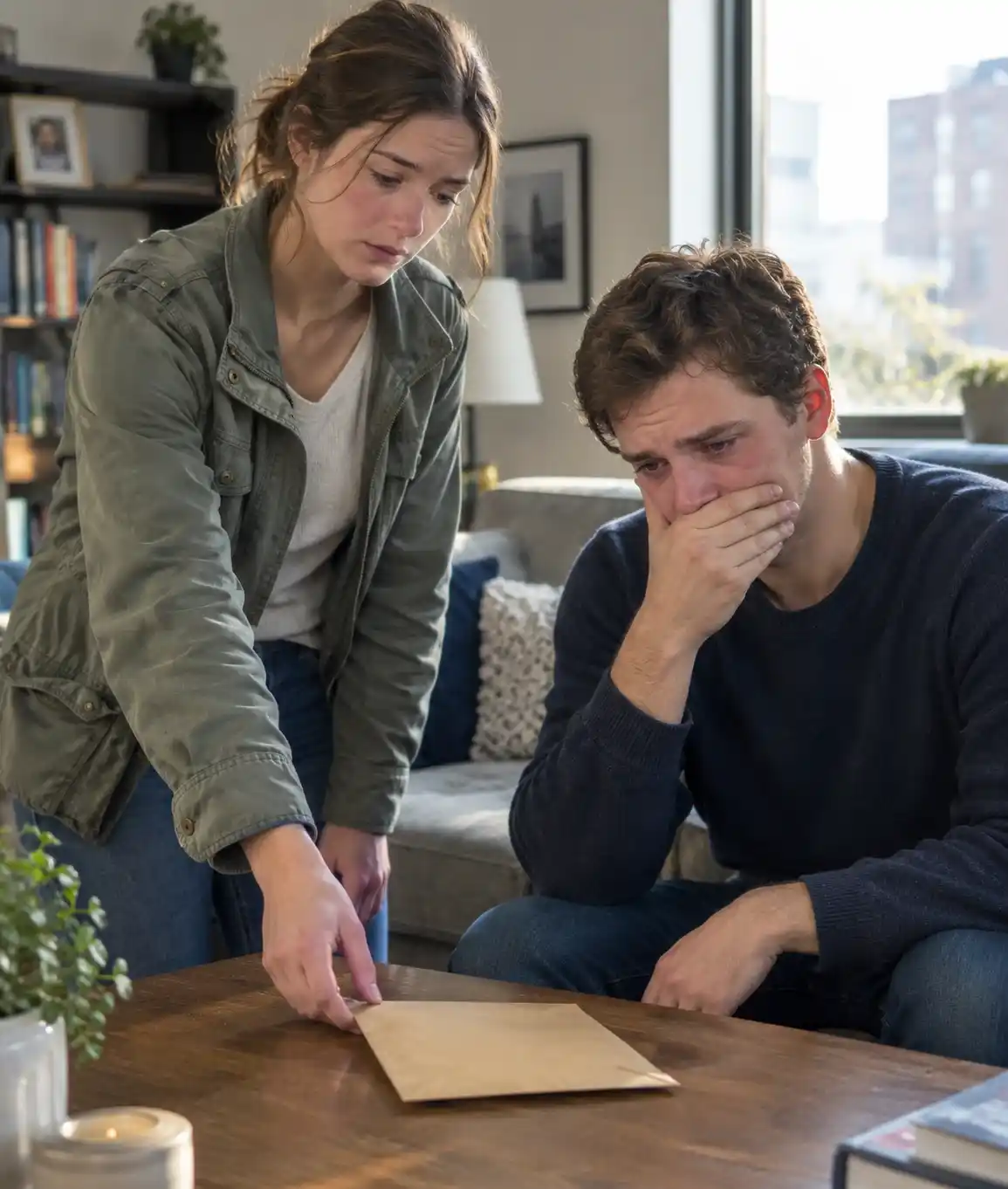
The woman I thought had abandoned me when I needed her most was standing in my living room, holding a worn brown envelope against her chest.
She looked exhausted. Her hair was messy, her clothes were wrinkled, and dark circles had formed beneath her eyes. Yet she wasn’t crying or asking me why I had frightened her with the news of a deadly illness.
She simply placed the envelope on the table and said, “I know you told me not to worry about money, but I couldn’t just sit around and watch you suffer.”
My hands began to shake.
Five days earlier, I had told this woman I was dying. I had also told her that the treatment would cost more than I could afford, even though I was a wealthy businessman who had never struggled to pay a bill in his life.
I had lied about everything.
And now, as I stared at the envelope, I was about to discover how badly I had misjudged the person who loved me most.
My name is Daniel, and until that week, I believed money could solve almost every problem in life. I had grown up in a comfortable home, attended good schools, and inherited enough advantages to build a successful business without worrying about my next meal or how I would pay my rent.
When my car needed repairs, I bought another one. When I wanted to travel, I booked a flight. If a business deal failed, I had enough savings to start again.
I wasn’t a terrible person, at least not in the way I understood myself. I donated to charities, helped friends when they needed it, and treated my employees fairly.
But there was one thing I had never learned to do properly.
Trust someone without wondering what they wanted from me.
Then I met Skyla.
She was twenty-four, still finishing college, and working part-time at a small café near campus. She drove an old silver car that made an embarrassing rattling sound whenever she accelerated too quickly. Her winter coat had a broken zipper, and she carried her textbooks in a backpack that had been repaired with black thread.
She was beautiful, but what attracted me most was how little she seemed impressed by the things that impressed everyone else.
On our second date, I took her to an expensive restaurant. She studied the menu for a long time before finally ordering the least expensive meal.
When I asked why, she smiled.
“Because I really want dessert, and I’m saving room for it.”
I laughed and ordered her favorite dessert, too.
Over the following months, I learned that Skyla planned her life down to the last dollar. She kept track of her rent, tuition, groceries, gas, and the money she needed for school supplies. Sometimes, she skipped eating out with friends because she couldn’t justify the expense.
Yet she never asked me to pay her bills.
When I offered to cover a semester of tuition, she shook her head.
“Daniel, I appreciate that you want to help, but I need to finish this degree knowing I earned it myself.”
“You know you wouldn’t owe me anything,” I told her.
“I know. But I want to stand on my own feet. If I ever need help, I’ll ask you.”
I should have admired her independence. Instead, I began to question it.
My friends didn’t help.
One evening, while we were sitting at a steakhouse, my friend Marcus leaned back in his chair and said, “You have to be careful with this relationship.”
“Why?”
“Look at your life compared with hers. You can give her anything she wants. A house, a car, a comfortable future. How do you know she wouldn’t be with you for those things?”
“She has never asked me for anything.”
Marcus shrugged. “Maybe she’s playing the long game.”
I dismissed his comment at the time, but the words stayed with me.
Then my parents began raising similar concerns.
My mother was particularly suspicious. She had spent years watching people approach our family whenever they needed something, and she believed money made it difficult to tell genuine affection from personal interest.
One afternoon, she invited me for lunch and asked about Skyla.
“Does she know how much your business is worth?” she asked.
“She knows I’m doing well.”
“And you believe she loves you for who you are?”
“I do.”
She set down her fork.
“Then why are you so defensive whenever I ask about her?”
I had no answer.
My father was less subtle.
“Before you make any serious commitment, find out what happens when you have nothing to offer her.”
I should have recognized how unfair that suggestion was. Instead, I started thinking of ways to test Skyla.
The idea came to me late one night while I was lying awake in bed. I would tell her I had a serious illness. I would say I needed expensive treatment and had no way to pay for it. If she truly loved me, she would stay. If she wanted my money, she would leave once she believed I had lost everything.
It sounded reasonable in my head.
That was how I knew I had already begun lying to myself.
The following evening, I invited Skyla to my apartment. She arrived carrying two coffees and a paper bag containing the sandwiches she had bought on her way over.
She immediately noticed that something was wrong.
“Daniel, what’s happened?”
I looked down at my hands.
“I went to the doctor last week. They found something serious.”
Her smile disappeared.
“What do you mean, serious?”
I told her I had a life-threatening illness. I described a frightening diagnosis and claimed that I needed treatment immediately. Then I told her the treatment would cost an enormous amount of money and that my parents had refused to help me.
Every word was a lie.
Skyla went pale.
“Are you sure the doctors know what they’re doing?” she asked. “Have you spoken to another specialist?”
“I can’t afford another opinion.”
“We’ll figure something out.”
She reached for my hand. Her fingers were cold.
“How much do you need?”
I named an amount so large that I knew she couldn’t possibly have it. It was more than she could save in years, especially while paying for college.
For a moment, she said nothing.
Then she asked me to write down the name of the hospital, the doctor, and the treatment.
“I’ll look into everything,” she promised. “There might be financial assistance or a payment plan. Please don’t give up.”
Over the next two days, Skyla called me repeatedly. She asked whether I had scheduled another appointment and whether the hospital had offered any financial assistance. She searched for charities, medical grants, and organizations that helped patients who couldn’t afford treatment.
I watched her worry and felt a strange mixture of guilt and satisfaction.
She seemed frightened enough to be telling the truth about her feelings. Still, I wanted more proof.
Then, on the third morning, my phone buzzed.
It was a message from Skyla.
“I’m leaving for five days. Don’t call me.”
I read it twice.
I called her immediately.
No answer.
I sent another message asking where she was going and why she was leaving when she knew I was supposedly running out of time.
She didn’t respond.
By that evening, I was furious.
My friends told me they had expected this outcome. My mother said she was sorry I had been hurt, though she didn’t sound surprised. My father simply said, “Now you know.”
I wanted to believe them. It was easier than admitting that I had no idea what Skyla was doing or why she had disappeared.
The first day passed. Then the second.
I imagined her enjoying herself somewhere while I sat alone in my apartment. I pictured her telling friends she had escaped a difficult relationship before it became her problem.
By the fourth day, I had convinced myself that the relationship was over.
I even began drafting a message telling her never to contact me again.
But I couldn’t bring myself to send it.
On the fifth evening, I was sitting on the sofa when I heard a key turn in the front door.
Skyla stepped inside.
She looked as though she hadn’t slept properly in days. Her eyes were tired, and her hands were trembling slightly. She was carrying a brown envelope and a small paper bag.
I stood up.
“Where have you been?”
She closed the door quietly.
“I had something important to do.”
“You disappeared for five days! You knew what I was going through. How could you leave without telling me anything?”
She looked at me for a long moment.
Then she placed the envelope on the table.
“I know you’re scared, Daniel. I know money can’t fix everything. But I needed to try.”
I stared at her.
“Try what?”
She pushed the envelope toward me.
“Open it.”
My fingers felt numb as I lifted the flap. Inside were several documents, a handwritten letter, and a folded piece of paper.
I read the first page.
Then I looked at her.
“Skyla, what have you done?”
She lowered her eyes.
And when she finally told me where she had spent those five days, I realized that the woman I had accused of abandoning me had been fighting a battle I knew nothing about.
I had wanted to discover whether she loved me without my money. Instead, I was about to discover what she was willing to sacrifice when she believed she might lose me.
Part 2: What She Had Been Doing All Along
I looked down at the papers again, struggling to understand what I was seeing.
The first document was an application for medical financial assistance. The next was a list of local charities, hospital programs, and organizations that helped patients facing expensive treatment.
Several pages were covered in handwritten notes. Beside each organization, Skyla had written a phone number, the name of someone she had spoken to, and what they had told her.
Some had rejected her request. Others had directed her to different programs. A few had explained that assistance depended on the patient’s actual diagnosis and financial circumstances.
She had written down every detail.
At the bottom of one page, she had added a simple sentence.
“Keep trying. There has to be a way.”
I looked up at her.
“You did all this?”
She nodded.
“I didn’t know where to start. I’ve never dealt with anything like this before. I called hospitals, patient assistance offices, and charities. Most of them couldn’t promise anything, but a few people took the time to explain what options might exist.”
“Where were you for five days?”
“At my aunt’s house.”
Her aunt lived several hours away in a neighboring town. Skyla had gone there because her aunt knew someone who worked with a local community organization that helped families navigate medical expenses.
“I thought if I went in person, someone might explain things more clearly,” she continued. “I didn’t want to waste time waiting for emails that might never come.”
She opened the paper bag and removed a small notebook.
“I wrote down everything I learned. I also spoke to a hospital financial counselor who explained that some patients qualify for assistance, depending on their circumstances. Nothing is guaranteed, but there are options worth exploring.”
She had spent her days making calls, traveling between offices, and asking strangers for guidance. She had used money she had been saving for college expenses to cover her transportation and meals.
She hadn’t become rich in five days. She hadn’t found a magical solution to an impossible bill.
She had simply refused to give up.
“Why didn’t you tell me where you were going?” I asked.
Her expression changed.
“Because I was afraid you’d tell me not to go.”
“Why would I do that?”
“Because you kept saying there was nothing anyone could do. You sounded as though you had already accepted that you were going to die. I wanted to find out whether there was another option before you lost hope.”
I swallowed hard.
She reached into the envelope and pulled out the folded letter.
“I wrote this last night. I wasn’t sure whether I’d give it to you, but I think you should read it.”
The letter was written on ordinary lined paper. Some of the words had been crossed out and rewritten.
It began:
Daniel,
I don’t know what will happen, and I’m frightened. I keep thinking about all the things we planned to do together. You promised to teach me how to drive your old car on a long road trip, even though I told you it would probably fall apart before we reached the next state.
I keep thinking about how you laugh when I burn pancakes, and how you pretend not to notice when I fall asleep halfway through a movie.
I don’t know how to save you. I wish I did.
I don’t have a lot of money. I can’t write a check for the amount you told me, and I can’t promise that everything will work out. But I can make calls. I can ask questions. I can search for help. I can sit beside you when you’re frightened.
I can love you.
I hope that counts for something.
I couldn’t finish the letter.
My eyes blurred, and I put the paper down before I could tear it.
Skyla sat beside me.
“I know I can’t give you the life you’re used to,” she said quietly. “I can’t buy you expensive gifts or solve every problem with money. But I thought loving someone meant trying, even when you don’t know whether your efforts will be enough.”
I covered my face with both hands.
For the first time in years, I felt ashamed of the person I had become.
I had spent days wondering whether Skyla wanted my wealth. She had spent those same days searching for help for a man she believed might die.
And I had done it all to her deliberately.
There was no way to hide from that truth.
“Skyla, I need to tell you something.”
She turned toward me.
“What?”
I tried to speak, but the words caught in my throat.
“The illness. The treatment. All of it.”
She frowned.
“What about it?”
I stared at the floor.
“I lied.”
For several seconds, the room was completely silent.
Then she asked, very slowly, “What did you just say?”
“I lied about being sick. I don’t have that diagnosis. There is no treatment bill. My parents never refused to help me because there was nothing to help with.”
Her face went pale again, but this time there was no fear in her eyes.
There was disbelief.
I told her everything. I admitted that my friends had made me suspicious and that my parents had encouraged me to question her intentions. I confessed that I had invented the illness because I wanted to see what she would do when she thought I had no money.
I expected her to shout.
I expected her to throw the envelope at me and walk out.
Instead, she sat very still.
When I finished, she asked one question.
“Did you ever believe me when I told you I loved you?”
I opened my mouth, but no answer came.
She looked down at her hands.
“Do you know what those five days were like for me? I was terrified that you were dying. I kept thinking that if I didn’t find something useful, I’d come back too late. I barely slept because every time my phone rang, I hoped someone had found a way to help.”
Her voice trembled.
“And all this time, you knew none of it was real.”
I tried to take her hand.
She pulled it away.
“Please don’t,” she whispered.
That hurt more than any angry words could have.
“I’m sorry,” I said. “I know that doesn’t make it right. I was wrong to do this to you.”
“You didn’t just lie about being sick, Daniel. You made me believe the person I loved was in danger, then watched to see whether I’d pass your test.”
I had no defense.
She stood up and gathered her bag.
“I need time to think.”
“Are you leaving me?”
She looked at me, and I could see tears forming in her eyes.
“I don’t know. I love you, but I don’t know if I can trust you right now. Those are two different things.”
Then she walked toward the door.
This time, I didn’t try to stop her.
I had spent five days believing that Skyla’s absence proved she didn’t love me. Now I understood that the real test had never been hers.
It had been mine.
And I had failed.
For the next several days, I gave her the space she had asked for. I didn’t send flowers to her apartment or show up at her college. I didn’t use money to buy gifts in the hope that she would forgive me.
Instead, I wrote her a letter of my own.
I apologized without blaming my parents, my friends, or my upbringing. I admitted that my fear of being used had become an excuse to treat someone I loved unfairly.
I told her I would understand if she chose not to continue the relationship.
Then I waited.
A week later, she agreed to meet me at the little café where we had first talked for hours about our families, our plans, and the things we hoped to do someday.
She arrived wearing the same old coat with the broken zipper.
I had never seen anything more beautiful.
“I read your letter,” she said after we ordered coffee.
I nodded.
“I’m not going to pretend everything is fine. It isn’t.”
“I understand.”
“And I don’t want you to think that a few apologies will make me forget what happened.”
“I don’t expect that.”
She looked at me carefully.
“If we’re going to have a future together, I need honesty. I don’t want to spend the rest of my life wondering whether you’re testing me or hiding something from me.”
“You shouldn’t have to.”
“And I need you to understand that being poor doesn’t make someone less deserving of trust. I was already struggling with tuition, work, and bills. Then I thought I was going to lose you, too.”
I felt my eyes sting.
“I’m sorry,” I said again. “I can’t undo what I did, but I can work on the person who thought it was acceptable.”
She was quiet for a while.
Finally, she reached across the table and took my hand.
“I’m willing to try again,” she said. “But we’re starting with honesty. No more games.”
I squeezed her hand gently.
“No more games.”
Our relationship didn’t instantly return to the way it had been. Trust took time, and there were moments when Skyla remembered those five days and became quiet. I learned not to demand that she move past her hurt simply because I regretted causing it.
I also stopped treating every warning from another person as proof that I should doubt her. My parents had their concerns, but I had to learn to judge my relationship through my own experiences rather than through other people’s fears.
Months later, Skyla graduated from college.
I attended the ceremony with her family, cheering as she walked across the stage to receive her diploma. She had worked for years to reach that moment, balancing classes, long shifts, and bills that never seemed to stop coming.
Afterward, I offered to take her to dinner.
She smiled and asked if we could go to the little diner near her old campus instead.
“I’ve been craving their pancakes,” she said.
So we went.
We sat in a booth by the window, sharing a plate of pancakes and laughing about the first time I had tried to cook breakfast for her and nearly burned down my kitchen.
At one point, she reached across the table and touched my hand.
“Do you remember what you asked me when we first started dating?”
“What?”
“You asked why I never let you pay for my tuition.”
I nodded.
She smiled.
“I told you I wanted to know I could do it myself. I still believe that. But I’ve learned something else, too. Accepting help doesn’t mean you’ve failed. Sometimes, love means allowing someone to stand beside you instead of insisting you do everything alone.”
I looked at her and thought about the envelope she had carried into my apartment, the pages filled with phone numbers, the letter written in the middle of a frightening night, and the days she had spent searching for answers because she believed I needed her.
She had never needed my wealth to prove her love.
I had needed to learn how to recognize it.
That evening, I drove her home. Before she got out of the car, I turned to her.
“Skyla, I used to think that if I lost my money, I’d find out who truly loved me. But I was wrong. Money wasn’t the problem. My fear was.”
She smiled sadly.
“Then don’t let your fear make decisions for you anymore.”
I promised I wouldn’t.
And this time, I understood that a promise was only the beginning. I had to prove it through the choices I made every day.
I still have money. I still run my business, and I still enjoy the comforts I grew up with. But I no longer believe that wealth gives me the right to put other people’s feelings on trial.
The most valuable thing Skyla ever gave me wasn’t the envelope she brought home that evening. It wasn’t her willingness to search for help or the sacrifices she made during those five days.
It was the chance to understand that love cannot be measured by how much someone can give you financially.
Sometimes, the person with the least to spare is the one who gives the most of themselves.
And sometimes, the greatest mistake you can make is hurting someone who has never given you a reason to doubt them.
I nearly lost Skyla because I was so afraid of being loved for my money that I forgot how to love without suspicion.
I still feel ashamed when I remember what I did.
But I am grateful that she gave me the opportunity to become a better man.
Because the day I thought I was testing her love was the day I discovered something far more important: having enough money to buy almost anything means very little if you haven’t learned how to trust the person sitting beside you.
Editor’s Note: This fictional story explores trust, insecurity, financial differences, and the importance of honest communication in relationships. While the characters face a difficult emotional situation, the story reminds readers that genuine love is built through respect, empathy, and consistent actions rather than wealth or financial status. Midnight Reads publishes stories intended to encourage reflection and meaningful conversations among readers.
Trending Posts
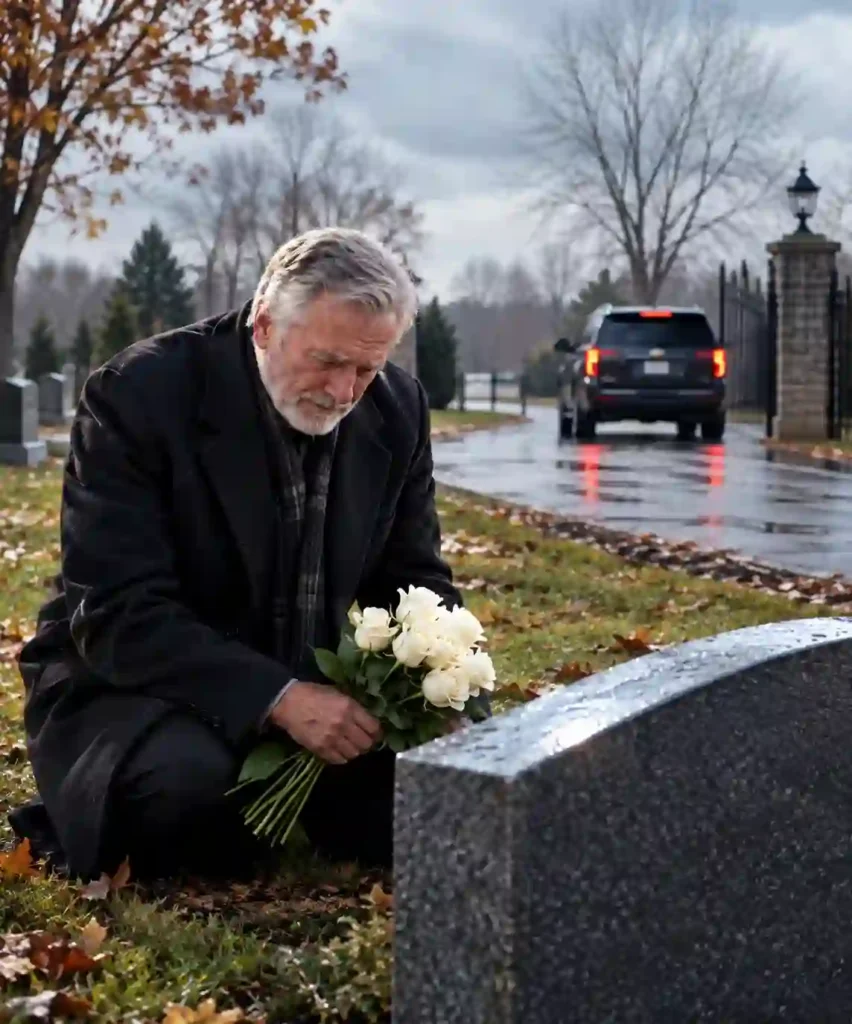
- My Daughter Abandoned Me at My Wife’s Grave, 190 Miles From Home—Four Days Later, Her Husband Saw Me in the Chairman’s Seat

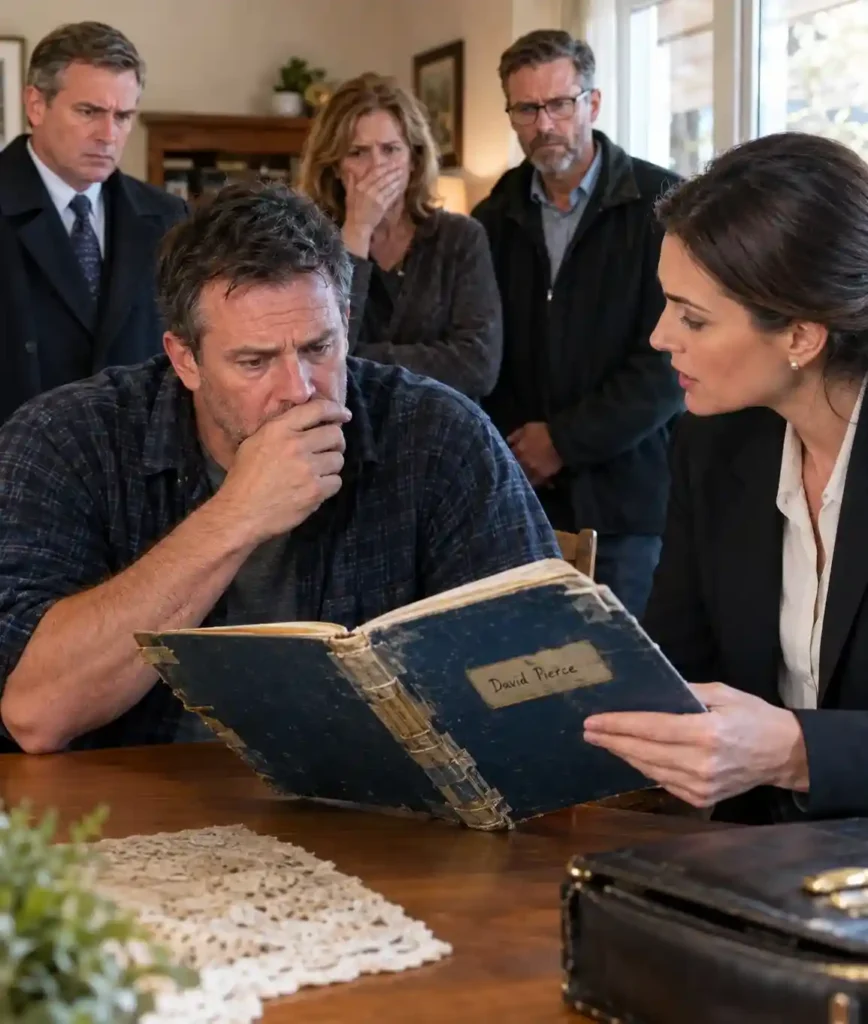
- My Father-in-Law Lived Under My Roof for 20 Years, and I Called Him a Burden, Until His Lawyer Opened a Blue Ledger at His Funeral and Revealed What He’d Been Hiding All Along

- My Ex-Husband’s Mother Arrived With Two Moving Trucks Minutes After Our Divorce—She Demanded My Mansion, but She Had No Idea What My Attorney Had Discovered2.

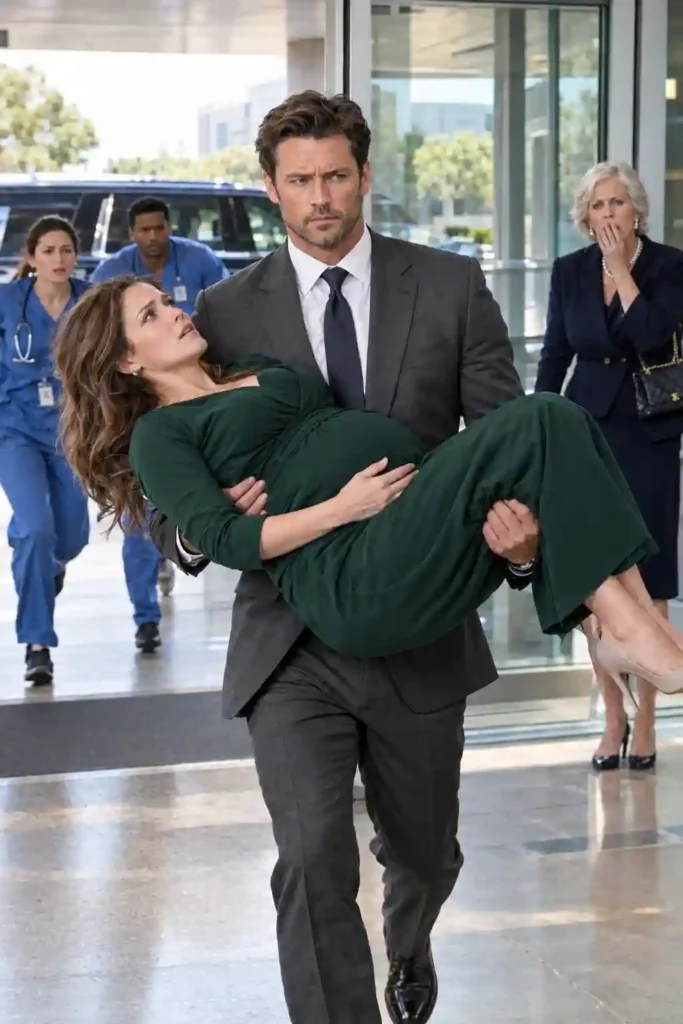
- My Mother-in-Law Pushed Me Down the Stairs at Nine Months Pregnant—She Never Expected Her “Unemployed” Son to Arrive With the Entire Board of Directors



Hammad Ali
Co-Owner & Author
Hammad Ali is a co-owner and author at MidnightReads, contributing thoughtful and engaging articles across human-interest, life, history, relationships, and entertainment topics.
They help develop and create original, useful content designed to inform, entertain, and give readers something meaningful to take away.