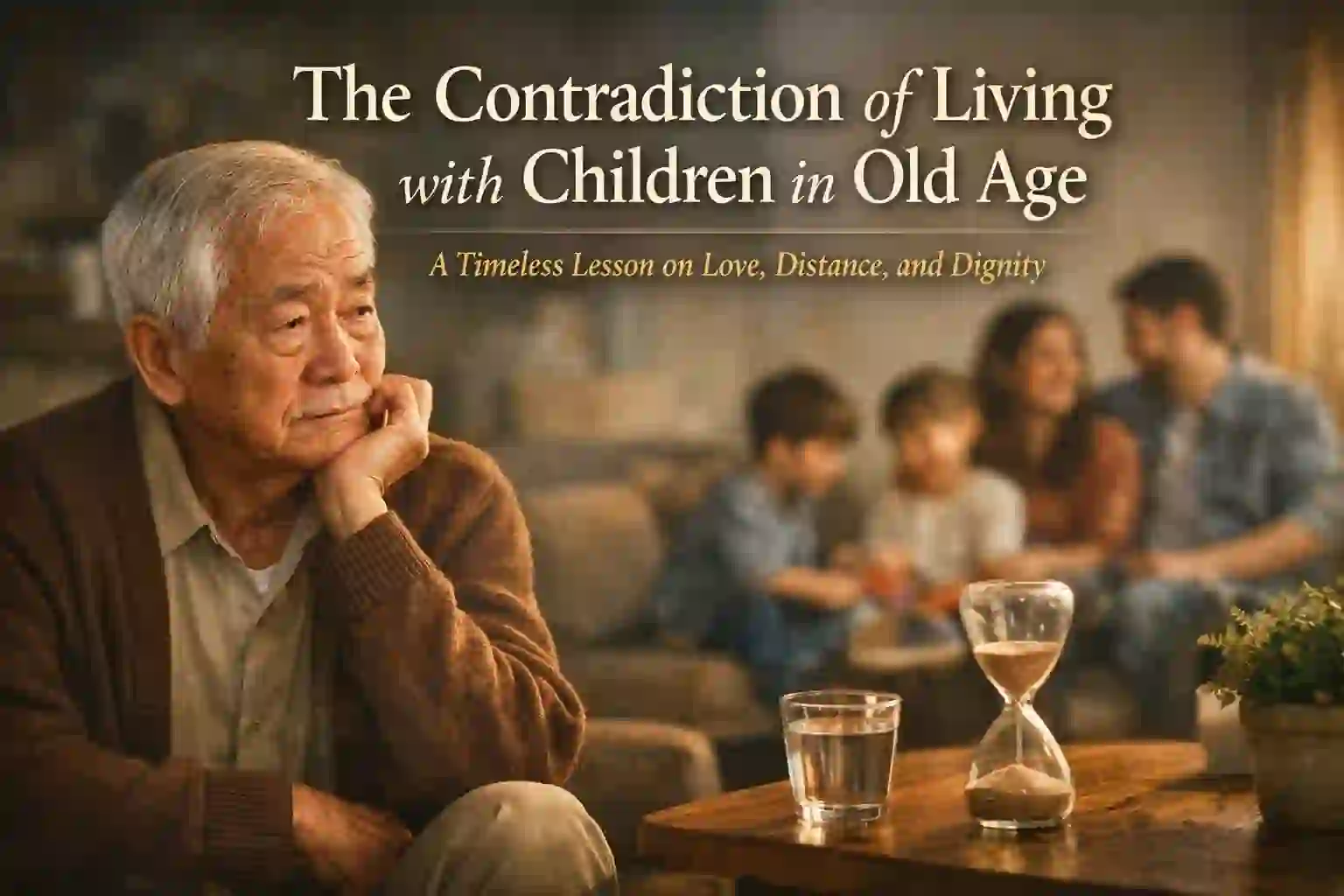
A Timeless Lesson on Love, Distance, and Dignity
Confucius once warned:
“In old age, living too closely with your grown children can, surprisingly, push them away.”
This story is more than 2,500 years old, yet it feels as if it was written for today’s world , for our parents, our children, and the silent emotions many elderly people carry in their hearts.
It is the story of an old man named Li Wei, who came to the great philosopher Confucius with a question that still troubles many elders today:
“After dedicating my entire life to my children, why do I still feel lonely in old age?”
The Bowl That Never Fills
Li Wei was not a bad father.
On the contrary, he sacrificed everything for his children. He worked tirelessly so they would never have to struggle for anything. When they grew up, built families of their own, and began living independent lives, Li Wei thought the time had finally come to enjoy the fruit of his sacrifices.
He sold his home and moved in with his son, believing he would now spend his later years surrounded by family, grandchildren, warmth, and belonging.
But the happiness he had imagined never came.
The house was full, yet his heart felt empty.
Everyone remained busy throughout the day. In the evenings, they returned home exhausted, craving silence and rest. They listened to him half-heartedly. His advice began to feel like interference. Slowly, his presence was treated as routine and sometimes even as a burden.
The closer he tried to become, the farther they seemed to drift away.

The Search for an Answer
Heartbroken, Li Wei went to Confucius and shared his pain:
“Master, I devoted my life to my children. I believed staying close to them would bring peace to my heart, but instead, I feel unwanted among them. Why is this happening?”
Confucius did not offer empty consolation.
Instead, he taught him three simple lessons.
First Lesson: The Bowl of Water
Confucius filled a bowl to the brim with water.
He asked, “Tell me, if I pour more water into this bowl, what will happen?”
Li Wei replied, “It will overflow.”
Confucius nodded.
“Exactly. Relationships are much the same. When we try to force ourselves into a space that is already full, balance is disturbed.”
“You once built a home for your children so they could grow. But now, you wish to become the center of that home again.”
“The center of their home is now their own lives and their own children.”
“You are pouring yourself into a vessel that no longer has room.”
Second Lesson: Two Trees
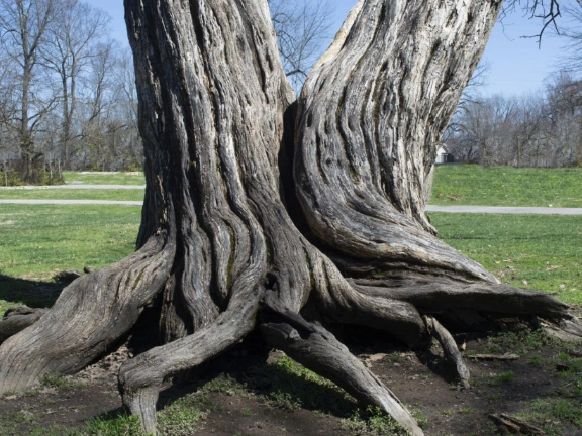
Confucius pointed toward two trees growing close together, their branches tangled into one another.
He asked, “What happens when two trees grow too close?”
Li Wei answered, “They block each other’s path and begin to compete.”
“Do they become stronger?” asked Confucius.
“No,” Li Wei replied, “they become weaker and misshapen.”
Confucius explained:
“Life is no different.”
“We often mistake extreme closeness for unity, but too much closeness creates tension.”
“Growth requires space.”
Third Lesson: A Handful of Sand
Confucius took a handful of sand and clenched it tightly in his fist.
“If I hold it like this, what will happen?”
Li Wei answered, “It will slip through your fingers.”
Confucius said:
“Human relationships are the same.”
“Love and respect cannot flourish under pressure.”
“The more you demand closeness, the faster the relationship slips away.”
“Give them freedom, and what truly belongs to you will remain with you.”
The Most Important Truth
Then Confucius asked him one final question:
“When you plant a tree, do you do so thinking that one day it must give you shade in old age?”
Li Wei replied:
“No, Master. I plant it so it may grow. The shade is a gift, not an obligation.”
Confucius smiled.
“Then why do you expect something different from your children?”
“You did not raise them for yourself alone — you raised them for the world.”
“And the world has as much right over them as you do.”
For the first time, Li Wei truly understood.
Also read: How to Reset Your Mood in 10 Minutes When Your Day Feels Off
The Wisdom of Old Age
Confucius handed him a small pouch of seeds.
“You can still sow seeds.”
“You can still teach, learn, and inspire.”
“Old age is not a time of waiting — it is a time for new beginnings.”
“Do not demand love from your children.”
“Instead, begin doing what you love.”
Li Wei returned to his hometown instead of staying at his son’s house.
He rented a small home near a school and began helping children. He shared stories, planted trees, and became useful to the people around him.
Soon, everyone began calling him Master Li.
The less he interfered, the more people valued him.
The less attention he demanded, the more genuine attention he received.
When Love Returns on Its Own
One day, he received a letter from his son:
“Father, it has been a long time. We miss you.”
“The children keep asking about you.”
“Please come visit us — not to stay permanently, but to spend time with us.”
When Li Wei arrived, he was welcomed with warmth and affection.
For the first time in years, he no longer felt like a burden.
He felt wanted.
He finally understood:
When he stopped expecting love, love found its way back to him.

The Real Message of This Story
The message is not that living with children in old age is always wrong.
Rather, it is a reminder that true closeness is born from freedom, not obligation.
When we demand presence, we suffocate relationships.
When we impose ourselves, we become invisible.
When we give others freedom, they choose us willingly.
As Confucius taught:
Love and respect cannot be demanded — they can only be nurtured.
Loved this story? Keep visiting our blog for more emotional family stories, marriage lessons, and life-changing thoughts that stay with you long after reading.
New heartfelt stories are added regularly — do not miss the next one.