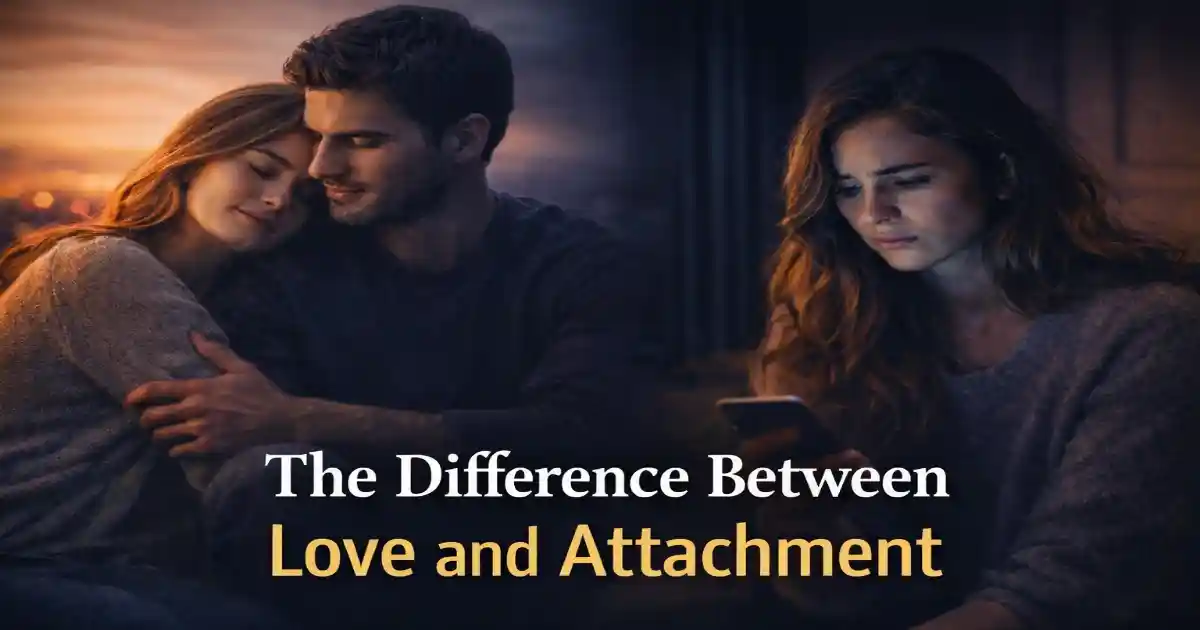
Sometimes we say “I love you” when what we really mean is, “I’m scared to lose you.”
And that is where the confusion begins.
Love and attachment can feel almost identical at first. Both make your heart race. Both make you think about someone constantly. Both make you miss them when they are gone.
But deep down, they are not the same thing.
One feels peaceful.
The other feels anxious.
One gives freedom.
The other clings tightly.
Understanding the difference can completely change the way you see your relationships.
Let’s talk about it honestly.
What Is Love?
Love is calm.
It does not mean it is boring. It does not mean there is no passion. It just means there is not constant fear underneath it.

When you truly love someone:
You want them to grow, even if that growth scares you.
You respect their individuality.
You feel secure even when they are not around.
You do not constantly question your worth in their life.
Love says:“I want you in my life, but I do not want to control it.”
It’s rooted in care, respect, and emotional stability.
You choose them , not because you need them to survive emotionally, but because you genuinely enjoy who they are.
What Is Attachment?
Attachment often feels intense.
It can feel passionate, overwhelming, even addictive.
But it usually carries fear underneath it.
When you are attached, you might notice:
You panic when they do not reply quickly.
Your mood depends heavily on their attention.

You feel insecure when they spend time with others.
You stay even when you are unhappy because you cannot imagine being alone.
Attachment says: “I do not know who I am without you.”
It’s rooted more in dependence than in choice.
Sometimes attachment feels stronger than love, but strength does not always mean health.
Love Feels Like Safety
When you love someone in a healthy way, you do not feel like you are constantly fighting for reassurance.
You do not analyze every message.
You do not overthink every pause.
You do not fear abandonment every time they are busy.

Love creates emotional safety.
Even during disagreements, there is a foundation of trust.
Attachment Feels Like Anxiety
Attachment often shows up as overthinking.
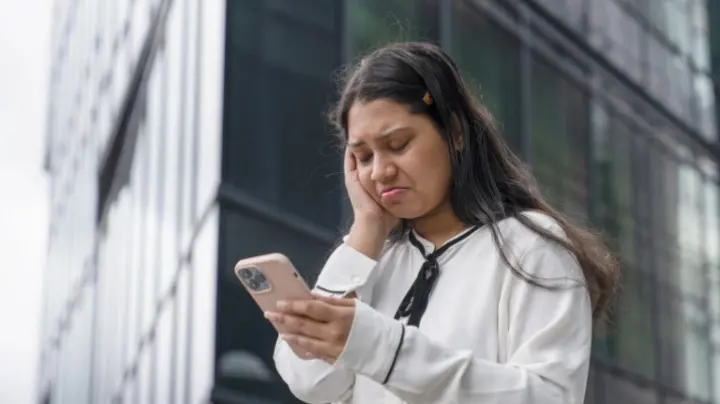
You check your phone repeatedly. You replay conversations in your head. You assume the worst before asking questions.
It’s not because you are dramatic. It is because attachment is driven by the fear of loss.
You may even tolerate behavior that hurts you just to avoid being alone.
That is not love. That is fear wearing love’s mask.
Love Allows Freedom
Here is a simple test.
If someone you love needs space for a few hours, how do you react?
In love, you understand. You trust. You let them breathe.
In attachment, space feels like rejection.
You may think: “Why do not they need me right now?” “Are they losing interest?” “Am I not enough?”
Love understands that two people can be close without being glued together.
Attachment believes closeness must be constant to survive.
Love Is About Giving
Love asks: “How can I support you?”
Attachment asks: “Will you leave me?”
See the difference?
Love focuses on the other person’s well-being without losing yourself.
Attachment focuses on protecting yourself from abandonment.
In love, you give because you care.
In attachment, you give because you are afraid they will stop choosing you.
Attachment Often Comes From Past Wounds
Sometimes attachment has nothing to do with the current partner.
It can come from:
Fear of abandonment from childhood
Past betrayal
Low self-worth
Loneliness
Emotional neglect
If someone once made you feel replaceable, you may cling harder in future relationships.
That does not make you weak.
It makes you human.
But healing those fears is important because attachment can slowly suffocate a relationship.
You can check also Why Late Nights Make Small Things Feel Important
Love Does not Mean Losing Yourself
One of the biggest signs of attachment is losing your identity.
You stop seeing friends. You drop hobbies. You adjust your personality. You shrink yourself to fit their comfort.

Love does not ask you to disappear.
Love supports your individuality.
A healthy relationship feels like: Two complete people choosing to walk together.
Not one person depending entirely on the other for emotional stability.
How to Know What You are Feeling
Ask yourself honestly:
If this person left tomorrow, would I survive emotionally? Do I love who they are, or do I just fear being alone?
Do I feel calm in this relationship, or constantly anxious?
Am I staying because I am happy, or because I am scared?
Your answers matter.
Sometimes we call something love simply because it feels intense.
But intensity is not always love.
Sometimes it is attachment mixed with insecurity.
Can Attachment Turn Into Love?
Yes.
If both people grow.
If insecurities are acknowledged. If boundaries are respected. If independence is encouraged.
Attachment becomes healthier when you build emotional security within yourself.
When you learn that: You are enough even alone.
Then love becomes a choice instead of a need.
And that shift changes everything.
The Quiet Difference

Love feels steady.
Attachment feels urgent.
Love says: “I want you.”
Attachment says: “I need you.”
There is nothing wrong with wanting someone deeply.
But when that want becomes desperation, anxiety, or fear of being alone, it is time to reflect.
Real love does not trap you.
It frees you.
It does not make you smaller. It helps you grow.
Final Thoughts
Love and attachment can look similar from the outside.
But inside, they feel different.
Love feels safe. Attachment feels shaky.
Love respects freedom. Attachment fears distance.
The goal is not to feel nothing. The goal is not to detach completely.
The goal is balance.
To care deeply, without losing yourself.
To choose someone, without depending on them for your entire identity.
Because the healthiest kind of love is not built on fear.
It is built on security, trust, and two people who are strong on their own but even better together.