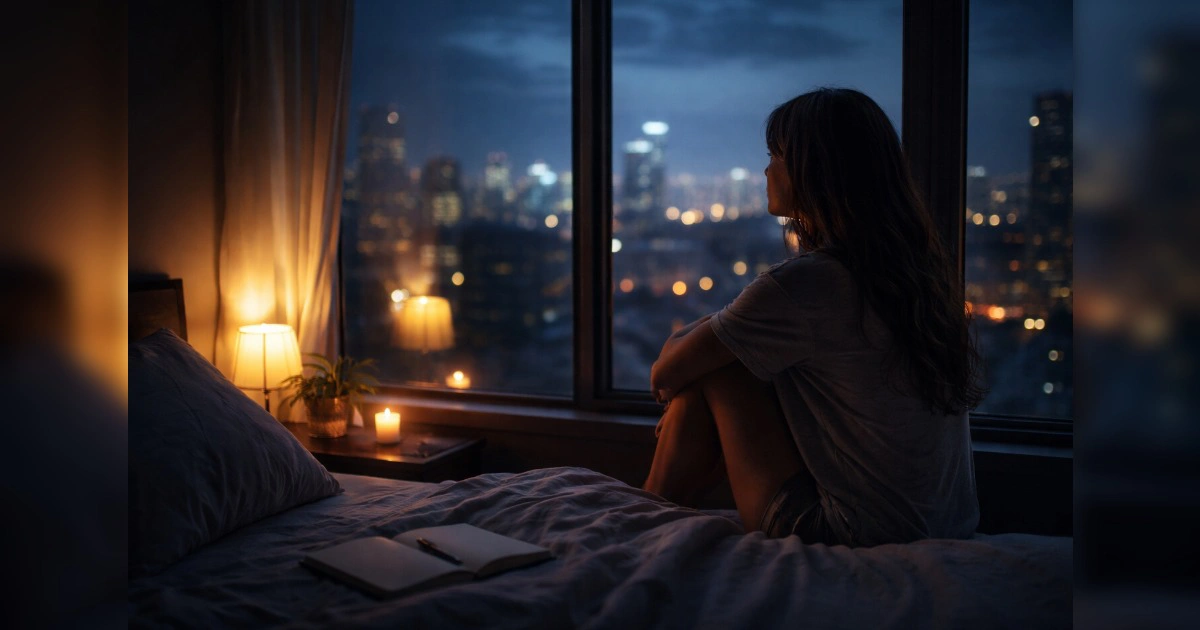
There is a strange honesty that appears after midnight.
During the day, we perform. We answer messages politely, follow routines, smile when expected, and push uncomfortable thoughts into quiet corners of our minds. But once the lights dim, notifications slow down, and the world goes silent, something shifts. The mind, finally free from distractions, begins to speak louder.
This is not overthinking. This is unfiltered thinking.
Late nights have a way of pulling thoughts out of hiding—memories we ignored, questions we postponed, emotions we pretended not to feel. Midnight doesn’t create these thoughts; it simply removes the noise that was keeping them buried.

The Silence That Makes Thoughts Echo
During daylight hours, our brains are busy reacting. Tasks demand attention. Conversations interrupt reflection. Noise keeps us anchored to the present. But at night, silence stretches long enough for thoughts to echo.
That silence can feel peaceful—or unsettling.
Suddenly, small moments replay themselves. A sentence someone said earlier. A decision you made months ago. A message you never sent. The mind begins connecting dots it didn’t have time for before.
This is why nights feel heavier emotionally. There’s nothing wrong with you. Your brain is simply doing what it was designed to do: process unfinished experiences.
Why Regret Loves the Night
Regret rarely shows up when you’re busy.
It waits.
At night, regret doesn’t scream—it whispers. It asks gentle but uncomfortable questions:
Did I choose right?
What if I had tried harder?
Why didn’t I say what I really felt?
These thoughts aren’t punishment. They’re signals. They point to values you care about deeply. You don’t regret things that don’t matter to you.
The problem is not regret itself, but how we respond to it. When we fight it, it grows louder. When we observe it calmly, it often softens.
Late nights are not asking you to relive the past—they’re asking you to understand it.
The Loneliness That Feels Louder at Night
Loneliness during the day is easier to ignore. At night, it becomes undeniable.
This isn’t always about being alone physically. You can be surrounded by people and still feel lonely at midnight. That kind of loneliness comes from emotional distance—when your inner world feels unseen.
Nighttime loneliness often carries questions like:
Does anyone really know me?
Am I enough as I am?
Will this feeling ever pass?
These questions don’t need immediate answers. Sometimes they simply want acknowledgment. Naming loneliness reduces its power. Pretending it doesn’t exist only deepens it.
Why Creativity Wakes Up When the World Sleeps
There’s a reason writers, artists, and thinkers often create at night.
Without interruption, the mind enters a slower rhythm. Ideas wander instead of rushing. Thoughts connect more freely. Creativity thrives in this unguarded mental state.
At night, you’re not creating to impress anyone. You’re creating to understand yourself.
That’s why ideas born at midnight feel more honest. They haven’t been edited by expectations yet.

If your mind feels alive at night, don’t suppress it entirely. Capture those thoughts. Write them down. Let them exist outside your head.
The Anxiety That Feels Bigger in the Dark
Anxiety doesn’t increase at night—but distractions decrease.
During the day, worries compete with noise. At night, they have the stage to themselves. This can make fears feel exaggerated and overwhelming.
The mind starts projecting:
Tomorrow’s problems
Worst-case scenarios
Imaginary outcomes
The trick is to remember that night thoughts are magnified, not necessarily accurate.
Your brain is tired. Logic is slower. Emotions are louder. This is not the best time to make life-changing decisions or harsh judgments about yourself.
Sometimes the healthiest response is to gently postpone these thoughts until morning, when perspective returns.

The Truth About Overthinking
Overthinking is often misunderstood.
It’s not thinking too much—it’s thinking without direction.
Late at night, thoughts loop because they lack closure. The mind keeps revisiting them, hoping for resolution. But resolution doesn’t always come from thinking harder. Sometimes it comes from rest.
If you notice your thoughts repeating, pause and ask:
Is this something I can act on right now? If the answer is no, give yourself permission to stop.
Rest is not avoidance. It’s preparation.
How to Make Peace With Midnight Thoughts
You don’t need to silence your mind completely. You need to change your relationship with it.
Here are gentle ways to coexist with late-night thoughts:
* Write without editing
Dump thoughts onto paper or notes. Don’t organize. Don’t judge. Externalizing thoughts reduces their emotional weight.
* Lower the emotional volume
Remind yourself: “These thoughts are louder because it’s night.” This simple awareness creates distance.
* Create a night ritual
Soft music, dim lighting, or reading signals safety to the brain. Consistency calms mental chaos.
* Don’t chase answers
Some questions need time, not analysis. Let them rest.
Why We Remember the Past More Clearly at Night
Midnight Isn’t Your Enemy
We often treat late nights as a problem to fix.
But what if midnight is simply a mirror?
It shows us what we avoided all day. It reveals unspoken needs. It highlights emotional truths we don’t always listen to.
Not every midnight thought is important—but some are messages worth hearing.
The goal isn’t to eliminate them. The goal is to understand which ones deserve attention and which ones deserve rest.
Final Thoughts
Midnight doesn’t make us weak—it makes us honest.
In the quiet, we meet ourselves without filters. That can be uncomfortable, but it can also be deeply healing. The thoughts that visit you at night are not flaws. They are unfinished conversations with yourself.
Listen gently. Respond kindly. And remember—morning brings clarity that night cannot.
Until then, let the quiet speak… but don’t let it judge you.