
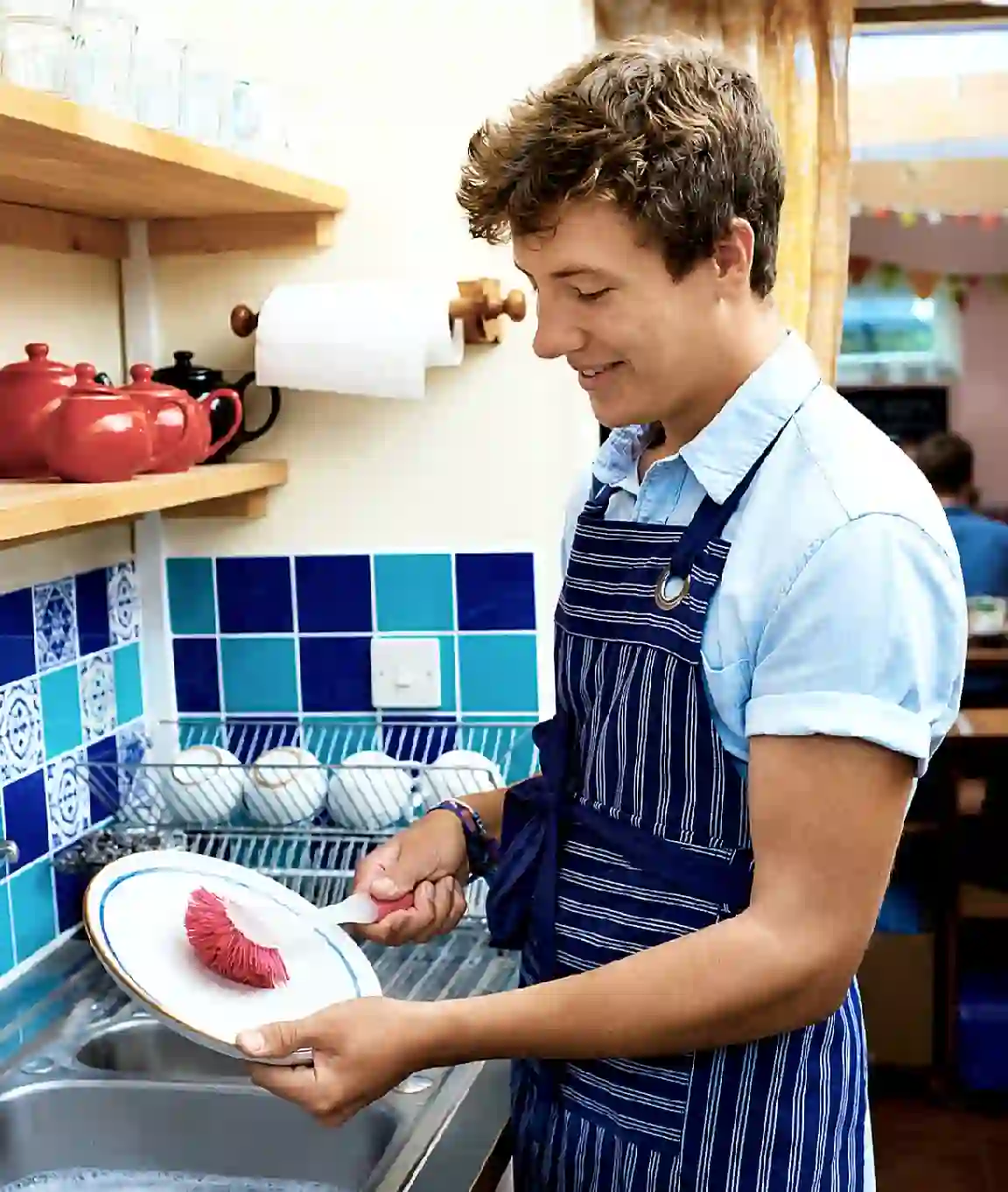
My name is Dr. Michael Carter.
I am forty-three years old and I have spent my last sixteen years working as a family physician in Columbus, Ohio. Most days were busy Between patients, paperwork, and emergency calls, life rarely slows down.
People often assume doctors have everything figured out.
But the truth is, we are just parents trying to make the best decisions we can.
My biggest challenge was not treating patients.
Instead it is about raising my fifteen-year-old son.
His name is Ethan.
He was a good kid. He is very smart and Respectful to others.
He earned decent grades in his class. He really loved basketball and could spend hours watching YouTube videos about technology and sports.
But somewhere along the way, comfort had quietly become normal for him.
He would leave lights on in every room.
His sneakers stayed by the front door until someone reminded him to put them away.
Half-eaten sandwiches often ended up in the trash because he had suddenly decide that he was not hungry anymore.
Dirty dishes somehow found their way to the kitchen counter but never into the dishwasher.
None of it made him a bad kid.
It just mean that he would never truly understood what it took to earn the life he was living.
My wife, Sarah, noticed it too.
Unlike me, though, she saw it differently just like all mothers do.
“He is still a teenager,” she would say with a smile.
“He shall grow out of it.”
Maybe she was right.
Mothers have a way of seeing the little boy that is still hiding inside their sons.
Fathers…
We sometimes see the man they are becoming.
One Friday evening, after finishing my last appointment, I walked through the front door to the smell of homemade lasagna.
Sarah was setting the table.
Ethan was sitting on the couch, wearing headphones, laughing at something on his phone.
“Dinner’s ready,” Sarah called.
Without looking up, Ethan answered,
“Give me a minute.”
Ten minutes later, we finally sat down together.
Dinner started the way most family dinners do.
Sarah asked about my day.
I asked Ethan how basketball practice had gone.
He shrugged.
“It was fine.”
Then he reached for another piece of garlic bread.
Halfway through the meal, his phone buzzed.
He picked it up immediately.
I cleared my throat.
“Ethan.”
“Oh… sorry.”
He set the phone face down.
A few minutes later, he pushed his plate away.
“I am full.”
There was still nearly half his dinner sitting there.
He stood up.
“I’m going upstairs.”
Before either of us could answer, he disappeared.
Sarah quietly picked up his plate.
She looked at the untouched food for a second before scraping it into the trash.
I watched without saying anything.
Then I asked,
“How often does he leave food like that?”
She sighed.
“More than I would like.”
That answer stayed with me.
Not because of the wasted food.
Because it reminded me how easy it is to take things for granted when you’ve never had to earn them.
The following Monday, I got a phone call from an old friend of mine.
Mike Reynolds owned a neighborhood diner just a few miles from our house.
We’d known each other since college.
After catching up for a few minutes, he laughed.
“Hey, if you know any teenagers looking for a summer job, send them my way.”
“We are short-handed.”
“What kind of work?” I asked.
“Oh, nothing glamorous.”
“Clearing tables.”
“Loading the dishwasher.”
“Washing pots.”
“Sweeping the kitchen.”
“A few hours a day.”
After we hung up, I sat in my office for a long time.
An idea had already begun forming in my mind.
That evening, I brought it up during dinner.
“I think Ethan should work at Mike’s diner this summer.”
Sarah stopped pouring iced tea.
She looked at me as though she had misheard.
“You cannot be serious.”
“I am.”
“He would only work afternoons.”
“Four hours a day.”
“It’s safe.”
“Mike would be supervising him.”
She slowly set the pitcher down.
“Michael…”
“He is fifteen.”
“I know.”
“Restaurants are hot.”
“They are busy.”
“People yell.”
“The kitchen gets stressful.”
“I know.”
She folded her arms.
“So why would you want him there?”
I looked toward the staircase where Ethan’s backpack had been dropped the moment he’d walked into the house.
“Because he’s growing up.”
“And one day the world won’t care that he’s a nice kid.”
“It’ll expect him to work.”
She didn’t answer immediately.
Instead, she sat across from me.
“I just do not want him to lose part of his childhood.”
Neither did I.
But I also did not want him to grow into an adult who believed every clean plate, every folded shirt, every hot meal, and every convenience simply appeared by magic.
“I do not want him to become a dishwasher,” I finally said.
“I want him to understand the person who washes the dishes.”
The room fell silent.
A few minutes later, Ethan came downstairs.
He grabbed a bottle of water from the refrigerator.
“What’s going on?”
Sarah looked at me.
I knew this conversation had to come from me.
“Ethan,” I said.
“I think it’s time for you to get your first summer job.”
He looked surprised.
“A job?”
“Doing what?”
I smiled.
“A friend of mine owns a diner.”
“They need some help in the kitchen.”
His smile disappeared.
“The kitchen?”
“You mean… washing dishes?”
“For some of the time.”
He frowned.
“Dad…”
“I thought I was going to spend the summer with my friends.”
“You still will.”
“But you’ll also spend part of it working.”
He looked at his mother, hoping she’d rescue him.
She stayed quiet.
After a long pause, he looked back at me.
“Why?”
I leaned forward.
“Because there are some lessons you can’t learn in school.”
“And I think it’s time you learned one of them.”
Ethan didn’t argue.
He simply nodded, though I could tell he wasn’t happy.
That night, after everyone had gone to bed, I stood alone in the kitchen.
I looked at the clean countertops.
The dishwasher humming softly.
The leftovers packed neatly into containers.
Everything looked effortless.
But I knew better.
Nothing in life stays clean, organized, or comfortable without someone doing the work.
And years earlier…
That someone had been me.
As I turned off the kitchen light, memories I’d spent decades forgetting slowly came back.
Because before I ever wore a white doctor’s coat…
I wore an apron stained with grease.
Part 2 — Before I Became a Doctor
Long after Sarah and Ethan had gone to bed, I stood alone in the kitchen. The dishwasher hummed quietly, the counters were spotless, and the house had finally fallen silent. Looking around, I realized something my son had never experienced firsthand: a clean home doesn’t happen by itself. Someone always pays for comfort with time, effort, and tired hands.
As I switched off the kitchen light, memories I had not visited in years came rushing back.
I was fourteen when my father’s manufacturing job disappeared overnight. After nearly twenty years with the same company, he came home carrying nothing but a cardboard box filled with family photos, a coffee mug, and the nameplate from his desk. He tried to smile. My mother tried to believe him. Neither of them succeeded.
Money became tight almost immediately. Restaurant dinners disappeared. Cable TV was canceled. My mother clipped grocery coupons every Sunday, and every shopping trip turned into careful math. Some nights I heard my parents whispering after they thought I was asleep, deciding which bills could wait another week.
One evening, Dad sat beside me on the front porch.
“I found you a summer job,” he said.
“A job? Doing what?”
“Pete’s Family Diner. You will clear tables, wash dishes, take out the trash, and help wherever you are needed.”
I was not excited because I was not mentally ready for all this. Now my friends planned fishing trips and afternoons at the public pool, I would be working.
“I do not want to spend my summer in a restaurant,” I admitted.
Dad nodded as if he had expected that answer.
“I know. But sometimes life teaches lessons you can not learn sitting in a classroom. One day you will understand that every paycheck starts with someone willing to do the work nobody notices.”
Monday morning arrived before sunrise.
Pete’s Diner was already alive. Coffee brewed by the gallon, bacon sizzled on the grill, and cooks moved through the kitchen with practiced speed. Pete handed me a navy-blue apron and smiled.
“First day?”
“Yes, sir.”
“Good. Everybody starts somewhere.”
Within an hour I was carrying stacks of dirty dishes into the kitchen. I could not believe how much perfectly good food people threw away. Pancakes, fries, sandwiches, toast, meals my family could have stretched into another dinner disappeared into the trash without a second thought.
By lunchtime, I was standing over a sink filled with greasy pans and endless plates. The hot water burned my hands, steam fogged my glasses, and the line of dirty dishes never seemed to shrink.
Trying to catch up, I rushed.
A heavy dinner plate slipped from my hands and shattered across the floor.
The kitchen went silent.
I waited for someone to yell.
Pete walked over, handed me a broom, and said only four words.
“Clean it up, son.”
That was it.
No anger.
No lecture.
Just a quiet reminder that mistakes are not the end of the job but they are part of it.
I cleaned the mess, grabbed another plate, and keep working.
By the time my shift ended, every muscle in my body hurt. My clothes smell like grease and dish soap, and my feet felt twice their normal weight.
On the drive home, Dad finally asked, “So… how was your first day?”
I stared out the truck window before answering.
“I never knew people worked this hard.”
He smiled without taking his eyes off the road.
“Most people do not until they are the ones doing that work.”
I almost quit the next morning.
Instead, I got dressed and went back.
Looking back now, that may have been one of the most important decisions of my life. As I also do not have any other option.
Part 3 — The Man Behind the Dishwasher
Monday morning arrived much faster than Ethan expected.
At 8:00 a.m., his dad pulled into the parking lot of Pete’s Family Diner.
The restaurant had been serving breakfast in the neighborhood for more than thirty years. It was not fancy. The sign outside had faded from years of sun and snow, and the building looked older than most of the businesses around it.
But the parking lot was already full.
“You ready?” Dr. Carter asked.
Ethan looked through the windshield.
“I guess.”
His father smiled.
“That is enough.”
Inside, the smell of fresh coffee, bacon, and pancakes filled the air.
Customers laughed over breakfast while waitresses hurried from table to table carrying steaming plates.
Pete, the owner, greeted Ethan with a warm handshake.
“Glad you are here.”
He handed Ethan a blue apron and pointed toward the kitchen.
“I would like you to meet someone.”
Near the dish station stood an older man with gray hair tucked beneath a baseball cap.
He looked to be in his late sixties.
Despite his age, he moved quickly, stacking plates with practiced hands.
“This is Mr. Lewis,” Pete said.
“He has been helping us here for almost five years.”
Mr. Lewis smiled.
“So you are the doctor’s kid.”
Ethan nodded.
“Yes, sir.”
“First job?”
“Yeah.”
Mr. Lewis chuckled.
“Good.”
“You shall remember your first job for the rest of your life.”
The morning started with simple tasks.
Carry clean dishes.
Restock cups.
Sweep the hallway.
Take out the trash.
None of it seemed difficult.
Around lunchtime, everything changed.
Orders began pouring into the kitchen.
Servers rushed in carrying stacks of dirty plates.
The dishwasher never stopped humming.
Pots piled higher and higher.
Steam filled the room.
Within an hour, Ethan’s T-shirt was soaked with sweat.
He tried to move faster.
A stack of bowls slipped from his hands.
Thankfully, they landed inside a plastic tub instead of crashing onto the floor.
His heart pounded.
“I’m sorry.”
Mr. Lewis walked over.
He did not yell.
He simply picked up the bowls.
“You know what happens if you rush?”
Ethan shook his head.
“You rush again.”
Then he smiled.
“Slow down.”
“Smooth is faster than panicked.”
For the rest of the afternoon, Ethan worked beside him.
Mr. Lewis never complained.
Even when the kitchen became louder.
Even when customers kept coming.
Even when another employee called in sick.
Every few minutes someone thanked him.
“Need clean pans.”
“No problem.”
“Need more coffee mugs.”
“Coming right up.”
“Can you help me with these trays?”
“Already on it.”
Ethan noticed something.
Nobody treated Mr. Lewis like he had an unimportant job.
Everyone depended on him.
Without clean dishes…
The cooks could not cook.
Without clean pans…
Orders stopped.
Without teamwork…
The entire restaurant slowed down.
During their break, the two of them sat outside on milk crates behind the building.
Pete handed everyone cold bottles of water.
For a few minutes, nobody spoke.
Finally, Ethan asked,
“So… is this your full-time job?”
Mr. Lewis smiled.
“It is now.”
“What did you do before?”
“I was a firefighter for thirty-two years.”
Ethan’s eyes widened.
“Really?”
Mr. Lewis nodded.
“I retired.”
“My wife passed away a few years later.”
He looked toward the parking lot.
“The house became awfully quiet.”
“So I came here.”
“I do not work because I have to.”
“I work because I like being useful.”
Those words stayed with Ethan.
He had never thought about work before like that way.
Later that afternoon, an elderly woman walked into the kitchen carrying an empty pie plate.
“Pete,” she said.
“That was the best apple pie I have had in years.”
Pete laughed.
“You should thank the whole crew.”
She looked around the kitchen.
“Then thank you all.”
Her eyes stopped on Ethan.
“Is this your first day?”
He smiled.
“Is it that obvious?”
She laughed.
“A little.”
“Keep showing up.”
“You will do just fine.”
It was a simple sentence.
But it meant more than she probably realized.
When the lunch rush finally ended, Ethan leaned against the counter.
His feet hurt.
His back ached.
He had never been so tired after only a few hours.
Mr. Lewis handed him a clean towel.
“You survived.”
Ethan laughed.
“Barely.”
The older man folded his apron.
“You know something?”
“What?”
“This job is not really about dishes.”
“It isn’t?”
Mr. Lewis shook his head.
“It’s about people.”
“Every clean plate means another family gets to enjoy a meal.”
“Every washed pan helps the cooks feed someone.”
“Every small job helps someone else do theirs.”
“There are no little jobs.”
“Only little attitudes.”
Ethan looked around the kitchen one more time.
For the first time all day…
He wasn’t seeing dirty dishes.
He was seeing the people behind them.
And somehow…
Everything looked different.
Part 4 — What My Son Really Brought Home
That evening, Ethan climbed into my truck without saying much.
For the first few minutes, we drove in silence.
I glanced over at him.
His hair was damp with sweat.
His hands were dry and rough from hours of washing, carrying, and cleaning.
He stared out the passenger window, lost in thought.
“So,” I finally asked, “how was your first day?”
He let out a small laugh.
“It was harder than I imagined.”
“I figured.”
He nodded.
“I thought washing dishes would be the easiest job in the restaurant.”
He paused before continuing.
“It is not.”
I smiled.
“No?”
He shook his head.
“Everyone depends on the person doing it.”
“If the dishes are not clean, nothing else works.”
That was the first time all day I felt certain he’d learned something no lecture could have taught him.
When we got home, Sarah was waiting by the front door.
The moment Ethan walked inside, she wrapped him in a hug.
“How’d it go?”
“I’m exhausted,” he admitted with a grin.
She laughed.
“I’ll take that as a good sign.”
At dinner that night, something felt different.
Not dramatic.
Just… different.
Ethan wasn’t looking at his phone.
He listened while his mother talked about her day.
He asked me about a patient I’d mentioned the night before.
He finished every bite on his plate.
When dinner was over, Sarah reached for the dishes.
Before she could pick them up, Ethan gently stopped her.
“I’ve got it.”
She looked surprised.
“You worked all day.”
“I know.”
“But you worked today too.”
Without another word, he carried every plate into the kitchen.
He rinsed them.
Loaded the dishwasher.
Wiped down the counters.
Then he swept the floor without anyone asking.
Sarah looked over at me.
Neither of us said anything.
There wasn’t anything to say.
The next morning was Saturday.
I woke up early and walked into the kitchen.
Ethan was already there.
He was making pancakes.
The batter wasn’t perfect.
One pancake was almost burned.
Another was shaped more like Texas than a circle.
When he saw me, he laughed.
“I’m still learning.”
“I can see that.”
He handed me a plate.
“Breakfast is on me.”
As we ate together, he looked thoughtful.
“Dad?”
“Yeah?”
“I owe you an apology.”
“For what?”
“I never realized how much work goes into the little things.”
He looked around the kitchen.
“I thought clean dishes just… happened.”
“I thought groceries just appeared.”
“I thought dinner cooked itself.”
He smiled awkwardly.
“I guess I never noticed.”
I leaned back in my chair.
“Most people don’t.”
“Not until they have to do it themselves.”
Monday turned into Tuesday.
Tuesday became Wednesday.
By the end of the second week, Pete called me.
“Your son’s doing great.”
“He asks questions.”
“He works hard.”
“And yesterday he stayed an extra thirty minutes to help Mr. Lewis finish cleaning after another employee got sick.”
I smiled.
“Thanks for letting him learn.”
Pete laughed.
“I didn’t teach him.”
“The work did.”
Summer passed faster than any of us expected.
On Ethan’s last day, Pete gathered the staff before closing.
He handed Ethan a small envelope with his final paycheck.
Then he reached into a cabinet and pulled out the blue apron Ethan had worn all summer.
“You can keep it.”
Ethan looked surprised.
“The apron?”
Pete nodded.
“Not because it’s valuable.”
“Because one day you’ll forget how hard this job was.”
“When that day comes…”
“Take this out.”
“It’ll remind you.”
Years later, after Ethan graduated from college, he accepted his first professional job.
Before leaving for work on his first morning, he opened a small box in his closet.
Inside was an old blue apron.
The name tag had faded.
The fabric was worn.
He smiled, folded it carefully, and put it back.
As he walked toward the door, he turned to me.
“You know something, Dad?”
“What?”
“I’m glad you made me get that summer job.”
“It taught me more than any class I ever took.”
I smiled.
“I was hoping you’d say that someday.”
After he left, I stood by the front window and watched him drive away.
I wasn’t thinking about grades.
Or college.
Or careers.
I was thinking about character.
Because success isn’t measured only by the job you have.
It’s measured by whether you respect the people whose work makes your life possible.
That summer, my son didn’t just learn how to wash dishes.
He learned that every honest job deserves dignity.
And as a father…
I could not have asked for a better lesson.
The End
Thanks for reading!
If this story meant something to you, share it with someone who needs this reminder.
What life lesson changed you the most? Let me know in the comments.
Related Posts

Hammad Ali
Co-Owner & Author
Hammad Ali is a co-owner and author at MidnightReads, contributing thoughtful and engaging articles across human-interest, life, history, relationships, and entertainment topics.
They help develop and create original, useful content designed to inform, entertain, and give readers something meaningful to take away.