
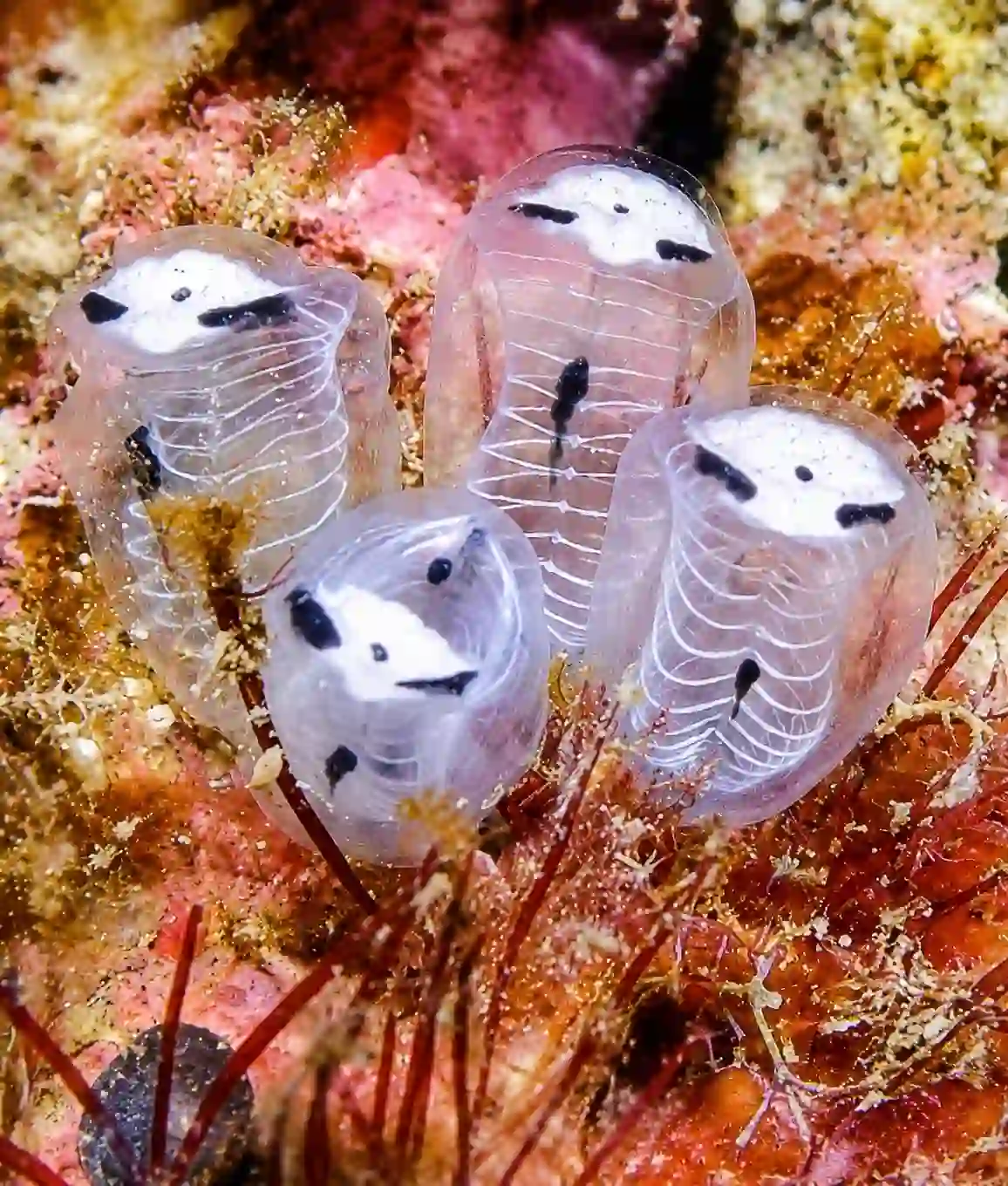
Nature is full of surprises, and sometimes the smallest creatures leave the biggest impression. The Skeleton Panda Sea Squirt is one of those remarkable animals that instantly catches people’s attention. At first glance, it looks like a miniature panda floating underwater, leading many people to believe the image has been edited or generated by artificial intelligence. The truth is even more fascinating that this unusual marine animal is completely real.
Although it has become popular on social media because of its adorable appearance, the Skeleton Panda Sea Squirt is far more than an internet sensation. It is a living part of the ocean ecosystem and plays an important role in maintaining healthy marine environments. Its story reminds us that even the tiniest creatures can have an important place in nature.
What Is the Skeleton Panda Sea Squirt?
The Skeleton Panda Sea Squirt is a species of sea squirt, a marine animal belonging to the group known as tunicates. While adult sea squirts may appear simple, they have an interesting life cycle that has fascinated scientists for decades.
During their early stage of life, they swim freely through the water like tiny tadpoles. As they mature, they permanently attach themselves to rocks, coral reefs, shells, or other hard surfaces beneath the sea. Once attached, they spend the rest of their lives quietly filtering seawater for food.
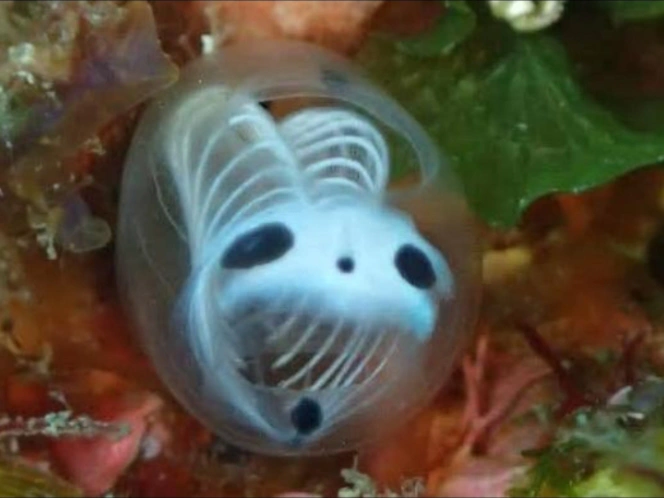
The Skeleton Panda Sea Squirt gets its nickname from the striking black-and-white markings visible through its transparent body. These markings naturally resemble the face of a panda, making it one of the most recognizable sea squirts ever photographed.
Why Does It Look Like a Panda?
The animal doesn’t intentionally resemble a panda. Its appearance is simply the result of its internal organs showing through its nearly transparent outer body.
Humans naturally recognize familiar shapes in random patterns, a phenomenon known as pareidolia. This is the same reason people sometimes see faces in clouds, tree bark, or mountains. When people notice the two dark spots and a central marking on the Skeleton Panda Sea Squirt, their brains immediately interpret it as a panda’s face.
This natural illusion has helped the species become famous across the internet, where many viewers initially believe the photographs have been digitally altered.
Where Does It Live?
The Skeleton Panda Sea Squirt is found in warm tropical waters, especially around coral reefs in parts of the western Pacific Ocean.
It usually lives in places with:
- Healthy coral reefs
- Clear seawater
- Rocky underwater surfaces
- Strong marine biodiversity
- Stable ocean conditions
Because it is only a few centimeters long and almost transparent, spotting one in the wild is surprisingly difficult. Even experienced divers can swim past one without noticing it.
How Does It Eat?
Unlike fish that actively search for food, the Skeleton Panda Sea Squirt is a filter feeder.
It continuously pulls seawater through two openings in its body. As water passes through, tiny plankton, bacteria, and organic particles become trapped inside. These microscopic organisms provide all the nutrients the animal needs to survive.
After removing its food, the sea squirt releases the filtered water back into the surrounding ocean.
This simple feeding process benefits not only the animal itself but also helps improve water quality around coral reefs.
Why Is It Important to Marine Ecosystems?
Many people overlook small marine animals, yet they often perform some of the most important ecological jobs.
The Skeleton Panda Sea Squirt contributes to healthy oceans by filtering seawater and recycling nutrients. Cleaner water supports healthier coral reefs, which provide shelter and food for thousands of marine species.
Sea squirts also become part of complex underwater communities. Tiny fish, crustaceans, algae, and microorganisms all depend on healthy reef systems where these animals live.
Although one sea squirt filters only a small amount of water, thousands living together can make a noticeable difference within their habitat.
Why Do Scientists Study Sea Squirts?
Sea squirts may look simple, but they are surprisingly important to science.
During their larval stage, they possess a structure called a notochord, making them distant relatives of all vertebrates, including fish, birds, reptiles, and humans.
Because of this connection, scientists study tunicates to better understand the evolution of complex animals. Research on these fascinating creatures has helped improve our understanding of genetics, developmental biology, and marine ecology.
Their simple bodies also make them valuable organisms for scientific research.
Is the Skeleton Panda Sea Squirt Dangerous?
Not at all.
The Skeleton Panda Sea Squirt is completely harmless.
It does not:
- Bite humans
- Produce venom
- Sting divers
- Chase prey
- Damage coral reefs
Instead, it quietly spends its entire adult life attached to a solid surface while filtering microscopic food from seawater.
For underwater photographers, it is one of the safest marine creatures to observe.
Why Has It Become So Popular Online?
The internet has introduced millions of people to unusual wildlife, and the Skeleton Panda Sea Squirt quickly became one of the most shared marine animals.
Its tiny panda-like face immediately captures attention. Many social media users assume the photographs are fake because the resemblance seems almost impossible.
Wildlife photographers and marine researchers, however, have repeatedly documented the species in its natural habitat, confirming that its appearance is entirely genuine.
The popularity of this tiny animal has also encouraged more people to learn about ocean biodiversity and marine conservation.
Threats to Its Habitat
Like many reef-dwelling species, the Skeleton Panda Sea Squirt depends on healthy oceans.
Unfortunately, coral reefs around the world face increasing threats from:
- Ocean pollution
- Plastic waste
- Rising sea temperatures
- Coral bleaching
- Coastal development
- Poor water quality
When coral reefs decline, many small marine animals lose the habitats they depend on for survival.
Protecting reefs means protecting thousands of species that most people never notice.
How Can We Help Protect Marine Life?
Everyone can contribute to healthier oceans.
Simple actions include:
- Reducing single-use plastics.
- Recycling whenever possible.
- Supporting marine conservation organizations.
- Avoiding products that damage coral reefs.
- Respecting marine wildlife while diving or snorkeling.
- Learning more about ocean ecosystems and sharing that knowledge with others.
Even small actions can have a positive impact when millions of people take part.
Amazing Facts About the Skeleton Panda Sea Squirt
- It is a genuine marine animal.
- Its panda-like face is completely natural.
- It belongs to the tunicate family.
- Its body is almost transparent.
- It survives by filtering seawater.
- It spends most of its adult life attached to coral or rocks.
- It helps improve water quality.
- Scientists study it because of its evolutionary importance.
- It is harmless to humans.
- It reminds us how diverse and creative nature can be.
Final Reflections
The Skeleton Panda Sea Squirt is proof that nature still holds countless surprises beneath the waves. What first appears to be a tiny underwater panda is actually a remarkable marine animal that quietly supports the health of coral reef ecosystems.
Its unusual appearance may attract attention, but its true value lies in the role it plays in the ocean. By filtering seawater, supporting healthy reefs, and helping scientists understand the evolution of life, this tiny creature contributes far more than its size would suggest.
The next time you see a photograph of the Skeleton Panda Sea Squirt, remember that some of the world’s most extraordinary animals are also the easiest to overlook. Protecting our oceans ensures that these incredible species continue to thrive, inspiring future generations with the endless wonders of the natural world.
What We Learn
The Skeleton Panda Sea Squirt teaches us that every living creature has value, no matter how small or unusual it may seem. By protecting coral reefs and keeping our oceans clean, we also protect the countless tiny species that quietly help maintain the balance of marine life.
Related Posts
- 10 Everyday Signs Your Body is Healthy Than You Think

- 10 Hard Truths About Love Every Man Should Learn Before a Relationship Costs Him His Peace
- 10 Ways Some Women Use Emotional Manipulation in Relationships Without Men Even Realizing It
- 11 Relationship Truths About Men and Women That Can Improve Your Relationship




About the Author
Hassan is the founder and editor of MidnightReads, a publication featuring thoughtful stories, human-interest articles, history, relationships, and entertaining reads.
He is involved in researching, writing, and editing content for the site, with a focus on creating original, clear, and useful articles that give readers something meaningful to take away.
Hassan believes good content should inform, entertain, and encourage curiosity.
— Hassan, Founder & Editor, MidnightReads