

There are the official rules of the workplace, and then there are the rules nobody writes down.
The official rules might talk about deadlines, attendance, performance, teamwork, communication, and professionalism. The unofficial rules are a little more complicated. They seem to change depending on who is doing the thing.
Take too long to finish something, and you might be told you’re slow. Your boss takes the same amount of time, and apparently he’s being thorough. You forget to complete an assignment, and you’re lazy. Your boss doesn’t complete his, and he’s simply too busy.
Make a mistake, and suddenly everyone remembers the importance of accountability. When the boss makes one, everyone remembers that nobody is perfect.
It’s the kind of workplace double standard that can be frustrating when you’re living through it—but surprisingly funny when you step back and look at the pattern.
Our visual comparison captures six of the most recognizable examples. And if you’ve spent enough time in an office, there’s a good chance at least one of them will feel painfully familiar.
1. When You Take a Long Time, You are Slow When Your Boss Takes a Long Time, He’s Thorough
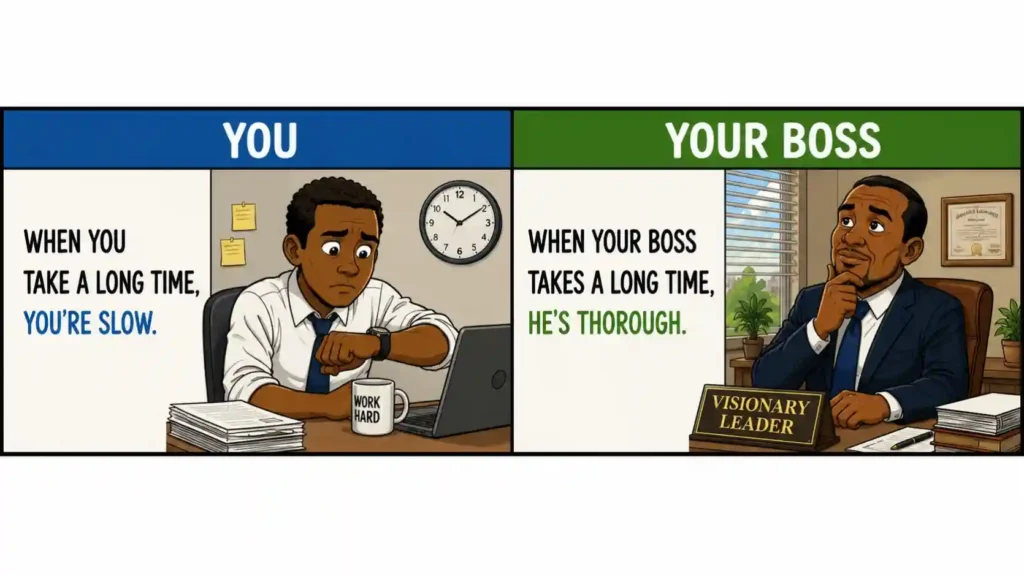
Time is one of the strangest things in an office.
An employee can spend an hour carefully checking a report, reviewing numbers, correcting mistakes, and making sure everything is ready before sending it. The moment someone notices the delay, the question may come:
“Why is this taking so long?”
Suddenly, being careful doesn’t look like being careful anymore. It looks like being slow.
But let the boss spend the same amount of time reviewing a proposal, staring at a spreadsheet, or thinking about a decision, and the description becomes much more flattering.
He’s being thorough.
He’s reviewing the details.
He wants to make sure everything is correct.
And to be fair, a manager may genuinely have more information to consider. Important decisions shouldn’t always be rushed. But from an employee’s perspective, it can still be amusing how quickly the vocabulary changes.
The clock hasn’t changed.
The task hasn’t changed.
Only the person doing it has changed.
That’s one of the first unwritten rules of office life: when you’re at the bottom of the organizational chart, taking your time can look like slowness. When you’re at the top, it can look like careful leadership.
2. When You Do not Do It, You are Lazy When Your Boss Doesn’t, He is Too Busy
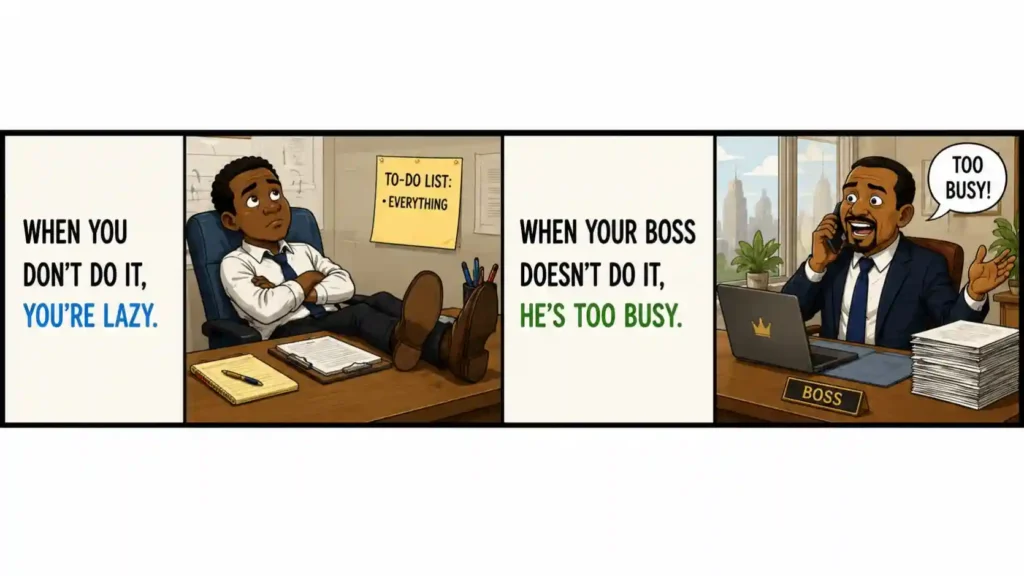
Few words can make an employee nervous faster than “lazy.”
If an employee forgets a task, doesn’t finish something immediately, or doesn’t appear busy every second of the day, people may start wondering whether they’re working hard enough.
Maybe they need to be more productive.
Maybe they need better time management.
Maybe they aren’t taking their responsibilities seriously.
But when the boss has a growing list of unfinished tasks, there is usually a completely different explanation.
He’s too busy.
There are meetings.
There are phone calls.
There are clients.
There are decisions to make.
There are problems that only he can handle.
And sometimes that’s absolutely true. Running a business or managing a department can involve responsibilities that employees never see.
But that’s what makes the comparison funny.
The employee has an unfinished task: “You’re lazy.”
The boss has an unfinished task: “He’s got too much on his plate.”
The work may be sitting in exactly the same place, but the explanation has received a promotion.
Perhaps that’s why employees sometimes develop an unofficial office survival skill: learning how to look busy even when the computer is doing absolutely nothing.
3. When You Make a Mistake, You are an Idiot When Your Boss Makes a Mistake, He is Only Human
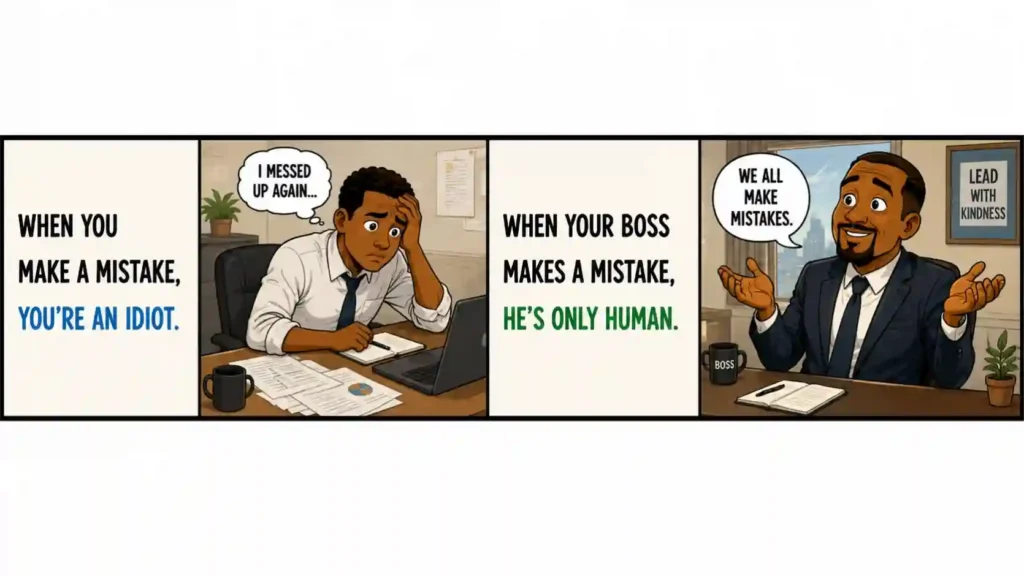
Nobody goes through an entire career without making a mistake.
Someone sends the wrong email. Someone enters the wrong number. Someone forgets an important attachment. Someone misunderstands an instruction. Someone makes a decision that seemed reasonable at the time but looks terrible afterward.
For employees, mistakes can sometimes feel enormous.
One error can lead to uncomfortable conversations, explanations, corrections, and a reminder to “be more careful next time.”
But when the boss makes a mistake, the atmosphere can suddenly become philosophical.
We’re all human.
Everyone makes mistakes.
Let’s learn from it.
And that’s actually a healthy attitude—provided it applies to everyone.
The funny part is when employees receive one standard while management receives another.
The employee thinks, “I messed up. I’m never going to hear the end of this.”
The boss thinks, “Well, nobody’s perfect.”
Suddenly, the same human imperfection has two completely different price tags.
Of course, good managers should be allowed to make mistakes. They have difficult decisions to make, often with incomplete information. The goal shouldn’t be to create a workplace where nobody is allowed to make an error.
The real goal should be consistency.
If mistakes are opportunities to learn when the boss makes them, they should be opportunities to learn when everyone else makes them too.
Because the truth is simple: a job title does not remove the possibility of being wrong.
4. When You Do Something Without Being Told, You are Overstepping When Your Boss Does It, That is Initiative
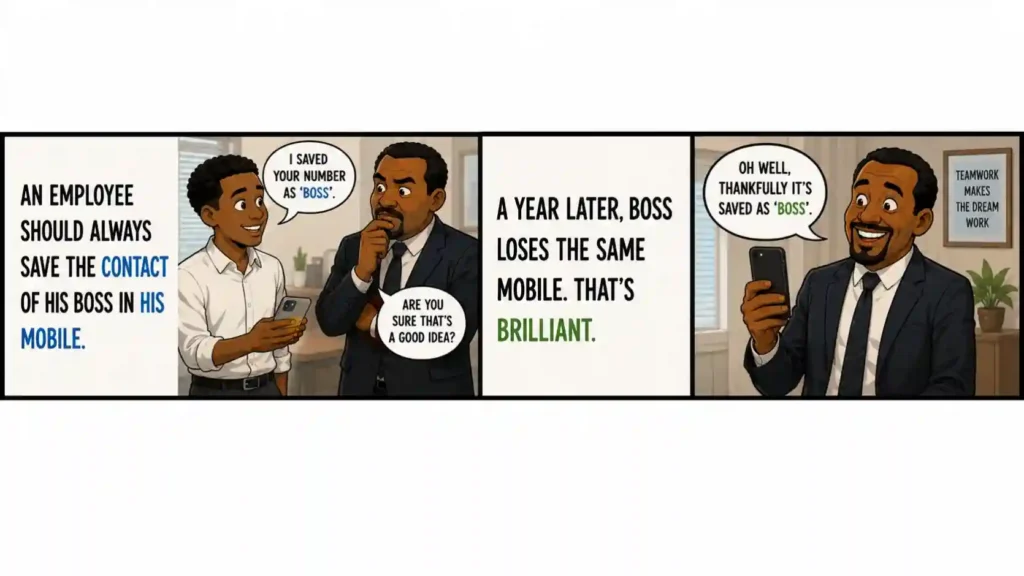
“Take initiative.”
It’s one of the most common pieces of workplace advice.
Employees are encouraged to think independently, solve problems, notice things before they become serious, and avoid waiting for instructions every five minutes.
So imagine an employee notices a problem.
Instead of waiting, they solve it.
They organize the paperwork.
They improve a small process.
They help another department.
They make a decision they believe will save everyone time.
And then comes the unexpected response:
“Who told you to do that?”
Suddenly, initiative has become overstepping.
The employee learns an important lesson: apparently, initiative is encouraged—but preferably with permission.
Then the boss notices a problem and makes a change without asking anyone.
Now the language changes.
He’s taking initiative.
He’s being proactive.
He’s showing leadership.
He’s thinking ahead.
Again, there can be a legitimate difference. Managers often have authority to make decisions that employees don’t. An employee shouldn’t necessarily change company procedures without approval.
But there is still a funny contradiction here.
Everyone wants employees to think like leaders—until an employee actually thinks like a leader.
The best workplaces solve this by making expectations clear. Employees should know which decisions they can make independently and which ones require approval.
That way, “initiative” doesn’t become a word that only works when someone with a bigger office uses it.
5. When You are Out of the Office, You are Wandering Around When Your Boss Is Out, He is on Business
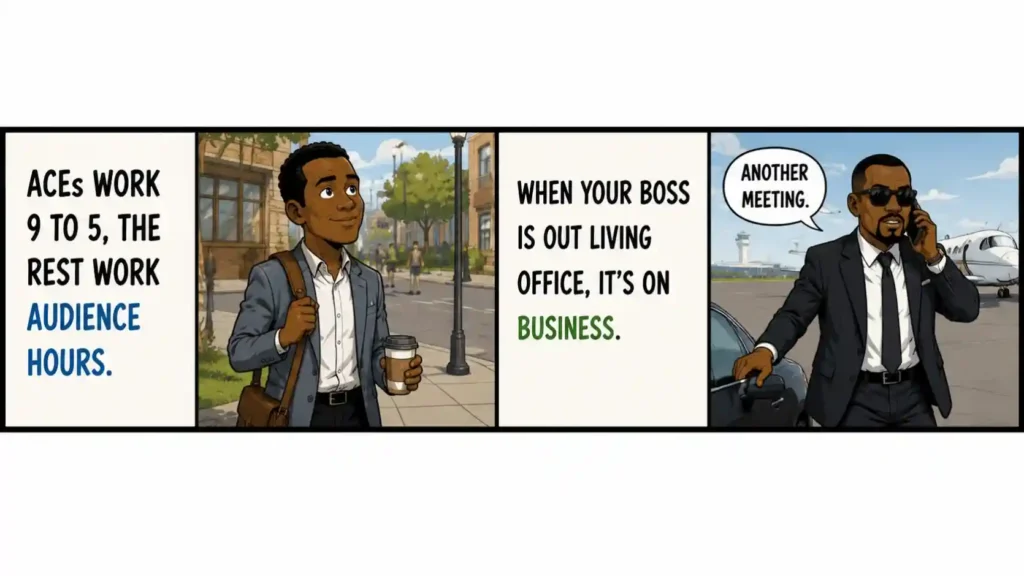
An empty chair can tell two completely different stories.
When an employee isn’t at their desk, someone might immediately wonder where they went.
Are they getting coffee?
Did they go for lunch?
Are they talking to someone?
Why have they been gone so long?
If nobody knows the answer, the employee may quickly become the subject of a little office investigation.
But when the boss isn’t at his desk, the explanation often sounds much more important.
He’s on business.
He’s meeting someone.
He’s handling an important matter.
He’s visiting a client.
And, again, the boss may genuinely be doing exactly that.
Managers frequently have responsibilities outside the office, and not every productive activity happens behind a desk.
Still, the contrast can be hilarious.
An employee walks outside for twenty minutes and it looks like they’re disappearing from work.
The boss spends half the day away and apparently the company is being strategically represented somewhere important.
The funny truth is that productivity isn’t always visible.
Someone sitting at a desk isn’t necessarily working.
Someone who isn’t sitting at a desk isn’t necessarily avoiding work.
Maybe the better workplace rule would be to judge people by their results rather than the number of minutes their chair is occupied.
6. When You Apply for Leave, You Must Be Going for an Interview When Your Boss Takes Leave, He is Overworked
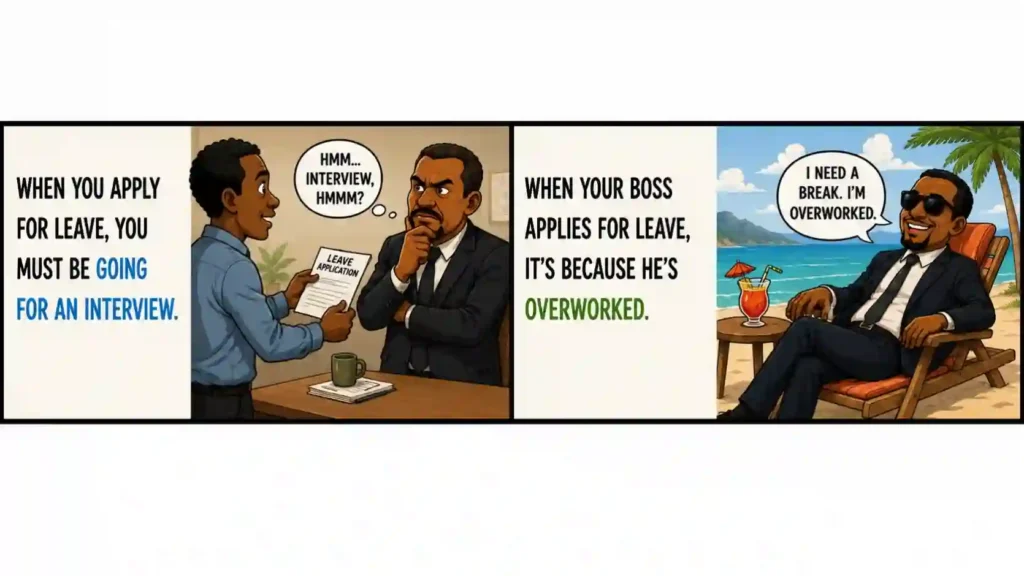
And then comes the ultimate workplace test: asking for time off.
An employee submits a leave request and suddenly feels like they’re applying for a visa.
Why do you need the days?
Is everything okay?
Do you really need that much time?
Is this urgent?
And occasionally, someone may even quietly wonder whether the employee is interviewing somewhere else.
A normal vacation request can somehow become a suspicious event.
Then the boss announces that he’s taking a break.
The reaction is completely different.
He deserves it.
He’s been working too hard.
He needs to recharge.
He’s been under a lot of pressure.
And once again, there is some truth behind the explanation. Managers can carry enormous responsibilities, and taking time away from work is important for them too.
But employees need rest for exactly the same reason.
Taking leave doesn’t automatically mean someone is lazy, disloyal, or searching for another job. Sometimes it simply means they are tired and want to spend time with family, travel, handle personal responsibilities, or recharge.
A good workplace understands that people are not machines.
Whether someone sits in the corner office or the smallest desk in the building, everyone eventually needs a break.
The Real Problem Is not the Difference It is the Double Standard
The six examples in the visual are funny because they exaggerate something many people have experienced.
But there is an important distinction between different responsibilities and unfair treatment.
A boss and an employee don’t have identical jobs. A manager may legitimately have more freedom to make decisions, spend time outside the office, or change priorities. Leadership comes with responsibilities that employees may not have.
That doesn’t mean employees should be judged unfairly.
A healthy workplace should have room for reasonable mistakes, honest questions, initiative, personal time, and different working styles. Expectations should be clear, and accountability should apply consistently.
The best managers don’t need to pretend they’re perfect.
They don’t need special excuses for every mistake.
And they don’t need to treat employees like machines.
In fact, one of the easiest ways for a manager to earn respect is to apply the same basic understanding to the people working for them that they would expect for themselves.
Because everyone is human.
Everyone gets tired.
Everyone makes mistakes.
Everyone sometimes needs more time.
And everyone occasionally wants to disappear from the office for a few days without being accused of secretly joining another company.
Same Office, Different Rules?
Maybe that’s the real joke behind office politics.
The employee takes too long: slow.
The boss takes too long: thorough.
The employee doesn’t finish something: lazy.
The boss doesn’t finish something: too busy.
The employee makes a mistake: careless.
The boss makes a mistake: human.
The employee acts independently: overstepping.
The boss does it: initiative.
The employee leaves the office: wandering around.
The boss leaves: business.
The employee asks for leave: suspicious.
The boss asks for leave: well deserved.
Of course, real workplaces are more complicated than a funny infographic. Not every manager behaves this way, and not every employee is treated unfairly.
But that’s why the joke works.
Most people who have spent enough time at work recognize at least a little bit of themselves in it.
And perhaps the best lesson isn’t that bosses always have different rules.
It’s that good leadership means knowing when the rules should be the same.
Because at the end of the day, it’s the same office, the same clock, the same deadlines, and the same human beings trying to get through another workday.
Same office. Different rules. That’s office politics.
Author’s Note:
This article is intended as lighthearted workplace humor based on common experiences and observations. It is not meant to portray every manager or workplace in the same way. The goal is simply to highlight familiar workplace situations in an entertaining and relatable way.
Latest Posts
- My Brother Destroyed My $78000 SUV Because I Refused to Give It to His Wife—Then the Police Asked One Question That Silenced My Entire Family

- What Happens When You Stop Chasing Women? 9 Powerful Changes Most Men Don’t Expect

- My Father-in-Law Lived Under My Roof for 20 Years, and I Called Him a Burden, Until His Lawyer Opened a Blue Ledger at His Funeral and Revealed What He’d Been Hiding All Along

- Every Ride Home Left Me With Missing Memories And I Thought My Husband Was Worried About My Blackouts Until I Heard His Voice on the Recording

- My Mother Banned Me From My Brother’s Wedding, Then One Phone Call Revealed Who I Really Was
- The White Cloth hanging From a Car Window: What This Little-Known Road Signal Really Means







Hammad Ali
Co-Owner & Author
Hammad Ali is a co-owner and author at MidnightReads, contributing thoughtful and engaging articles across human-interest, life, history, relationships, and entertainment topics.
They help develop and create original, useful content designed to inform, entertain, and give readers something meaningful to take away.