
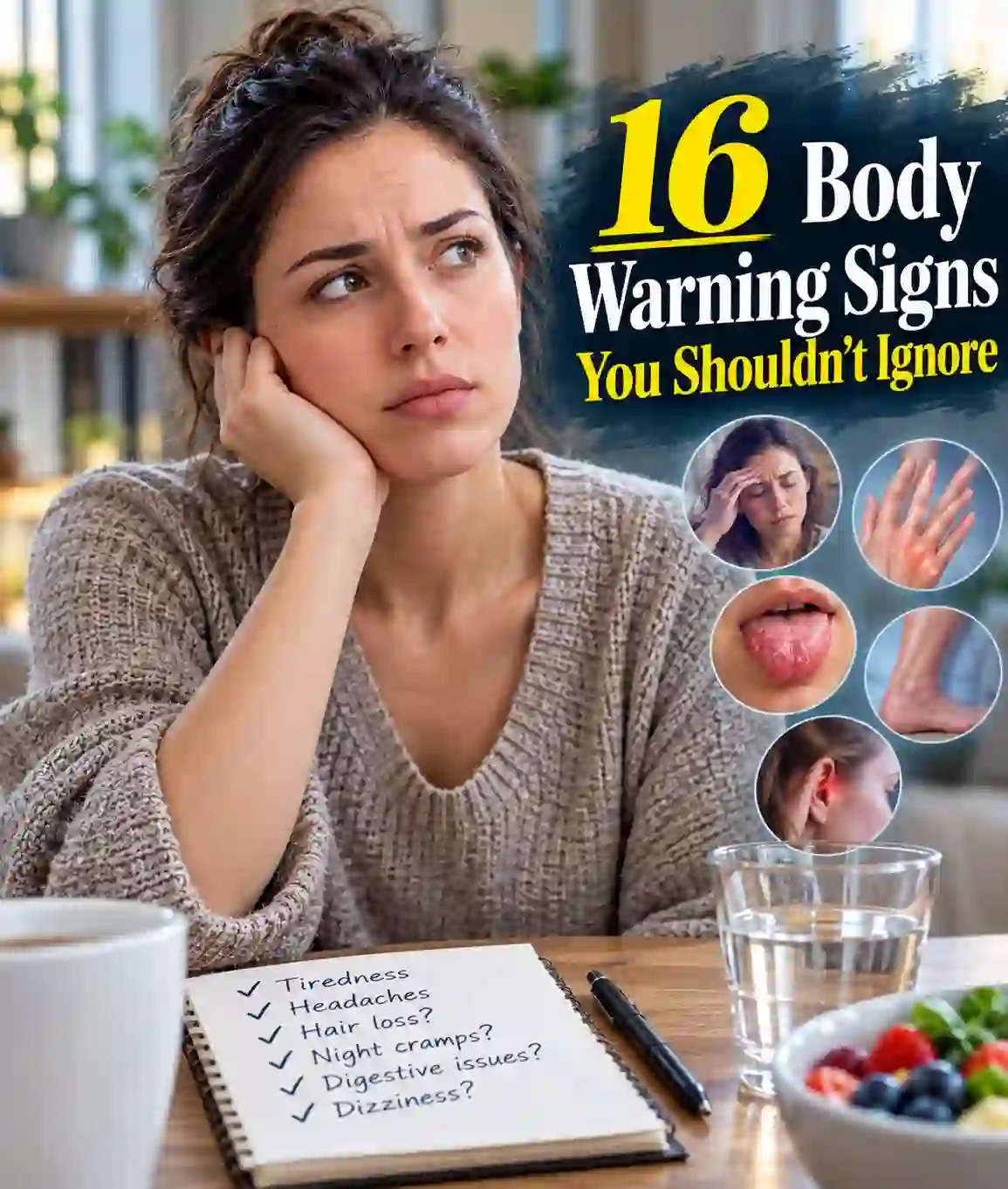
Your body does not always give you an obvious warning when something needs attention.
Sometimes the first clue is surprisingly ordinary: feeling tired even after sleeping, getting frequent headaches, noticing more hair in your brush, waking up with painful leg cramps, or realizing that your hands and feet seem unusually cold.
Most of the time, these symptoms have simple explanations. A poor night’s sleep can leave you exhausted. A long day can trigger a headache. Sitting in one position for hours can make your legs uncomfortable.
But when a change keeps happening, becomes stronger, or appears alongside other symptoms, it can be worth paying attention.
There is one important thing to remember, though: a symptom rarely tells you exactly what is causing it.
A viral health graphic might say that one symptom means a particular vitamin deficiency or disease. Real health is more complicated. The same symptom can have many possible causes, and a deficiency cannot usually be diagnosed from a symptom alone.
So instead of asking, “Which vitamin am I missing?” a better question is:
“Why has this change appeared, and does it keep happening?”
Here are 16 body warning signs worth understanding—and what they may actually mean.
1. You are Yawning Much More Than Usual
Yawning is completely normal. People yawn when they are tired, bored, waking up, or simply changing states between alertness and relaxation.
Occasional yawning is therefore nothing to worry about.
But if you suddenly begin yawning far more than usual, especially when you are getting enough sleep, it may be worth considering what else has changed. Poor-quality sleep, excessive daytime sleepiness, medications and several other factors can contribute to unusual yawning.
One popular claim says frequent yawning automatically means your body is low on oxygen. That’s too simplistic. Yawning has several possible explanations, and a single symptom cannot tell you that your oxygen level is low.
Worth paying attention to: persistent excessive yawning, especially when accompanied by unusual daytime sleepiness, breathing problems, fainting, or other new symptoms.
2. Your Breath Smells Bad Even After Brushing
Bad breath is common, and it doesn’t automatically mean something is wrong with your stomach or digestive system.
The mouth itself is often the place to look first. Bacteria on the tongue, plaque, gum disease, cavities, dry mouth, smoking and certain foods can all contribute to unpleasant breath.
If the problem keeps returning despite brushing, flossing and cleaning your tongue, a dental examination may be more useful than immediately trying supplements or digestive remedies.
Persistent bad breath can sometimes be a clue that something needs attention—but the cause needs to be identified rather than guessed.
Worth paying attention to: ongoing bad breath together with bleeding gums, tooth pain, mouth problems or persistent dry mouth.
3. Your Ears Keep Ringing or Buzzing
A ringing, buzzing, humming or similar sound without an external source is commonly known as tinnitus.
It can happen after exposure to loud music or machinery, with hearing changes, certain ear problems and some medications. It can also occur without an obvious cause.
A common internet claim links ordinary ringing in the ears directly to high blood pressure. That’s not a reliable way to diagnose blood pressure problems.
One particular form deserves attention: a sound that seems to pulse in rhythm with your heartbeat.
Worth paying attention to: persistent tinnitus, tinnitus mainly affecting one ear, hearing loss, or a pulsing sound synchronized with your heartbeat.
4. You are Losing More Hair Than Usual
Seeing some hair in your brush or shower is normal. Hair naturally grows, rests and sheds.
A noticeable change is different.
Hair loss can be associated with hereditary factors, hormonal changes, stress, illness, certain medications, thyroid problems and nutritional deficiencies. Iron deficiency is one possible contributor, but hair loss by itself does not prove that you are low in iron.
That distinction matters because taking iron unnecessarily isn’t a good substitute for finding the reason behind the hair loss.
Worth paying attention to: sudden hair loss, bald patches, significant thinning, or hair loss that continues for months.
5. Your Legs or Ankles Keep Swelling
Leg swelling can happen after spending a long time standing or sitting. Hot weather and some medications can also contribute.
But unexplained or persistent swelling deserves more attention.
Swelling can sometimes occur with problems involving the veins, heart, kidneys or liver. The pattern matters, too.
Sudden swelling in one leg accompanied by pain, warmth or tenderness can have a different significance from mild swelling in both ankles after a long day.
Get prompt medical attention if: swelling appears suddenly, is severe or one-sided, or occurs together with chest pain or difficulty breathing.
6. You Keep Waking Up With Painful Leg Cramps
Few things ruin a good night’s sleep faster than a calf muscle suddenly tightening into a painful knot.
Nighttime leg cramps can have many possible causes. Muscle fatigue, prolonged physical activity, dehydration, certain medications and some medical conditions can all play a role.
Electrolytes such as magnesium are important to normal muscle function, but frequent cramps do not automatically prove that you have a magnesium deficiency.
Before reaching for a supplement, consider your hydration, activity level, medications and overall health.
Worth paying attention to: cramps that are frequent, severe, worsening, or associated with swelling, weakness or other unusual symptoms.
7. Your Fingers Keep Going Numb
Almost everyone occasionally experiences pins and needles after sleeping on an arm or sitting awkwardly.
The concern is when numbness becomes persistent or keeps returning without an obvious explanation.
Vitamin B12 deficiency can affect nerves and cause numbness or tingling. But nerve compression, diabetes, certain medications and other neurological conditions can produce similar symptoms.
This is why numb fingers are a clue—not a diagnosis.
Worth paying attention to: recurring numbness, symptoms that spread to the feet, balance problems, weakness, or symptoms that don’t go away.
Sudden numbness or weakness, particularly on one side of the body, requires urgent medical attention.
8. You Suddenly Crave Certain Foods Constantly
Cravings are normal. They can be influenced by hunger, habits, sleep, stress, emotions and dietary patterns.
A craving therefore isn’t a reliable nutritional test.
There is one unusual situation that deserves attention: repeatedly wanting to eat things that aren’t food, such as ice, soil or paper. This behavior is called pica and can sometimes be associated with iron deficiency.
Instead of assuming that every sweet or salty craving means you are missing a particular mineral, look at the overall pattern.
Worth paying attention to: extreme or persistent cravings, especially cravings for non-food substances or cravings accompanied by weakness or unexplained fatigue.
9. Your Headaches Keep Coming Back
Headaches are extremely common, and most are not signs of a serious illness.
Dehydration can contribute to headaches, but so can lack of sleep, stress, skipped meals, eye strain, infections, caffeine changes, migraines and many other factors.
The useful question isn’t simply, “What vitamin am I missing?”
It’s:
“When do these headaches happen, and has the pattern changed?”
Keeping track of sleep, meals, hydration, stress and headache timing can sometimes reveal useful patterns.
Seek urgent medical care if: a headache suddenly becomes extremely severe, follows a head injury, or occurs with confusion, fainting, weakness, trouble speaking, vision changes, fever or a stiff neck.
10. Your Hands and Feet Are Almost Always Cold
Cold hands and feet can simply mean that you’re cold.
But if your hands or feet remain unusually cold even in a comfortable environment, there may be other factors worth considering.
Anemia, thyroid problems and circulation issues are among the possibilities. Other symptoms can help provide context.
For example, someone experiencing persistent coldness along with significant fatigue, weakness or dizziness may have a reason to discuss those symptoms with a healthcare professional.
Worth paying attention to: persistent coldness combined with numbness, pain, unusual color changes, significant fatigue or weakness.
11. Your Tongue Feels Sore or Burning
A burning or unusually sore tongue can be surprisingly uncomfortable.
Irritation, dry mouth, infections and nutritional problems can all contribute. Vitamin B12 deficiency is one possible cause of mouth and tongue changes, particularly when other deficiency symptoms are present.
But once again, a burning tongue doesn’t automatically mean that you need a B-vitamin supplement.
The cause matters.
Worth paying attention to: persistent tongue pain, changes in appearance, mouth sores, altered taste, numbness or symptoms occurring alongside unusual fatigue.
12. Your Sense of Smell Has Changed
A sudden change in your sense of smell can make familiar foods seem completely different.
Colds, allergies, nasal congestion, sinus problems and some viral infections can affect the sense of smell. Certain medications can also contribute.
A reduced sense of smell should not automatically be interpreted as a zinc deficiency.
If your smell does not return after an illness or becomes weaker without an obvious explanation, it is worth discussing with a healthcare professional.
Worth paying attention to: unexplained or persistent loss of smell, especially when accompanied by other unusual symptoms.
13. Your Gums Bleed Regularly
A little bleeding after brushing doesn’t necessarily mean you have a vitamin deficiency.
One of the most common explanations is gum inflammation caused by plaque buildup. Brushing too aggressively can also irritate the gums.
However, frequent bleeding shouldn’t simply be ignored.
Significant vitamin C deficiency can cause gum problems, but it is only one possible explanation.
A dentist can often determine whether the problem is related to gum health, brushing habits or something that requires further investigation.
Worth paying attention to: regular bleeding, swollen or painful gums, persistent bad breath, or loose teeth.
14. You are Tired All the Time
This is one of the most important signs on the list—and one of the easiest to misunderstand.
Everyone gets tired.
The concern is unexplained fatigue that continues despite adequate sleep and begins interfering with everyday life.
Anemia can cause fatigue, weakness, dizziness, headaches and shortness of breath. Vitamin B12 deficiency can also contribute to anemia and neurological symptoms.
But fatigue has many other possible causes, including poor sleep, stress, infections, thyroid problems, medications and other medical conditions.
That’s why “I’m always tired” is not a diagnosis.
Worth paying attention to: fatigue lasting for weeks, fatigue that interferes with normal activities, or tiredness accompanied by weakness, breathlessness, unexplained weight changes or other persistent symptoms.
15. You Feel Dizzy Again and Again
“Dizziness” can mean different things.
Some people feel as if they are about to faint. Others feel as if the room is spinning. Still others describe a general feeling of being unsteady.
Dehydration, low blood pressure, low blood sugar, anemia, medications and inner-ear problems can all cause dizziness.
Because there are so many possibilities, repeated dizziness deserves more than a guess about which vitamin might be missing.
Worth paying attention to: repeated dizziness, fainting, difficulty walking, severe headache, chest pain, confusion, weakness, speech problems or sudden vision changes.
16. The Whites of Your Eyes Are Turning Yellow
This is one symptom that deserves particular attention.
Yellowing of the whites of the eyes can be a sign of jaundice, which occurs when bilirubin builds up in the body.
There are several possible causes, including conditions affecting the liver, gallbladder, bile ducts or breakdown of red blood cells.
Unlike many of the symptoms on this list, genuine yellowing of the eyes shouldn’t be treated as something to fix with a random vitamin or home remedy.
If your eyes have genuinely turned yellow, arrange medical evaluation promptly, particularly if you also have dark urine, pale stools, abdominal pain, fever, vomiting or significant weakness.
Why You Should not Diagnose Yourself From a Symptom List
This may be the most important part of the entire article.
Social-media health graphics are designed to be easy to understand. That’s why they often connect one symptom with one explanation.
Real medicine doesn’t work that neatly.
For example:
Tiredness → could be sleep deprivation, stress, anemia, an infection, medication effects, thyroid problems or something else.
Hair loss → could be hereditary hair loss, hormonal changes, stress, illness, medication effects or nutritional problems.
Leg cramps → could be related to activity, hydration, medications or several other factors.
Headaches → could have dozens of possible explanations.
The symptom is only the starting point.
Doctors look at the person’s age, medical history, medications, diet, lifestyle, other symptoms, physical examination and, when appropriate, laboratory tests.
That is what turns a vague symptom into useful information.
What You Can Do Instead of Guessing
If you notice one of these signs, don’t panic.
Start by observing the pattern.
Ask yourself:
- When did it begin?
- How often does it happen?
- Is it getting better or worse?
- Does anything trigger it?
- Did it start after an illness or medication change?
- Are other symptoms happening at the same time?
- Is it interfering with normal daily life?
Writing these details down can be surprisingly helpful if you eventually need to speak with a healthcare professional.
And be cautious with supplements.
A symptom that looks like a deficiency on the internet does not necessarily mean you should start taking that nutrient. The correct treatment depends on the actual cause.
When You Should not Wait
Some symptoms need urgent attention rather than observation at home.
Seek urgent medical care for symptoms such as sudden weakness or numbness, severe difficulty breathing, chest pain, fainting, sudden confusion, difficulty speaking, sudden major vision changes, or an exceptionally severe and sudden headache.
Likewise, sudden one-sided leg swelling accompanied by pain or breathing difficulty should not be ignored.
When something feels seriously wrong, it is better to seek professional help than to spend hours trying to identify the problem from a social-media post.
The Bottom Line
Your body does communicate with you—but its messages aren’t always as simple as an infographic makes them appear.
A headache doesn’t automatically mean dehydration.
Hair loss doesn’t automatically mean low iron.
A leg cramp doesn’t automatically mean low magnesium.
Tiredness doesn’t automatically mean low vitamin D.
And ringing ears don’t automatically mean high blood pressure.
Symptoms are clues, not conclusions.
The most useful habit is to notice changes, look for patterns and take persistent or concerning symptoms seriously without immediately assuming the worst.
Sometimes the explanation is simple.
Sometimes it isn’t.
Either way, listening to your body is a much better strategy than ignoring it—or trying to diagnose yourself from a viral graphic.
Medical Disclaimer
This article is provided for general educational and informational purposes only. It is not intended to diagnose, treat or prevent any disease or medical condition. The symptoms discussed can have many different causes, and experiencing a symptom does not necessarily mean that you have a vitamin deficiency or a specific illness. If you have persistent, severe, sudden or worsening symptoms, consult a qualified healthcare professional. For emergencies, seek immediate medical care.
You May Also Like
- I Was Hiding in a Brooklyn Restaurant From the Men My Stepmother Sent After Me When a Six-Year-Old Boy quietly Asked Me to Marry Him, Then His Father Walked In

- A Stray Cat Kept Returning to the Same Porch Every Evening, and the Reason Finally Became Clear

- 10 Ways Some Women Use Emotional Manipulation in Relationships Without Men Even Realizing It
- 15 Private Things Women Do When They are Completely Alone — Things They Rarely Tell Anyone About

- 10 Hard Truths About Love Every Man Should Learn Before a Relationship Costs Him His Peace
- 15 Powerful Questions to Ask Any Woman for a Deeper Connection





About the Author
Hassan is the founder and editor of MidnightReads, a publication featuring thoughtful stories, human-interest articles, history, relationships, and entertaining reads.
He is involved in researching, writing, and editing content for the site, with a focus on creating original, clear, and useful articles that give readers something meaningful to take away.
Hassan believes good content should inform, entertain, and encourage curiosity.
— Hassan, Founder & Editor, MidnightReads