
When Everett Langston asked me to marry him, I was thirty-six years old, exhausted, nearly out of savings, and raising my ten-year-old daughter, Brielle, alone. He was seventy-four, a wealthy widower who owned a beautiful home outside Raleigh, North Carolina, and had been living by himself since his wife died several years earlier.
Anyone who heard about our marriage eventually came to the same conclusion. They assumed I had married an old man because of his money. I couldn’t really blame them. From the outside, it probably looked exactly that way.
The truth was much more complicated.
At the time, Brielle had been struggling with recurring respiratory problems for months. Her doctor wanted her to have consistent treatment, healthier surroundings and regular appointments. I was doing everything I could, working mornings cleaning offices and afternoons doing housekeeping for private homes around Raleigh and Cary, but our bills kept getting ahead of me.
One of the houses I cleaned belonged to Everett.
I had worked for him for almost two years, and he had always been kind without being overly familiar. One afternoon, he found me crying quietly while dusting a framed photograph of his late wife. I tried to pretend I was fine, but instead of walking away, he made coffee and asked what was wrong.
For some reason, I told him everything.
I told him about Brielle’s health, the rising rent, the medical bills and how frightened I was that I would eventually have to choose between keeping a roof over our heads and paying for my daughter’s treatment.
A week later, Everett asked me to sit down with him.
“I have something to propose,” he said.
I immediately became cautious.
“I’m listening.”
He looked uncomfortable, as though he knew how strange his next words would sound.
“Marry me. You and Brielle can move into my house. I’ll take care of the household expenses, and I’ll make sure she gets whatever medical care she needs.”
I stared at him.
Before I could respond, he continued.
“I don’t expect you to become some traditional wife. You can keep working if you want. You can have your own room. I won’t ask you for anything you’re not comfortable giving.”
“Then why would you marry me?”
He looked toward the photograph of his late wife.
“Because I’m tired of living alone. I don’t want another romance. I want a family.”
I went home that night and spent hours thinking about it.
The next morning, I accepted.
Our wedding was small. Brielle wore a pale blue dress, and Everett made sure she understood that she didn’t have to call him Dad.
“Just call me Everett,” he told her. “We’ll figure everything else out as we go.”
For the first several months, our strange little arrangement worked better than I ever imagined.
Everett treated me with respect. He never questioned where I went or demanded to know how I spent money. He also never tried to control Brielle. Instead, the two of them slowly developed a friendship that surprised me.
He taught her how to grow tomatoes in his garden. They played chess after dinner, argued over baseball, and spent Saturday mornings repairing things around the house. He even bought her a used piano and spent several weekends helping her learn the basics.
Brielle became happier.
She slept better. She stopped worrying about whether we would have to move again. For the first time in years, she had a bedroom she loved and a backyard where she could play.
I should have felt completely relieved.
Instead, something began to bother me.
Everett had started giving Brielle money.
The first time I discovered it, I found an envelope inside her backpack with $100 in cash.
“Where did this come from?” I asked.
Brielle hesitated.
“Everett gave it to me.”
“Why?”
“He told me to save it.”
I didn’t think much of it at first. Everett was wealthy, and perhaps he simply wanted to teach her about saving. But a week later, I found another envelope. This one contained $200.
That evening, I asked Everett about it.
“You’re giving Brielle money without telling me?”
He didn’t look surprised.
“She isn’t spending it.”
“That isn’t the point.”
“I know.”
“Then why are you doing it?”
He leaned back in his chair.
“Because I want her to have something of her own.”
“She already has everything she needs.”
“Today, yes.”
His answer bothered me.
“What does that mean?”
He was quiet for a moment before saying, “You’ll understand someday.”
I didn’t like that answer, but I decided not to turn it into an argument.
After that, I noticed the envelopes more often. Sometimes there was $50 inside, sometimes $100, and once I found $500. Brielle always told me the same thing: Everett wanted her to save it.
She never spent any of it.
She kept every envelope inside a small wooden box in her closet.
Then Everett started acting strangely.
He began spending long hours in his study with the door locked. He made phone calls late at night, and whenever I entered the room, he would either hang up or change the subject.
One afternoon, I heard him talking on the phone.
“She can’t know yet,” he said.
I stopped outside the door.
A few seconds later, he added, “Brielle is the only one who can help me finish this.”
I walked away before he could see me.
I wanted to ask him what he meant, but something stopped me.
Perhaps I was afraid of the answer.
A few days later, Everett brought a large cardboard box into the house. I asked what was inside.
“Old family papers,” he replied.
He carried it into his study and locked the door.
From that moment, I couldn’t stop wondering what he was hiding.
Then came the night that changed everything.
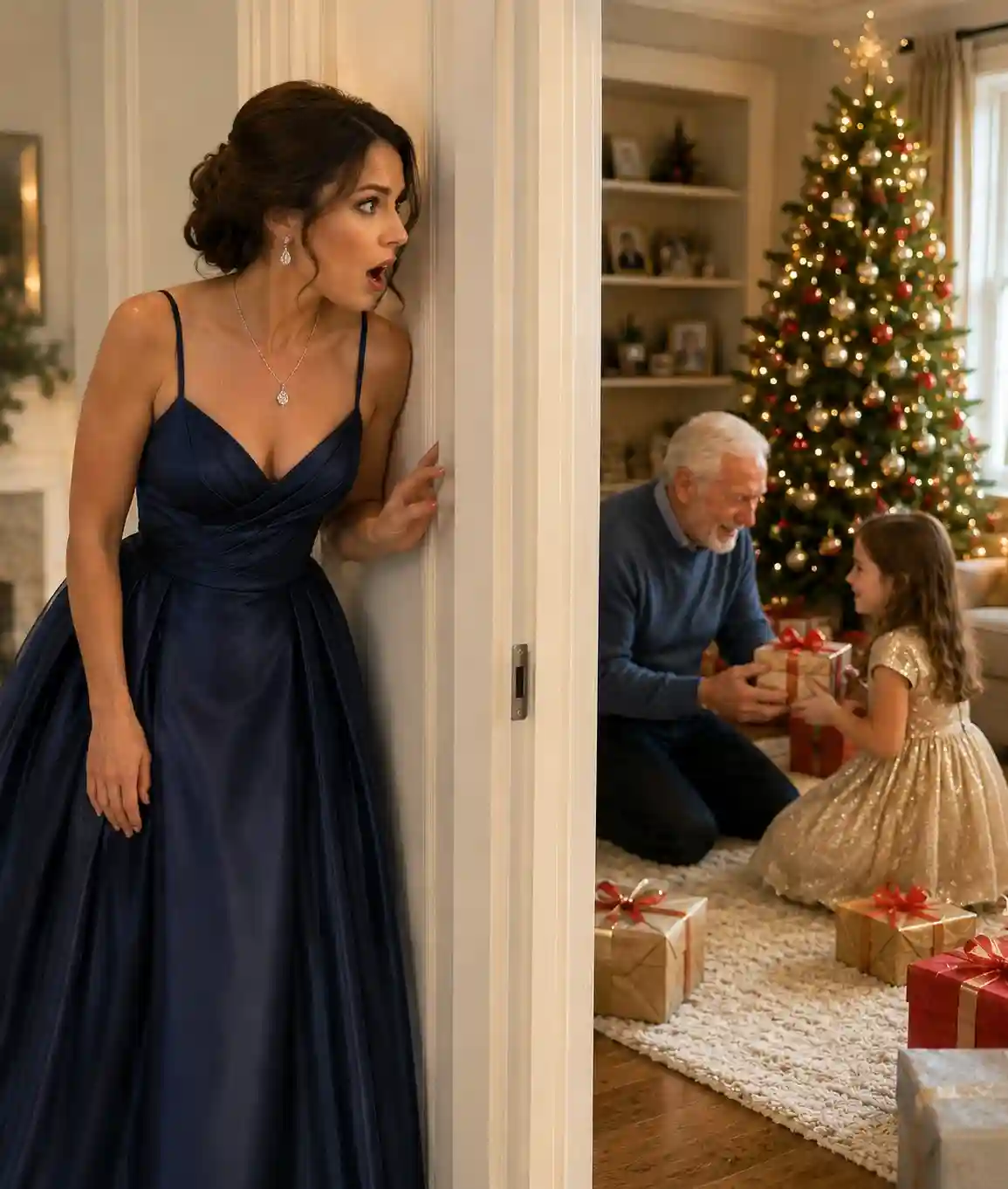
It was almost midnight when I woke to the sound of footsteps downstairs. At first, I assumed Everett was getting a glass of water. Then I heard Brielle’s bedroom door open.
I sat up in bed.
“Brielle?”
She didn’t answer.
I quietly opened my bedroom door and walked toward the stairs. Before I reached the top step, I heard Everett’s voice from the living room.
“Quickly, before your mom comes down.”
I froze.
My heart started beating faster.
Why was my husband secretly meeting my daughter in the middle of the night?
I heard Brielle whisper something, but I couldn’t make out the words.
Everett replied, “We don’t have much time.”
That was enough.
I went downstairs.
The living room was dimly lit by a single lamp. Everett was standing beside the coffee table, and Brielle was next to him. The cardboard box was open on the floor.
Inside were dozens of envelopes, photographs, bank documents and several folders.
Brielle was holding a small envelope.
When they saw me, both of them went silent.
“What is going on?” I asked.
Everett’s expression changed immediately.
“Laurel, please—”
“No. I want an answer.”
I looked at my daughter.
“Brielle, come here.”
She slowly walked toward me.
I took her hand.
“Why are you downstairs at midnight?”
She looked at Everett instead of answering me.
That frightened me even more.
I turned back toward him.
“What are you doing with my daughter?”
Everett took a deep breath.
“I was trying to finish something before you found out.”
“Found out what?”
He looked at the box.
Then he said, “You need to sit down.”
“I’d rather stand.”
He didn’t argue.
Instead, he picked up a folder and handed it to me.
I opened it.
The first document was a bank statement.
I stared at the amount.
Then I looked at another document.
It was a trust agreement.
Brielle was the beneficiary.
My hands started trembling.
“How much money is in this?”
“Enough to pay for her education.”
“How much, Everett?”
He hesitated.
“More than you could save in a lifetime.”
I couldn’t believe what I was reading.
“Why did you do this?”
Everett sat down slowly.
“Because I know what it feels like to watch someone you love have a future and realize you can’t protect them from everything.”
He looked toward the photograph in his hand.
Then he finally told me about Emily.
Years before he met me, Everett and his wife, Margaret, had a daughter. Her name was Emily, and she died when she was twelve after an illness that wasn’t diagnosed early enough.
“She was a wonderful child,” he said. “She wanted to become a doctor. She had notebooks full of plans for her future. She wanted to travel, study medicine and someday help other children.”
He looked down at the photograph.
“We thought we had more time.”
His voice became quieter.
“After she died, Margaret never really recovered. Neither did I. I spent years thinking about all the things we could have done if we’d known how little time we had.”
I looked at Brielle.
“And when you met her?”
“I didn’t see Emily.”
He answered so quickly that I knew he wanted me to understand.
“Brielle is Brielle. I would never try to turn her into someone else. But watching you struggle to provide everything she needs reminded me of how helpless I felt when Emily was sick.”
He pointed toward the box.
“So I decided that whatever happens to me, Brielle will always have a safety net.”
I looked down at the envelopes.
“What about all the money you’ve been giving her?”
“Those aren’t for her to spend.”
“What are they for?”
“She’s been learning how to save. Every envelope represents something. College. An emergency. A future business. A place of her own.”
I looked at my daughter.
“You knew about this?”
She nodded.
“Why didn’t you tell me?”
“Because Everett wanted to surprise you.”
I looked at him.
“You scared me half to death.”
He gave me an apologetic smile.
“I know.”
“You told her to hurry before I came downstairs.”
He winced.
“When you say it like that, it does sound terrible.”
Despite myself, I almost laughed.
Almost.
Then Brielle handed me the small envelope she had been holding.
“This one is for you.”
I opened it.
Inside was a handwritten letter from Everett.
He explained that he knew I had accepted his proposal because I wanted to give Brielle a safer life. He knew I was afraid of depending on him, and he wanted me to know that I would never owe him my love or loyalty because of what he provided.
Then I reached the final paragraph.
“I didn’t marry Laurel because she needed my money. I married her because I needed a family.”
I couldn’t hold back my tears.
For months, I had wondered whether Everett’s generosity came with a hidden price. I had watched him closely, convinced there must be some reason behind everything he did.
Instead, he had been quietly preparing for a future he might never see.
I looked through the rest of the documents and discovered that he had even arranged for the trust to remain protected if he died while Brielle was still a minor.
Then I found something I hadn’t expected.
My name was included too.
I looked at him.
“You put me in the trust?”
“Yes.”
“Why?”
He smiled.
“Because you gave me something too.”
“What?”
“A reason to stop living like the house was a museum.”
I started crying again.
Brielle came over and hugged me.
Everett joined us, and for a few moments, the three of us simply stood there together.
The strange thing was that I had walked downstairs expecting to discover something terrible.
Instead, I discovered that the secret I had feared was actually an act of love.
Then Brielle suddenly smiled.
“Can we finish the surprise now?”
I looked at her.
“What surprise?”
She ran into the kitchen and returned carrying a small cake.
I stared at it.
Everett laughed.
“She remembered the date.”
I looked at the clock.
It was twelve fifteen.
It was the anniversary of the night I had agreed to marry him.
I had completely forgotten.
The cake was slightly crooked, and one side was more burned than the other, but we sat around the kitchen table and ate it anyway.
That night, we talked until nearly two in the morning.
We talked about Emily. We talked about Brielle’s future. We talked about the trust and what would happen when she became an adult. Most importantly, we talked about the things we had been too afraid to say during the first year of our unusual marriage.
I told Everett I had been suspicious of him.
He admitted he knew.
He also admitted that his secrecy had made everything worse.
“I should have told you from the beginning,” he said.
“Yes, you should have.”
“I was afraid you’d think I was trying to buy your family.”
I looked across the table.
“And I was afraid there was a price attached to everything you gave us.”
He nodded.
“Maybe we were both afraid of the same thing.”
After that night, things changed.
Everett stopped keeping secrets about the trust. I became involved in the financial planning, and Brielle continued learning how to manage her savings.
But something else changed too.
I stopped thinking of Everett as the wealthy older man I had married because I needed help.
He became my husband.
Not because of his money.
Because of the quiet mornings, the arguments over dinner, the terrible jokes, the garden disasters and the way he always left the porch light on when I was out late.
Years later, when Brielle graduated from college, Everett stood beside me in the crowd.
He cried when she walked across the stage.
After the ceremony, she ran toward us and hugged him.
“Thank you,” she said.
Everett shook his head.
“You did all the hard work.”
She smiled.
“You gave me the chance.”
He looked at me.
“No. Your mother gave you that chance long before I did.”
I watched the two of them embrace, and I thought about the woman I had been when I first accepted Everett’s proposal.
I had been frightened, tired and desperate to protect my child.
I had believed money was the answer because money could pay the bills, provide better medical care and give Brielle opportunities I couldn’t afford on my own.
But money wasn’t what saved us.
It was kindness.
It was trust.
It was having someone willing to stand beside us without demanding that we repay him for it.
I had married a seventy-four-year-old wealthy man because I wanted my daughter to have a better life.
What I didn’t know then was that my daughter wasn’t the only person who needed saving.
Everett had been lonely.
I had been afraid.
Brielle had been worried about losing everything she knew.
Somehow, the three of us found each other at exactly the right time.
And the midnight secret that once terrified me became one of the memories I treasure most.
Because when I rushed downstairs expecting to discover something I would never forgive, I found something completely different.
I found a man quietly preparing a future for my daughter.
And, without realizing it, he had already become part of our family.
Author’s Note: This is an original fictional story created for entertainment. The characters and events are fictional, but the emotions and themes of family, trust, sacrifice, and second chances are meant to feel familiar and heartfelt.
Related Posts
- I Married a 74-Year-Old Wealthy Man to Give My Daughter a Better Life but Then I Heard Him Whispering to Her at Midnight
- Kiersten Was 29 Weeks Pregnant and Preparing for Her Second Son, Then One Diagnosis Forced Her to Begin a Fight She Never Expected
- Five Years After Our Divorce, My Ex-Husband Mocked Me at My Best Friend’s Wedding, Then My Daughter Ran to Call Me “Mommy,” and His New Wife Suddenly Went Pale
- My 72-Year-Old Mom’s 57-Year-Old Boyfriend Always Left Before Dessert—Until My Daughter Followed Him One Night and Returned in Tears With His Briefcase

About the Author
Hassan is the founder and editor of MidnightReads, a publication featuring thoughtful stories, human-interest articles, history, relationships, and entertaining reads.
He is involved in researching, writing, and editing content for the site, with a focus on creating original, clear, and useful articles that give readers something meaningful to take away.
Hassan believes good content should inform, entertain, and encourage curiosity.
— Hassan, Founder & Editor, MidnightReads