
My name is Romy, and for most of my adult life, I thought motherhood was something I would only experience through other people.
When I was 23, a doctor gently explained that I had been born infertile.
I remember sitting in that little examination room afterward, staring at the floor and trying not to cry.
I had imagined being a mother since I was a child.
I used to wrap my dolls in blankets, carry them around the house, and whisper that I would always protect them.
For years, I wondered whether I would ever get the chance to make that promise to a real child.
Then I met Wilder.
He never treated my infertility like something that made me incomplete.
When we got married, he surprised me by turning one of our spare bedrooms into a child’s room.
He painted the walls a warm yellow, put a soft rug on the floor, and filled the shelves with children’s books.
When I saw it, I stood in the doorway with tears running down my face.
“You know we don’t have a baby,” I whispered.
Wilder smiled.
“Not yet.”
I looked at him.
“What do you mean?”
He took my hand.
“We can adopt.”
For the first time in years, the word mother didn’t feel like something that belonged to someone else.
It felt possible.
We began the adoption process.
Wilder worked as an emergency-room doctor, so he was used to seeing people on the worst days of their lives. He was also the kind of person who couldn’t ignore someone who needed help.
A few weeks into the process, he was asked to join a medical volunteer team traveling overseas after a devastating natural disaster.
The assignment would last about a month.
Neither of us wanted him to go.
But people were injured, hospitals were overwhelmed, and doctors were desperately needed.
“You’ll handle the adoption appointments?” he asked the night before he left.
“I will.”
“And you’ll call me if anything changes?”
“Every time.”
He hugged me.
“Then maybe you’ll meet our child while I’m gone.”
I laughed nervously.
“That’s a lot of pressure.”
He kissed my forehead.
“Don’t look for perfect. Just look for the child who feels like home.”
Two days later, I visited an orphanage.
The social worker introduced me to several children.
Some were energetic and curious.
Others barely looked up.
Then I noticed a little girl sitting beside a window.
She was seven years old.
Her hair was pulled into two messy braids, and she was carefully coloring a picture with a purple crayon.
I sat beside her.
“What are you drawing?”
She didn’t look at me.
“A house.”
“It’s pretty.”
“It isn’t finished.”
I smiled.
“What does it need?”
“A family.”
That answer stayed with me.
She finally looked up.
Her name was Sunny.
She had been in state care for some time and was legally eligible for adoption.
I spent nearly two hours with her that day.
She told me about her favorite books, her imaginary dog, and the fact that she believed every house should have a yellow door because yellow doors looked welcoming.
Before I left, she handed me the purple crayon.
“You can keep it.”
I laughed.
“Are you sure?”
“Yes.”
“Why?”
“Because you came back.”
I didn’t understand what she meant.
Not then.
That evening, I called Wilder.
“I met someone.”
His voice immediately changed.
“Tell me.”
“Her name is Sunny.”
I described her.
He listened quietly.
When I finished, he said:
“Romy, I think you already know.”
I did.
I just didn’t want to admit how quickly my heart had chosen her.
Over the next few weeks, the adoption moved forward.
Sunny came to our home.
She inspected every room.
She counted the steps leading upstairs.
She opened every kitchen cabinet.
Then she found the yellow bedroom.
“You made this for me?”
“I hoped someone would use it.”
She smiled.
“I like it.”
And suddenly the room wasn’t empty anymore.
Neither was the house.
Sunny filled our days with questions and stories.
She wanted pancakes every morning.
She left books everywhere.
She slept with three stuffed animals and somehow managed to take up most of the bed.
She was happy.
But there were moments when something seemed wrong.
Sometimes she’d freeze when she heard a man’s voice outside.
Sometimes she woke from nightmares.
And whenever I asked what was wrong, she’d say:
“Nothing.”
I didn’t push.
I wanted her to learn that our home was a safe place.
Wilder called regularly from overseas.
Sunny knew he was my husband.
She knew he was going to be her father.
But I deliberately didn’t show her photographs.
I wanted their first meeting to be special.
The night before Wilder came home, he called me.
“I can’t believe tomorrow is finally here.”
“She’s excited.”
“What did she say?”
“She asked whether you’re bringing pancakes.”
He laughed.
“I’ve been gone for a month and that’s what she wants?”
“She has priorities.”
“Can I talk to her?”
I looked toward Sunny.
She was drawing at the table.
“Not tonight.”
“Why?”
“I want to see her reaction when she meets you.”
There was a pause.
“Okay,” he said. “Tomorrow, then.”
The following evening, I cooked all his favorite food.
Sunny wore a pink dress.
She kept asking what time he would arrive.
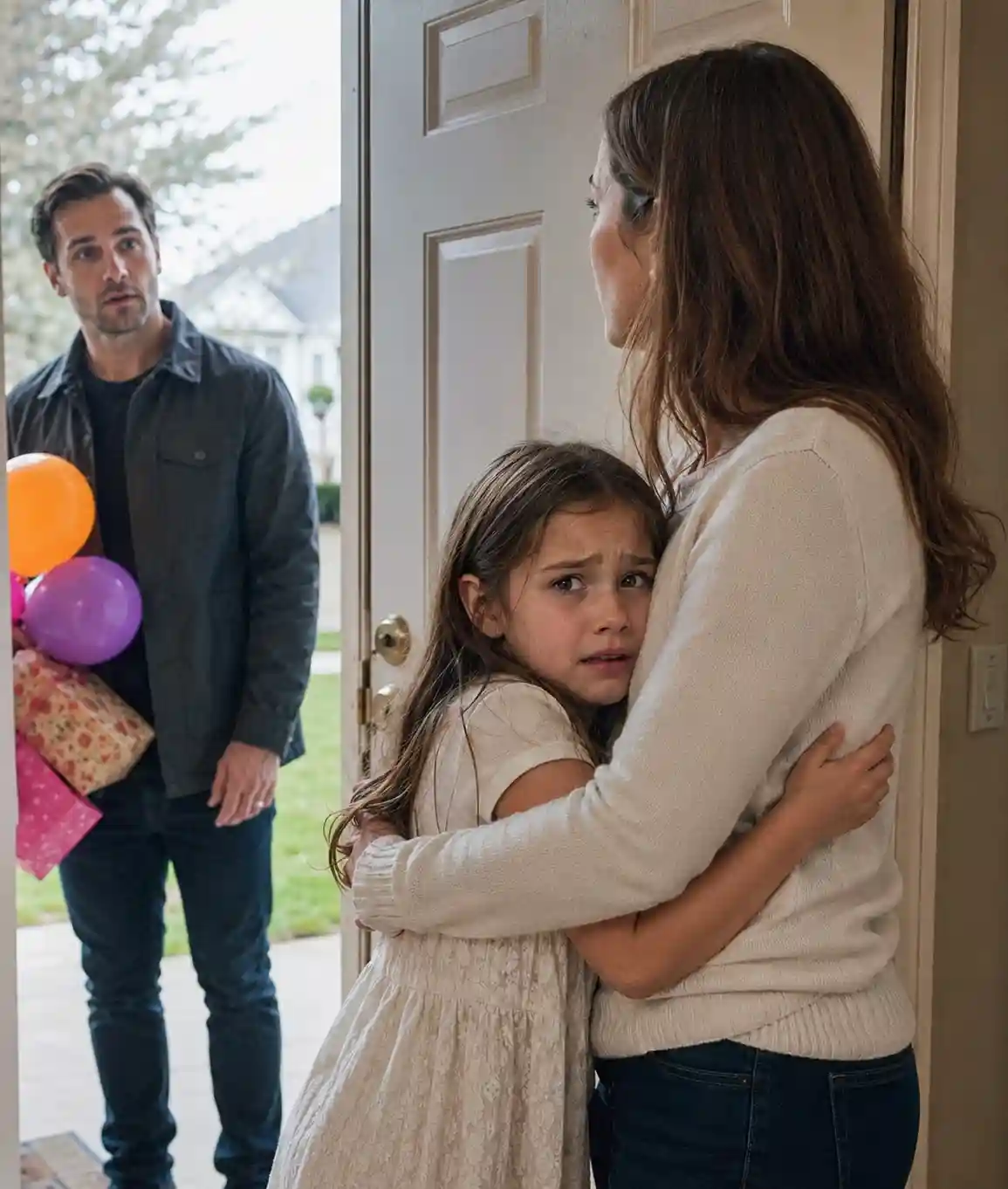
Finally, the doorbell rang.
Sunny grabbed my hand.
“Is that him?”
“Yes.”
I opened the door.
Wilder stood there with balloons, presents, and an enormous smile.
He looked exhausted.
But happy.
Then his eyes landed on Sunny.
His smile disappeared.
Sunny stared at him.
For one second, neither of them moved.
Then Sunny’s face turned white.
Her fingers dug into my hand.
“Sunny?”
She stepped backward.
Wilder whispered:
“No.”
I looked at him.
“You know her?”
Sunny suddenly screamed.
“NOT HIM AGAIN!”
She ripped her hand out of mine and ran behind me.
I turned toward Wilder.
His face was as pale as hers.
“Romy,” he whispered.
“What?”
“I’ve seen her before.”
My heart began pounding.
“Where?”
Wilder slowly put the balloons down.
“After the hurricane.”
I stared at him.
“The disaster mission?”
He nodded.
“There was a temporary medical shelter near the coast. We treated hundreds of people.”
He looked at Sunny.
“She was there.”
Sunny began crying.
Wilder took a step backward.
“I won’t come any closer.”
I looked between them.
“What happened?”
Wilder swallowed.
“She was brought into the medical tent one night. She had a cut on her forehead and bruises on her arm.”
Sunny spoke from behind me.
“He found me.”
Wilder nodded.
“I treated her.”
“You promised you’d come back,” Sunny whispered.
“I know.”
“You promised.”
“I know.”
I turned toward him.
“Why did you leave?”
“I didn’t leave her.”
His voice cracked.
“The shelter was evacuated. I was ordered to another location because dozens of injured people needed medical care. I tried to find her afterward, but the children had been moved.”
Sunny wiped her eyes.
“I waited.”
Wilder looked devastated.
“I know.”
“You never came.”
“I tried.”
“You didn’t.”
The room became silent.
Then Wilder said something that changed everything.
“I came back three times.”
Sunny looked up.
“What?”
“I kept asking about you. Nobody knew where you’d been transferred.”
“Why?”
“Because I couldn’t forget you.”
Sunny stared at him.
“Then why didn’t you tell Mommy?”
I looked at Wilder.
He looked at me.
“I didn’t know she was the same child.”
My stomach dropped.
“Wait.”
Wilder explained.
The girl he’d treated during the disaster had been registered under a temporary shelter identification number.
By the time he returned, the shelter had been cleared.
He had no name.
No photograph.
No way to find her.
Then, months later, I had walked into an orphanage and met Sunny.
Neither of us knew.
Until that moment.
I knelt beside Sunny.
“Baby, did you know he was the doctor who helped you?”
She nodded.
“I remembered his voice.”
That was why she had been terrified.
Not because Wilder had hurt her.
Because she remembered the man from the worst night of her life.
The man who had carried her out of the wreckage.
The man who had promised to return.
And the man she believed had disappeared.
Wilder sat on the floor several feet away from her.
“I am sorry I wasn’t there when you needed me.”
Sunny stared at him.
“You saved me.”
“I was supposed to.”
“Then you left.”
Wilder nodded.
“Yes.”
He didn’t make excuses.
He didn’t tell her she was wrong.
He simply accepted what she felt.
After a long silence, Sunny asked:
“Are you going to leave again?”
Wilder shook his head.
“I can’t promise that life will never take me somewhere. But I can promise you something else.”
“What?”
“I will never disappear without telling you where I’m going.”
Sunny thought about it.
Then she slowly walked toward him.
She didn’t hug him.
She simply sat down beside him.
Wilder smiled through his tears.
That was enough.
Over the next several months, their relationship grew slowly.
There were no instant miracles.
Sunny still had nightmares.
She still became nervous around hospitals.
And sometimes she needed reassurance that Wilder was really coming home.
But he never rushed her.
He read to her.
He helped her with homework.
He learned how she liked her pancakes.
And every time he left the house, even for something as simple as going to the store, he told her where he was going and when he’d be back.
One evening, months after their first meeting, Sunny was sitting at the kitchen table drawing.
Wilder walked past her.
She looked up.
“Dad?”
He stopped.
“What?”
“Can you help me?”
He sat beside her.
“What are you drawing?”
“A house.”
He smiled.
“Another rainbow house?”
“No.”
She turned the paper around.
It was our family.
There was me.
There was Sunny.
And there was Wilder.
Above the drawing, she’d written three words in uneven handwriting:
People who stayed.
I couldn’t hold back my tears.
Wilder looked at the picture for a long time.
Then he hugged her.
This time, she hugged him back.
And I finally understood something I had missed when I first met Sunny.
I thought I had found a little girl who needed a mother.
But Sunny had already survived things I could barely imagine.
What she needed wasn’t someone to rescue her.
She needed people who would stay long enough for her to believe she was safe.
And that was what we promised to be.
Her family.
Not because everything about our story was perfect.
But because, this time, nobody was leaving without saying goodbye.
What We Learn From Sunny’s Story
Sunny’s story reminds us that children who have experienced loss or difficult circumstances may carry memories and fears that adults cannot immediately understand. Patience, consistency, and a safe environment can matter more than grand gestures.
It also teaches us that trust cannot always be built overnight. Wilder did not try to force Sunny to forgive him or become comfortable with him immediately. He gave her space, listened to her feelings, and showed through his actions that he could be trusted.
Most importantly, the story reminds us that being a family is not only about biology. It is about showing up, keeping promises, listening, and making someone feel safe and wanted.
Sometimes, the most meaningful thing we can give another person isn’t a perfect life. It’s the reassurance that we won’t disappear when things become difficult.
Author’s Note
This is a fictional emotional story created for entertainment. The characters, events, and circumstances are fictional and should not be interpreted as a real adoption case or personal testimony.
Related Posts
- My Brother Destroyed My $78000 SUV Because I Refused to Give It to His Wife—Then the Police Asked One Question That Silenced My Entire Family

- What Happens When You Stop Chasing Women? 9 Powerful Changes Most Men Don’t Expect

- My Father-in-Law Lived Under My Roof for 20 Years, and I Called Him a Burden, Until His Lawyer Opened a Blue Ledger at His Funeral and Revealed What He’d Been Hiding All Along

- Every Ride Home Left Me With Missing Memories And I Thought My Husband Was Worried About My Blackouts Until I Heard His Voice on the Recording

- My Mother Banned Me From My Brother’s Wedding, Then One Phone Call Revealed Who I Really Was
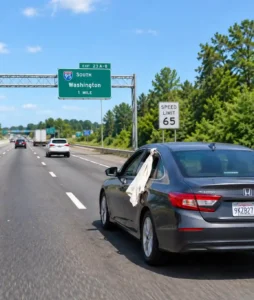
- The White Cloth hanging From a Car Window: What This Little-Known Road Signal Really Means



Hammad Ali
Co-Owner & Author
Hammad Ali is a co-owner and author at MidnightReads, contributing thoughtful and engaging articles across human-interest, life, history, relationships, and entertainment topics.
They help develop and create original, useful content designed to inform, entertain, and give readers something meaningful to take away.