
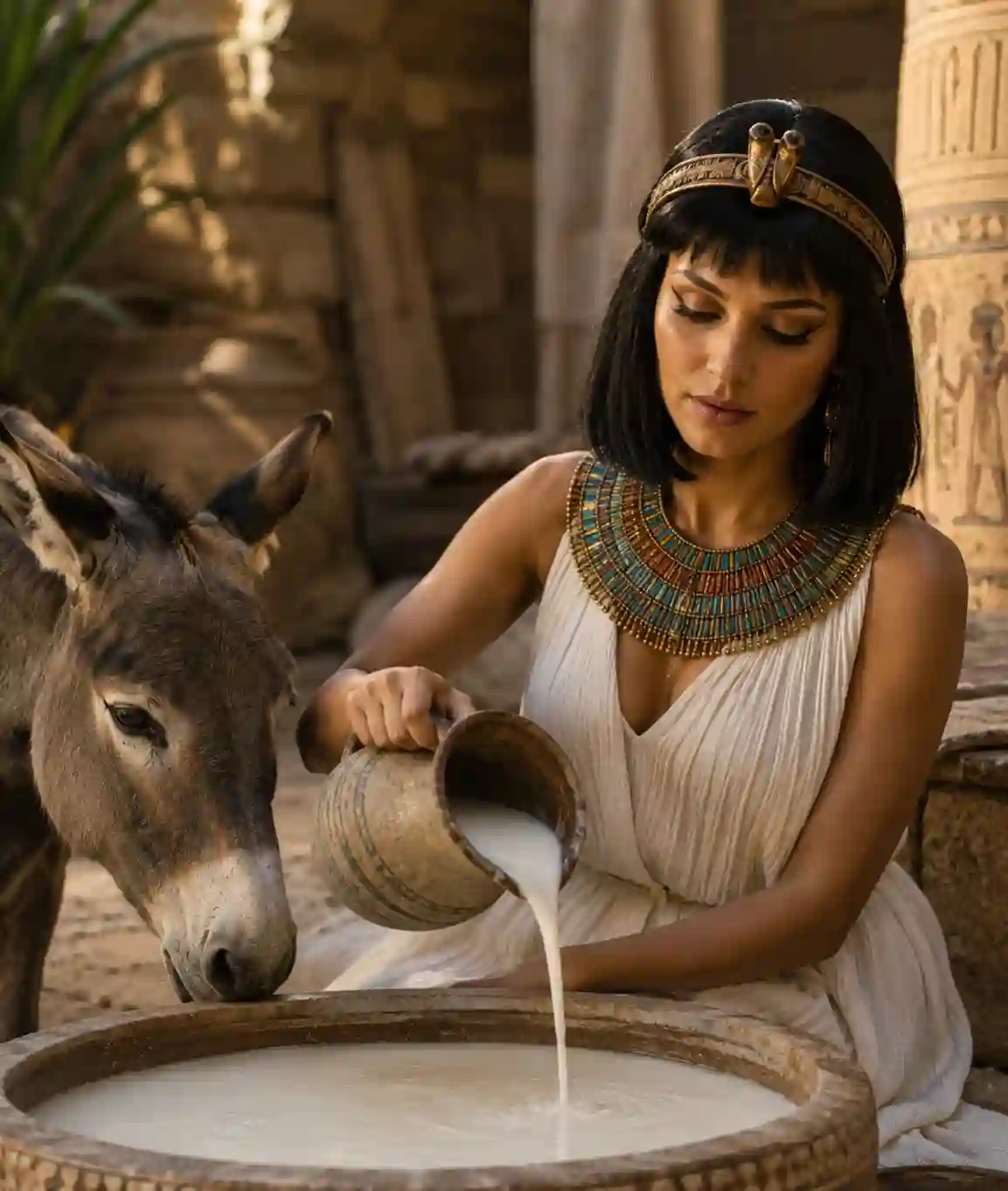
Thousands of years ago, one of the most powerful women in history followed a beauty ritual so unusual that people still talk about it today. Long before expensive skincare brands, luxury spas, and anti-aging creams existed, an ancient queen believed the secret to glowing skin was hidden in something most people would never expect.(Cleopatra’s Strange Beauty Secret)
That queen was Cleopatra VII.
Even today, Cleopatra’s name is linked with beauty, elegance, mystery, and power. Stories about her appearance have survived for centuries. Historians describe her as a woman who understood the importance of presentation, charm, and self-care better than almost anyone of her time. While many people assume her beauty came naturally, historical accounts suggest she followed detailed skincare and wellness routines to maintain her youthful appearance.
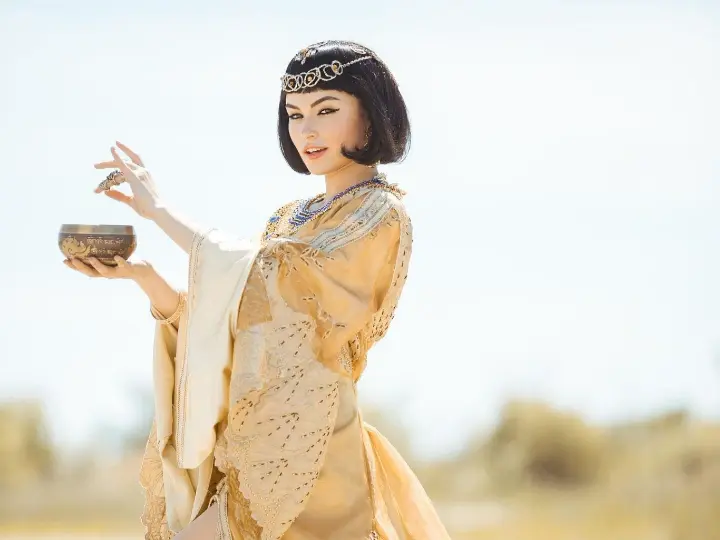
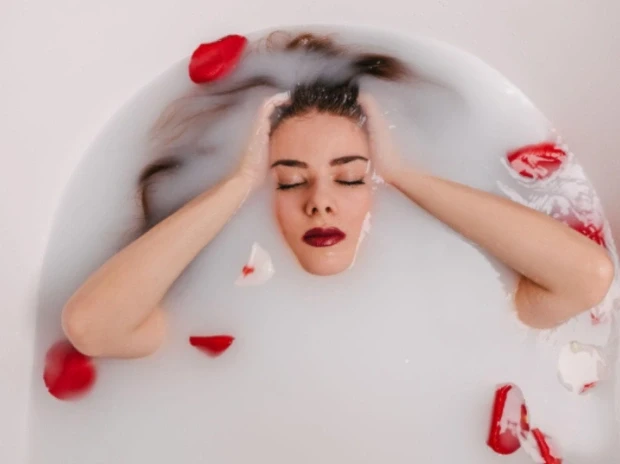
Among all the Cleopatra’s Strange beauty secrets, one strange ritual continues to fascinate people more than any other: her famous donkey milk baths.
According to historical stories passed down over generations, Cleopatra regularly bathed in donkey milk to keep her skin soft, smooth, and youthful. Some accounts even claim hundreds of donkeys were needed to provide enough milk for her daily beauty routine. While the exact number may have been exaggerated over time, the connection between Cleopatra and donkey milk became one of the most famous beauty legends in history.
At first, the idea sounds unbelievable.
How could something as simple as donkey milk become one of the most talked-about skincare secrets of the ancient world?
The answer becomes more interesting when modern science enters the conversation.
Today, researchers and skincare experts have discovered that donkey milk naturally contains several ingredients known to benefit the skin. It is rich in vitamins, proteins, minerals, and healthy fats that can help nourish and hydrate the skin. One of its most important components is lactic acid, a natural compound widely used in modern skincare products.
Lactic acid helps gently remove dead skin cells from the surface of the skin. This process can make the skin appear smoother, brighter, and fresher. Many modern exfoliating creams and beauty treatments still use forms of lactic acid because of its ability to improve skin texture without being too harsh.
This is one reason why Cleopatra’s beauty routine continues to attract attention even after thousands of years.
People are often surprised to learn that some ancient beauty methods were not entirely based on myth or imagination. In many cases, natural ingredients used centuries ago are now being rediscovered by the skincare industry.
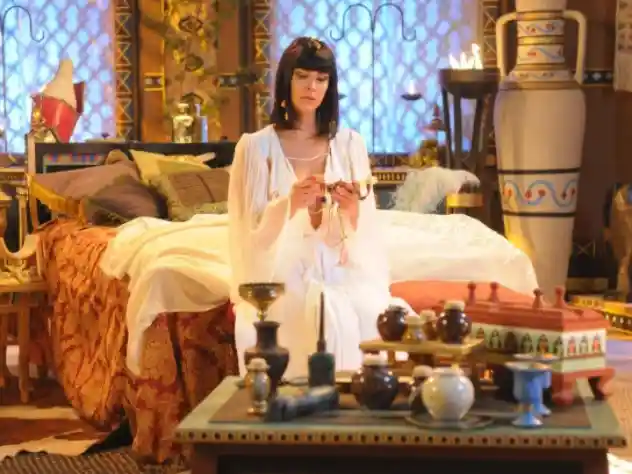
Donkey milk is one example.
Compared to regular cow’s milk, donkey milk has a lighter structure and contains nutrients that are considered gentle on sensitive skin. Some skincare enthusiasts believe it may help reduce dryness and improve softness. In certain parts of the world, soaps and creams made from donkey milk are still sold as luxury skincare products inspired by ancient traditions.
Of course, modern experts also remind people that no single ingredient can magically create perfect skin forever. Good skincare depends on many factors including hydration, nutrition, sleep, hygiene, genetics, and overall health. Still, the historical connection between Cleopatra and donkey milk remains one of the most fascinating beauty stories ever told.
What makes Cleopatra’s story even more interesting is that her influence extended far beyond beauty.
She was not simply a queen admired for her appearance. Cleopatra was also highly educated, intelligent, and politically skilled. She could reportedly speak multiple languages and played a major role in the politics of the ancient Mediterranean world. Her ability to influence powerful leaders helped her maintain control over Egypt during a difficult period in history.
Yet despite her intelligence and political achievements, people across generations continued focusing on her beauty rituals.
This shows how deeply society has always been fascinated by beauty secrets, especially when connected to famous historical figures.
In today’s world, billions of dollars are spent every year on skincare products promising younger-looking skin. Expensive creams, facial treatments, serums, and beauty therapies dominate social media and advertising. Influencers constantly promote new products claiming to transform the skin overnight.
But long before the modern beauty industry existed, ancient civilizations were already experimenting with natural skincare ingredients.
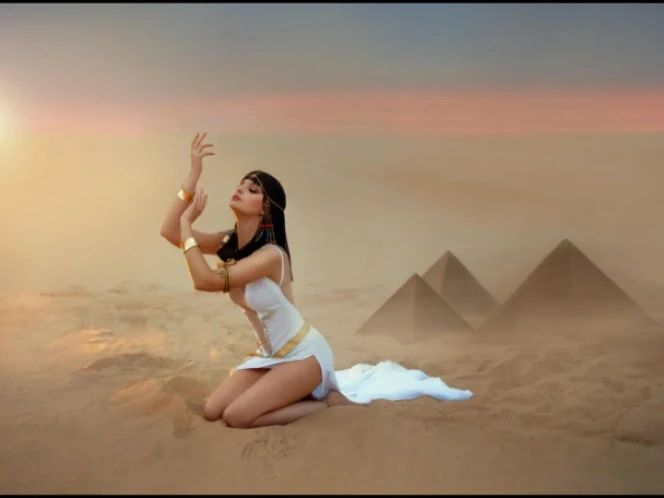
The Egyptians, in particular, were known for their interest in cosmetics, oils, perfumes, and personal care. Historical records suggest they used ingredients such as honey, aloe vera, milk, salt, and plant oils in beauty treatments. Many of these ingredients are still used in skincare products today.
Honey, for example, is known for its moisturizing and antibacterial properties. Aloe vera is widely used for soothing irritated skin. Natural oils help prevent dryness and protect the skin barrier. Even thousands of years ago, people understood that nature contained ingredients capable of improving skin health.
Cleopatra’s milk baths became legendary because they represented luxury, beauty, and royal self-care at the highest level.
Imagine the image people had in their minds: a powerful queen relaxing in a bath filled with rich milk while servants prepared perfumes and oils around her palace. Whether every detail of these stories is completely accurate or partly exaggerated by history, the legend itself became unforgettable.
Over time, Cleopatra transformed from a historical ruler into a symbol of timeless beauty.
Movies, books, paintings, and documentaries continued repeating the stories about her beauty rituals. Generations became curious about how an ancient queen managed to maintain such glowing skin without modern products.
This curiosity still exists today.
Many people continue searching for “Cleopatra beauty secrets” online because they are fascinated by the idea that ancient skincare methods may still hold value in the modern world.
At the same time, experts encourage people to separate historical inspiration from unrealistic expectations. Ancient beauty routines were often part of larger lifestyles involving diet, environment, and daily habits that cannot easily be recreated today.
It is also important to remember that beauty standards change over time.
What one generation considers beautiful may look completely different to another. Cleopatra’s lasting reputation was not only about physical appearance. Confidence, intelligence, charisma, and influence also shaped the way people remembered her.
In many ways, that may be the real reason her story survived for over two thousand years.
Modern skincare trends constantly come and go. One year people obsess over gold masks, the next year over snail creams or ice facials. But the fascination with natural beauty remedies never fully disappears.
Perhaps that is why Cleopatra’s donkey milk bath story still captures attention today.
It combines history, mystery, luxury, science, and beauty into one unforgettable legend.
Some people read the story and laugh at how unusual it sounds. Others become curious enough to research the science behind it. And some simply enjoy imagining the glamorous world of ancient Egyptian royalty.
No matter how people react, one thing is clear: few beauty stories from history have remained as famous as Cleopatra’s.
Even after thousands of years, her name continues to appear in conversations about skincare, beauty routines, and timeless elegance.
And maybe that is what makes the story truly powerful.
Not the milk itself.
Not the royal palace.
Not even the luxury.
But the fact that one woman from the ancient world left such a lasting impression that people still discuss her beauty secrets centuries later.
In a world filled with constantly changing trends, that kind of influence is rare.
Cleopatra’s legendary skincare rituals remind us that humanity’s search for beauty, confidence, and youth is not something new. It has existed for centuries, connecting ancient civilizations to the modern world in surprisingly familiar ways.
Thanks for reading! Visit again for more strange, mysterious, and unforgettable stories from the past.
You May Also Like
- My Father-in-Law Lived Under My Roof for 20 Years, and I Called Him a Burden, Until His Lawyer Opened a Blue Ledger at His Funeral and Revealed What He’d Been Hiding All Along

- Every Ride Home Left Me With Missing Memories And I Thought My Husband Was Worried About My Blackouts Until I Heard His Voice on the Recording

- My Mother Banned Me From My Brother’s Wedding, Then One Phone Call Revealed Who I Really Was
- My Ex-Husband’s Mother Arrived With Two Moving Trucks Minutes After Our Divorce—She Demanded My Mansion, but She Had No Idea What My Attorney Had Discovered2.





About the Author
Hassan is the founder and editor of MidnightReads, a publication featuring thoughtful stories, human-interest articles, history, relationships, and entertaining reads.
He is involved in researching, writing, and editing content for the site, with a focus on creating original, clear, and useful articles that give readers something meaningful to take away.
Hassan believes good content should inform, entertain, and encourage curiosity.
— Hassan, Founder & Editor, MidnightReads