
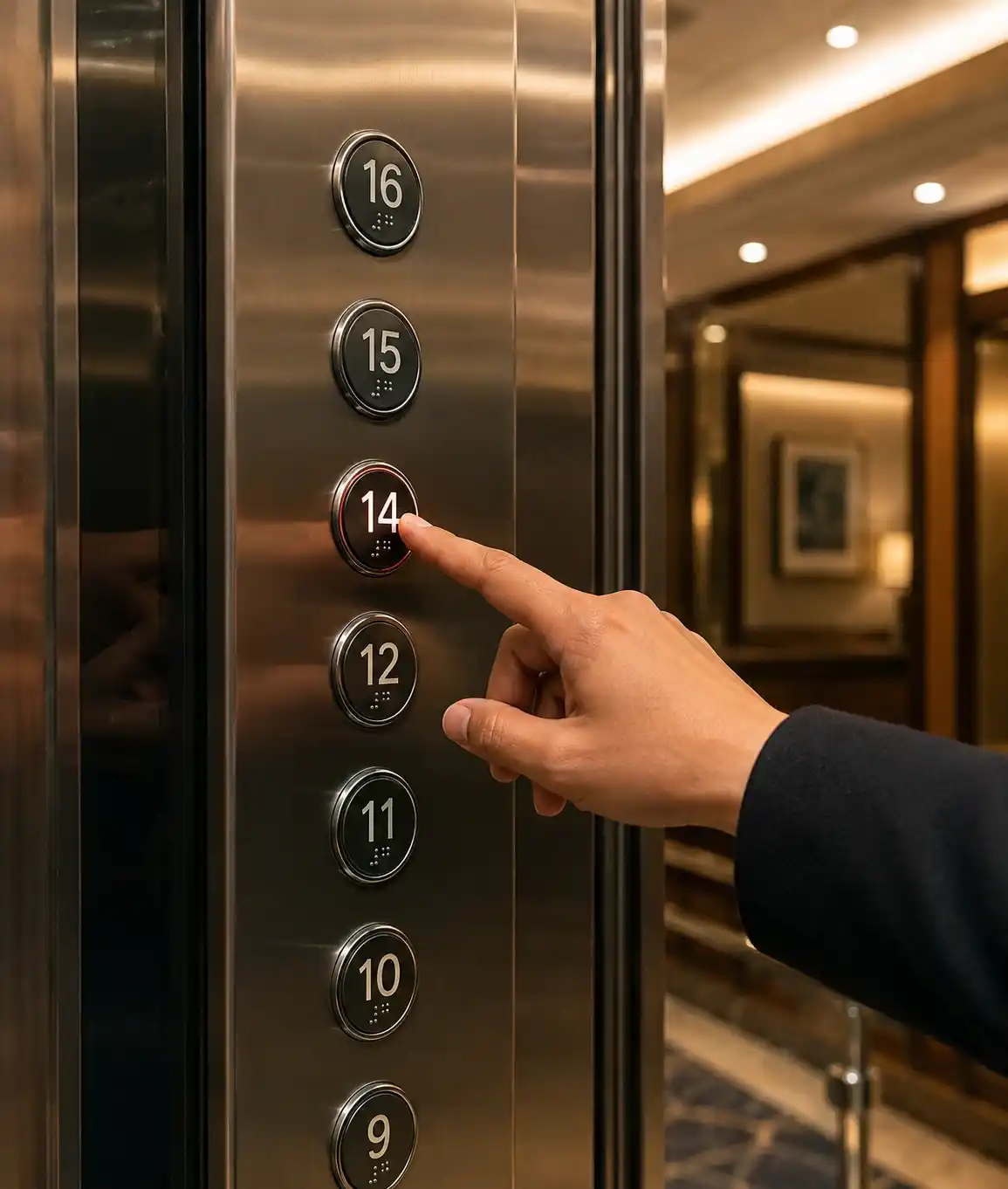
Why buildings do not have a 13th floor is a question that surprises many people. If you have ever stepped into an elevator and noticed it jumps from the 12th floor to the 14th, you may have wondered whether the building is missing a floor. The truth is far more interesting—and it has nothing to do with construction or safety.
It’s a small detail that surprises many people, especially those seeing it for the first time. The truth, however, is far more interesting than most people expect.
The 13th floor usually hasn’t disappeared at all. In many buildings, it exists just like every other floor. The only difference is that it has been given a different number.
This practice has nothing to do with engineering, safety, or construction standards. Instead, it reflects a cultural tradition that has influenced architecture for generations.
A Number Surrounded by Superstition
The belief that the number 13 brings bad luck has existed for hundreds of years in several Western countries. While historians cannot point to a single moment when the superstition began, many believe it grew from a combination of ancient legends, religious traditions, and folklore.
One well-known example is the Last Supper, where thirteen people shared a meal before the betrayal of Jesus. Another story from Norse mythology tells of a banquet that was interrupted by an unexpected thirteenth guest, leading to tragedy.
Whether or not people believe these stories today, they have helped shape the reputation of the number 13 over many centuries.
Why Developers Skip the Number
Hotels, apartment buildings, hospitals, and office towers are designed to make people feel comfortable. Developers understand that some guests and tenants may feel uneasy about staying on a floor labeled “13.”
Instead of taking the risk of making visitors uncomfortable, many simply change the floor number.
Rather than displaying Floor 13, the elevator might show:
- Floor 12
- Floor 12A
- Floor M
- Floor 14
The building still has the same number of floors. Only the label changes.
For building owners, this is an inexpensive way to respect the beliefs of some customers without changing the structure itself.
The Floor Is Still There
One of the biggest misconceptions is that these buildings actually have one fewer floor.
That isn’t true.
If the elevator jumps from 12 to 14, the physical space between those floors still exists. Construction workers built it, electrical systems run through it, and people use it every day.
Only the number has been changed.
In other words, the “14th floor” in some buildings may actually be the thirteenth physical level.
Is There Any Scientific Reason?
No.
There is no engineering rule, architectural requirement, or scientific study that recommends avoiding the number 13.
Building safety depends on construction quality, materials, fire protection, and engineering standards—not on floor numbers.
From a technical point of view, the number printed on an elevator button has absolutely no effect on how a building performs.
A Business Decision More Than Anything
For many property owners, skipping the number 13 is simply a business decision.
Hotels want guests to enjoy their stay without unnecessary concerns. Apartment developers want buyers to feel comfortable purchasing a home. Office buildings want tenants to lease space without hesitation.
If changing one number can prevent complaints or make some customers feel more at ease, many businesses see it as a practical choice.
Not Every Country Follows This Tradition
The idea that 13 is unlucky is far from universal.
Many countries use the number normally in homes, offices, hotels, and public buildings. People there rarely think twice about seeing a 13th floor.
Even in places where the superstition has been common for decades, attitudes are slowly changing. Many newer buildings now keep the traditional numbering because younger generations often view the number as completely ordinary.
As societies become more global and diverse, these old traditions continue to fade in some areas while remaining strong in others.
Other Numbers People Avoid
The number 13 isn’t the only number surrounded by superstition.
In several East Asian countries, some people avoid the number 4 because its pronunciation sounds similar to the word for “death” in certain languages.
As a result, some buildings skip the fourth floor in much the same way others skip the 13th.
This shows that beliefs about lucky and unlucky numbers depend largely on local culture rather than universal rules.
The Psychology Behind It
Psychologists have long studied why people hold on to superstitions.
Even when there is no evidence that a number affects real-life events, traditions passed down through families and communities can strongly influence the way people think.
Numbers become symbols rather than facts.
For some people, avoiding a particular number simply offers peace of mind. Whether or not the belief is scientifically supported, the emotional comfort it provides can feel very real.
That is one reason these traditions continue even in modern cities filled with advanced technology.
Explore more like: What Your Nails May Reveal About Your Health (And What They Don’t)
Famous Examples
Many hotels, office buildings, and residential towers in North America have chosen to skip the number 13. Visitors often never notice unless they pay close attention to the elevator buttons. e.g One Madison building, Chase tower etc.
At the same time, countless modern buildings proudly include a 13th floor, showing that not every developer sees a need to follow the tradition.
This mix of old beliefs and modern thinking makes architecture surprisingly interesting.
Myth vs. Fact
Myth: Buildings without a 13th floor are missing an entire level.
Fact: The floor is almost always present. Only its number has changed.
Myth: Skipping the number is required by building laws.
Fact: No construction code requires it.
Myth: The number 13 affects a building’s safety.
Fact: Safety depends on engineering and maintenance, not floor numbers.
Frequently Asked Questions
Can people still stay on the 13th floor?
Yes. They may simply be staying on a floor labeled 14 or 12A.
Are all elevators missing the number 13?
No. Many elevators around the world include it just like every other number.
Is the number 13 actually unlucky?
There is no scientific evidence that the number itself brings good or bad luck. Whether someone believes it is unlucky depends on personal and cultural beliefs.
Final Reflections
A missing number on an elevator may seem like an unimportant detail, but it tells a fascinating story about history, culture, business, and human psychology.
The next time you notice an elevator jumping from Floor 12 to Floor 14, you’ll know the building isn’t missing a level. It’s simply following a tradition that has been around for generations.
Sometimes, the smallest details in everyday life reveal the most interesting stories—and the mystery of the missing 13th floor is a perfect example.
Thanks for reading! Check out more interesting stories and everyday mysteries waiting for you
Related Posts

Hammad Ali
Co-Owner & Author
Hammad Ali is a co-owner and author at MidnightReads, contributing thoughtful and engaging articles across human-interest, life, history, relationships, and entertainment topics.
They help develop and create original, useful content designed to inform, entertain, and give readers something meaningful to take away.